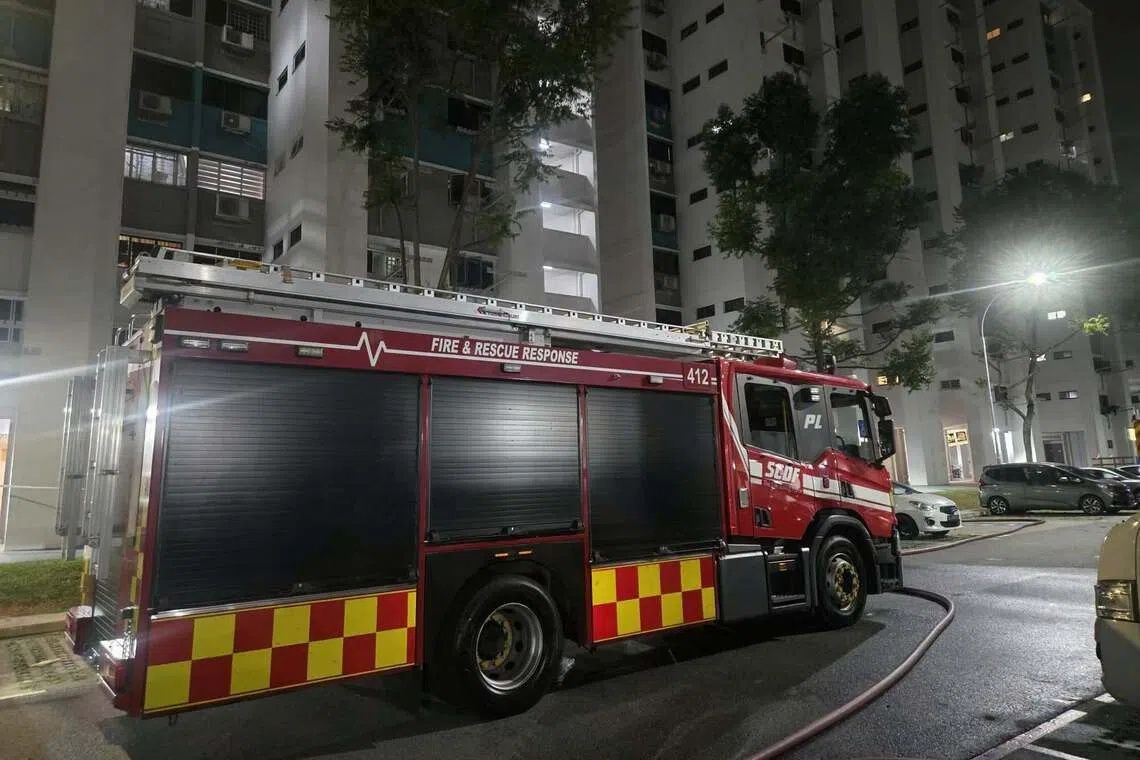
A residential fire in Singapore's Jurong East district has claimed another life, underscoring a troubling spike in fatal blazes across the city-state's public housing complexes. The incident at Block 339 Jurong East Avenue 1 occurred in the early morning hours of August 16, prompting emergency responders to conduct a rescue operation that resulted in the evacuation of 50 residents from the affected building.
The Singapore Civil Defence Force received an emergency alert at 3.55am and arrived to discover thick black smoke billowing from a third-floor unit. Firefighters observed flames confined to the living room area of the apartment, though the precise ignition source remains undetermined as investigations continue. The rapid deployment of emergency personnel allowed crews to enter the unit by force and locate an unresponsive individual in the living room, though resuscitation efforts proved unsuccessful.
A paramedic pronounced the resident dead at the scene, marking a significant loss for the residential community. The identity of the deceased and details regarding family notification have not yet been disclosed. The SCDF's swift response likely prevented the fire from spreading to neighbouring units, a critical outcome given the close quarters typical of HDB flats and the early morning hour when residents would have been sleeping.
What renders this tragedy particularly significant is its place within a disturbing pattern of residential fires claiming lives across Singapore's HDB estates over a compressed timeframe. This marks at least the fourth reported fatality linked to HDB flat fires since late July, a cluster that has prompted concern among housing authority officials and fire safety experts alike. The frequency of these incidents raises important questions about fire prevention, emergency preparedness, and potential systemic vulnerabilities in public housing infrastructure.
The first of these recent fatalities occurred on July 28 when a blaze broke out in the morning at Block 39 Circuit Road, killing a 70-year-old resident. Three days later, on July 31, a fire in an eighth-floor unit at Block 309 Clementi Avenue 4 proved fatal to a 65-year-old occupant and resulted in injuries to two firefighters battling the blaze. These incidents demonstrate that fires pose hazards not only to residents but also to emergency personnel responding to dangerous conditions in high-rise residential settings.
The third fatality in this series occurred on August 3 at Block 684 Race Course Road, where flames erupted on the fifth floor. Five residents ranging from 55 to 88 years old were transported to hospital following exposure to smoke and heat. Among them, an 88-year-old resident succumbed to injuries sustained in the fire on August 5, just two days after the incident. This particular case highlights the vulnerability of elderly residents, who may experience greater difficulty evacuating quickly or recovering from smoke inhalation injuries.
The succession of fatal fires within a two-week period has prompted closer scrutiny of fire safety protocols within HDB estates. Housing boards across Singapore maintain fire suppression systems and conduct regular safety inspections, yet these incidents suggest that additional preventive measures or enhanced emergency response coordination may be warranted. The clustering of fatalities also raises questions about whether seasonal factors, building maintenance, electrical systems, or resident awareness campaigns might contribute to the frequency of these blazes.
Fire safety in HDB flats presents unique challenges that differ from other residential settings. The high-density nature of public housing means that fires can endanger not just a single unit but potentially multiple adjoining apartments within minutes. Evacuation procedures must account for the fact that residents may include elderly individuals, children, and persons with mobility limitations who require additional assistance to reach safety. Stairwells and corridors serve numerous families simultaneously during emergencies, creating potential bottlenecks.
The incident at Block 339 underscores the importance of functional smoke detectors, clear evacuation routes, and resident familiarity with emergency procedures. The SCDF's ability to locate and reach the deceased resident relatively quickly demonstrates the value of trained emergency response, though the outcome in this case proved tragic. For the broader community across Singapore's public housing estates, this fire represents a sobering reminder of residential fire risks and the critical importance of preparedness.
As investigations into the cause of the Jurong East fire proceed, officials are likely to examine electrical systems, cooking appliances, and other potential ignition sources within the affected unit. The speed and intensity of the fire's development, along with the production of heavy black smoke, may provide forensic evidence regarding materials involved. Such findings could inform future safety recommendations across the HDB portfolio.
The evacuation of 50 residents from Block 339 demonstrates the cascading impact of a single residential fire beyond the immediate fire scene. Displaced families required temporary accommodation and support services while the building underwent assessment for structural integrity and smoke damage. The psychological impact on residents who witnessed emergency operations and evacuation procedures during the early morning hours should not be underestimated, particularly among vulnerable populations.
Looking forward, the concentration of fatal fires in July and August may prompt the SCDF and HDB authorities to launch enhanced public education campaigns emphasizing fire prevention, the importance of smoke alarms, and proper evacuation procedures. For residents throughout Singapore's public housing system, these incidents serve as stark reminders that fire safety remains a shared responsibility requiring vigilance and preparation at individual, community, and institutional levels.

