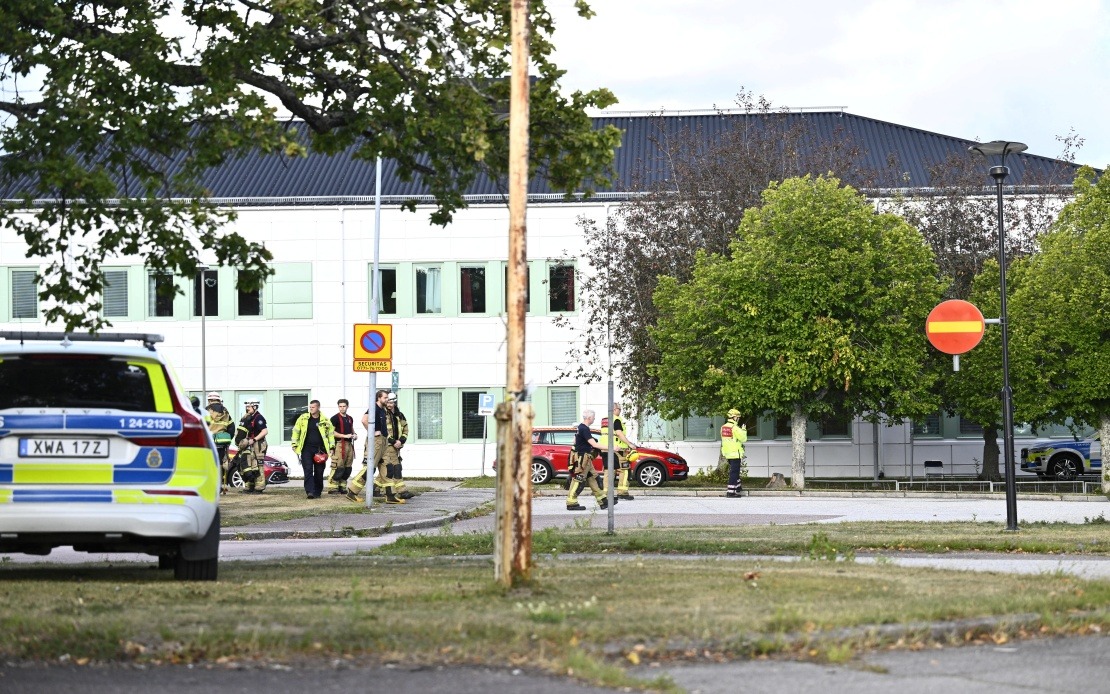
A sword-wielding attacker entered Brinell School in the central Swedish town of Fagersta on Wednesday afternoon, resulting in one fatality and multiple injuries in what authorities are treating as a serious criminal incident. Emergency services responded to the scene at approximately 2.06 pm local time following an alert to the Fagersta Municipality, initiating a swift response that has drawn government attention to the Nordic nation's ongoing security challenges.
The attack left a significant mark on the community, with two male victims under the age of 18 suffering serious but stable injuries that required immediate medical intervention. A third individual sustained minor injuries during the violent episode. The rapid escalation of the situation prompted authorities to expand their response beyond the immediate school premises, reflecting concerns about potential ongoing threats to public safety in the area.
Police have detained an 18-year-old suspect believed to be responsible for the attack. According to Sweden's public broadcaster SVT, the individual is a former pupil of Brinell School and is known to have connections to two addresses within Fagersta. The fact that the perpetrator had prior familiarity with the school environment raises questions about security protocols and the psychological warning signs that may have preceded the violence.
The attack prompted a coordinated lockdown across multiple educational and public facilities throughout Fagersta as a precautionary measure. Schools including Olympen, Fagerstahallen, Risbroskolan, Skogsglantan, Bjorksta, Prastkragen, and Norrbybacken were placed under security protocols, effectively restricting movement and access to ensure no additional threats could emerge. Such coordinated responses have become increasingly routine in European countries following several high-profile school incidents over the past two decades.
Justice Minister Gunnar Strommer addressed the incident publicly, emphasizing the government's engagement with security forces and commitment to addressing the situation. In a statement, Strommer noted that authorities had been briefed on the serious occurrence and that police were working with intensity to investigate all aspects of the attack. He underscored ongoing governmental coordination with law enforcement agencies and pledged continuous monitoring of developments as the investigation progressed.
This incident reflects broader European concerns about school safety and youth violence, though such sword attacks remain comparatively uncommon in Sweden. The Nordic country has generally maintained relatively low violent crime rates compared to global averages, yet occasional incidents continue to spark discussions about security infrastructure in educational settings. The involvement of a former student in the attack adds another dimension to the investigation, potentially raising questions about grievances or psychological issues that may have motivated the violence.
For Malaysian observers, this event underscores how developed Western nations continue to grapple with school security despite substantial resources and established police systems. While Malaysia's educational institutions face different security considerations, the incident serves as a reminder that violence in schools remains a transnational concern requiring vigilance, proper threat assessment protocols, and coordinated emergency response mechanisms. The rapid response from Swedish authorities and the subsequent lockdown procedures demonstrate crisis management protocols that many nations, including those in Southeast Asia, continue to refine and improve.
The investigation into the Fagersta attack will likely focus on the suspect's background, access to weapons, psychological profile, and any potential warning signs that may have been overlooked. Understanding these elements could provide valuable insights for educators and security professionals across Europe and beyond who work to prevent similar tragedies. The presence of an 18-year-old carrying a sword into a school raises questions about how such weapons are secured and under what circumstances young individuals gain access to them.
Swedish society, like many European nations, has experienced heightened scrutiny regarding youth violence and mental health services. The involvement of an individual barely into adulthood suggests that prevention strategies focusing on early intervention, counselling services, and community awareness may play important roles in addressing root causes of school violence. As investigations continue and more details emerge about the circumstances surrounding the attack, security officials across Sweden and neighbouring countries will likely review protocols and implement any necessary adjustments to safeguard educational environments.

