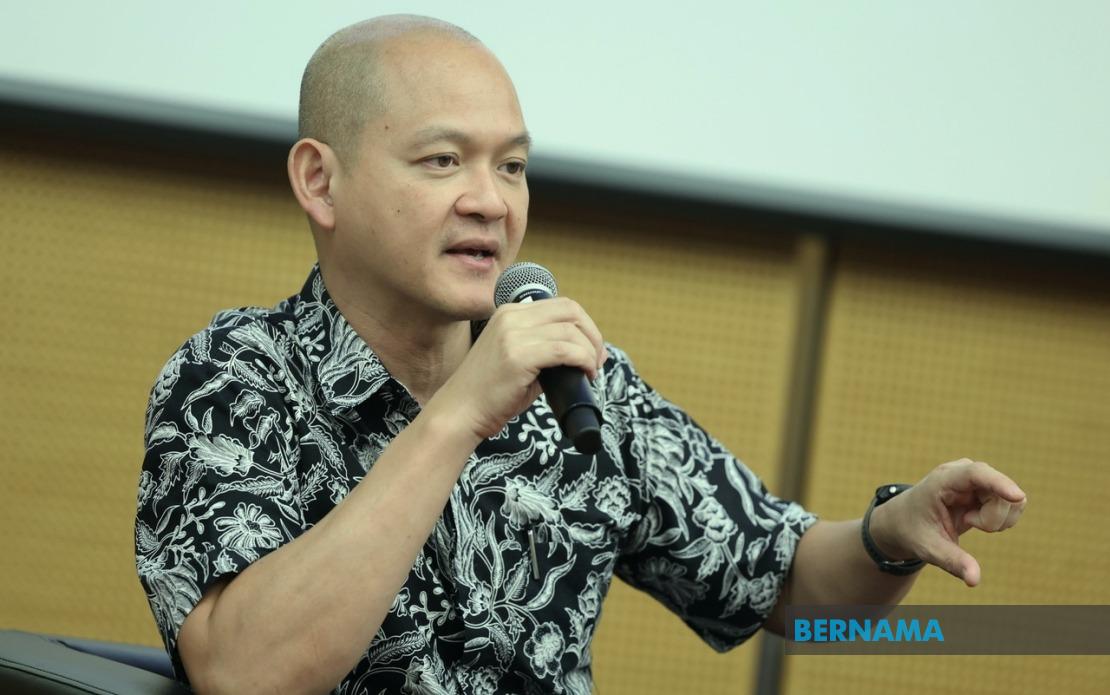
Dr Ong Kian Ming, who represented Bangi in Parliament until 2022, has formally ended his membership with the Democratic Action Party, marking a significant departure from Malaysian politics for the once-prominent legislator. The announcement, made public through a Facebook statement on August 31, came after Ong notified DAP Secretary-General Anthony Loke Siew Fook and DAP National Organising Secretary Khoo Poay Tiong of his decision, which took effect immediately.
Ong's exit from the DAP concludes a substantial chapter in his political career that spanned over a decade. Since joining the party in 2012, he had held multiple positions of considerable influence within both the party structure and government apparatus. His parliamentary tenure included two separate terms representing different constituencies—Serdang from 2013 to 2018, followed by his Bangi seat from 2018 until 2022, during which he witnessed significant shifts in Malaysian electoral politics and government composition.
Beyond his role as a legislator, Ong had accumulated substantial experience in ministerial work, serving as Deputy Minister of International Trade and Industry between 2018 and 2020. This portfolio positioned him within the government's economic and trade machinery during a critical period for Malaysia's international business relations. His administrative credentials extended to party structures as well, having served as an appointed member of the DAP's Central Executive Committee from 2019 to 2022, and later as an elected member of the DAP Selangor state committee from 2018 to 2024.
In his resignation statement, Ong emphasised gratitude for the opportunities afforded to him throughout his involvement with the DAP, framing his contributions across multiple dimensions—parliamentary representation, ministerial service, and party governance. This measured tone suggests an amicable separation rather than a fractious departure, though the timing and circumstances surrounding his decision remain publicly unspecified. Such dignified departures are relatively uncommon in Malaysian politics, where personality clashes and factional disputes frequently characterise resignations from major parties.
Perhaps most significantly, Ong has explicitly foreclosed two potential pathways that might have allowed him to remain visible in Malaysian politics. He categorically stated that he does not intend to join another political party in the foreseeable future, effectively removing himself from the traditional revolving door of Malaysian party-switching that has characterised numerous political careers. This commitment represents a deliberate choice to step back from active partisan politics entirely, rather than simply transferring his allegiance to a rival organisation.
Moreover, Ong confirmed that he will not be seeking nomination as a candidate in the upcoming 16th General Election (GE16), eliminating the possibility that his resignation represents merely a temporary hiatus before a comeback bid through another party. This declaration suggests a genuine withdrawal from competitive electoral politics, marking an exit that appears designed to be relatively permanent rather than a tactical repositioning ahead of future campaigns.
Ong's departure carries particular significance for the DAP at a moment when the party continues to navigate the complex dynamics of Malaysian coalition politics. The Democratic Action Party has been a consistent component of Pakatan Harapan and subsequent governing coalitions, and the loss of experienced legislators and administrators represents a tangible drain of institutional knowledge. Ong's parliamentary experience and ministerial background positioned him as one of the party's more technically competent figures, particularly on economic and trade matters.
For Malaysian political observers, Ong's withdrawal also signals broader questions about the sustainability of long-term careers within Malaysia's party system. The transition from the PH-led federal government after 2022, followed by the subsequent reshuffling of political alignments, appears to have prompted reassessment among several prominent figures. That an accomplished legislator and administrator would choose complete disengagement rather than navigate the current political landscape suggests the degree of institutional instability and uncertainty characterising contemporary Malaysian politics.
Ong indicated that despite his departure from party politics, he remains committed to serving Malaysia's national interests through alternative channels. This suggests potential involvement in non-governmental sectors, think tanks, business, or consulting roles where his economic expertise and policy experience could prove valuable. Such transitions have become increasingly common among retired Malaysian politicians seeking to maintain relevance and contribution outside the formal political arena.
The resignation underscores how Malaysia's political ecosystem continues evolving, with veteran figures periodically stepping back from the contest. Ong's decision reflects a generation of politicians confronting shifting coalitional dynamics and the practical challenges of sustaining electoral viability in an increasingly complex multiparty landscape. His measured exit, coupled with explicit commitments to avoid both party-switching and electoral candidacy, represents a relatively clean break from the competitive political sphere.
As Malaysian politics continues adapting to post-2022 realities, further exits and repositioning among legislators may follow. Ong's departure serves as a reminder that even accomplished politicians sometimes determine that their contributions are better channelled through venues other than competitive electoral politics, particularly when the institutional stability and ideological coherence once characterising their party affiliations face unprecedented pressures.

