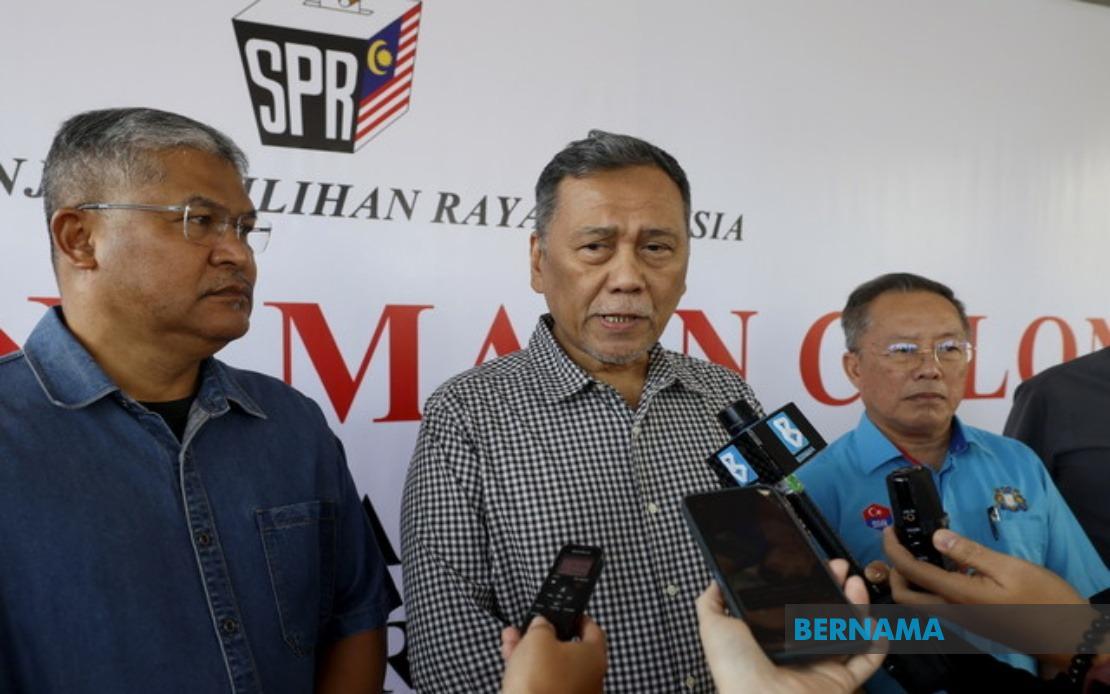
Preparations for the Johor state election have entered their final stretch, with the Election Commission reporting a considerable gap between candidates collecting nomination forms and those actually committing to contest through deposit payments. As of June 26, some 593 nomination forms have been distributed across returning officer offices throughout the state, yet merely 133 aspirants have taken the decisive step of submitting the mandatory deposit, formally signalling their electoral ambitions. This disparity suggests either cautious optimism from would-be candidates who are still weighing their options, or reflects the typical pattern whereby many who initially express interest ultimately withdraw from the race.
Election Commission chairman Datuk Seri Ramlan Harun underscored that the final tally could still shift meaningfully before nomination day concludes. The compressed timeframe—with nominations commencing the following morning—means candidates still have a window to formalise their candidacies. Ramlan's appeal for earlier submission was pragmatic; smooth processing of nominations depends partly on staggered arrivals rather than last-minute surges that could overwhelm administrative capacity at the 56 nomination centres distributed statewide. His comments reveal the EC's balancing act between maintaining procedural flexibility and ensuring orderly conduct during a politically charged period.
The Johor state assembly was dissolved on June 1, triggering this election cycle. The EC has compressed the electoral calendar substantially: nominations occur on June 27, early voting is scheduled for July 7, and polling day falls on July 11. This accelerated timeline has implications for campaign strategy, voter engagement, and resource mobilisation across all competing parties. For a state as politically significant as Johor—a BN stronghold historically but increasingly competitive—the shortened campaign period may disadvantage candidates lacking established machinery or name recognition.
Security and order considerations loom large as nomination day approaches. Zainal Eran, the returning officer for the Maharani constituency, detailed measures designed to prevent confrontations between rival supporters. Designated separate zones, demarcated by physical barriers, will contain supporters from different political camps. The restrictions on nomination centre access—limiting entries to the candidate, their proposer, and a single supporter—further aim to minimise volatile interactions. These precautions reflect lessons from previous electoral exercises and the acknowledged tensions that can surface when multiple political forces mobilise simultaneously in confined spaces.
The EC conducted two consecutive trial runs at nomination centres to ensure operational readiness. This preparation signals institutional seriousness about managing what could prove a contentious process given the diversity of candidates and parties expected to participate. Ramlan explicitly reminded all political actors to observe regulations and refrain from provocative conduct, casting the onus on discipline from candidates, party officials, and grassroots supporters alike.
The party positioning across Johor's 56 seats reveals a three-way contest, though with asymmetric configurations. Pakatan Harapan has declared a full slate: PKR contesting 20 seats, Amanah 19, and DAP 17. This coalition coordination suggests relative stability within the opposition alliance, though internal dynamics—particularly between PKR and DAP in urban constituencies—may still generate friction. Barisan Nasional similarly fields candidates in all 56 seats, with UMNO bearing the heaviest load at 36 constituencies, MCA contesting 16, and MIC four. This distribution reflects UMNO's demographic and geographic dominance within the BN framework, though questions persist about whether coalition unity will hold during campaigning.
Perikatan Nasional, the relative newcomer to Malaysian electoral politics, has adopted a more selective strategy. PAS will contest 11 seats, Bersatu 16, the Malaysian Indian People's Party five, and Pejuang one—totalling 33 seats. This suggests PN intends to target specific regions rather than mount a comprehensive statewide challenge. The fragmentation within PN's component parties, exacerbated by ongoing tensions between PAS and Bersatu nationally, may manifest in the Johor campaign. Beyond these major coalitions, the Malaysian United Democratic Alliance fields four candidates, Parti Sosialis Malaysia one, while Parti Bersama Malaysia enters its first state electoral contest with ambitions to capture 15 seats—a notably aggressive debut that signals either genuine grassroots mobilisation or strategic positioning for future relevance.
The candidate confirmation rate merits deeper examination. That nearly three-quarters of form holders have not yet paid deposits could reflect genuine indecision, financial constraints, or strategic waiting to assess the political landscape more clearly before committing resources. In Malaysian electoral culture, some candidates delay confirmation to leverage negotiations with party machinery or to observe competitor movements. The EC's window for late deposits until nomination commences thus likely accommodates this endemic pattern while maintaining administrative control.
For Malaysian observers and Southeast Asian watchers, the Johor election carries significance beyond its 56 constituencies. The state represents a litmus test of BN's resilience following federal government changes and voter sentiment shifts documented in recent years. Johor's status as an economic powerhouse and demographic heavyweight means its electoral outcome influences national political calculations. The distribution of seats, turnout levels, and swing patterns will provide crucial data about whether certain voter cohorts are solidifying their allegiances or remaining fluid.
The nomination process itself serves as a pressure test on Malaysia's electoral architecture. How efficiently the EC processes hundreds of nominations, manages security arrangements, and maintains procedural integrity offers insights into institutional capacity. The attention paid to separating rival supporters and constraining nomination centre access demonstrates recognition that electoral processes remain flashpoints where political competition can occasionally spill into confrontation. Success in managing the nomination phase sets the tone for subsequent campaign weeks.
As candidates prepare to submit their papers and make their deposits formal, underlying questions persist about campaign financing, voter messaging, and coalition cohesion. The months ahead will reveal whether the 133 candidates already confirmed represent a core committed group or merely the leading edge of a larger wave. Equally important is whether the 460 form holders who have not yet paid deposits represent a reservoir of potential late candidates or individuals for whom the costs—financial and political—prove prohibitive. The Johor election, in miniature, encapsulates broader dynamics reshaping Malaysian democracy: coalition fluidity, factional tensions, and the perpetual competition between stability and change that defines the nation's political landscape.

