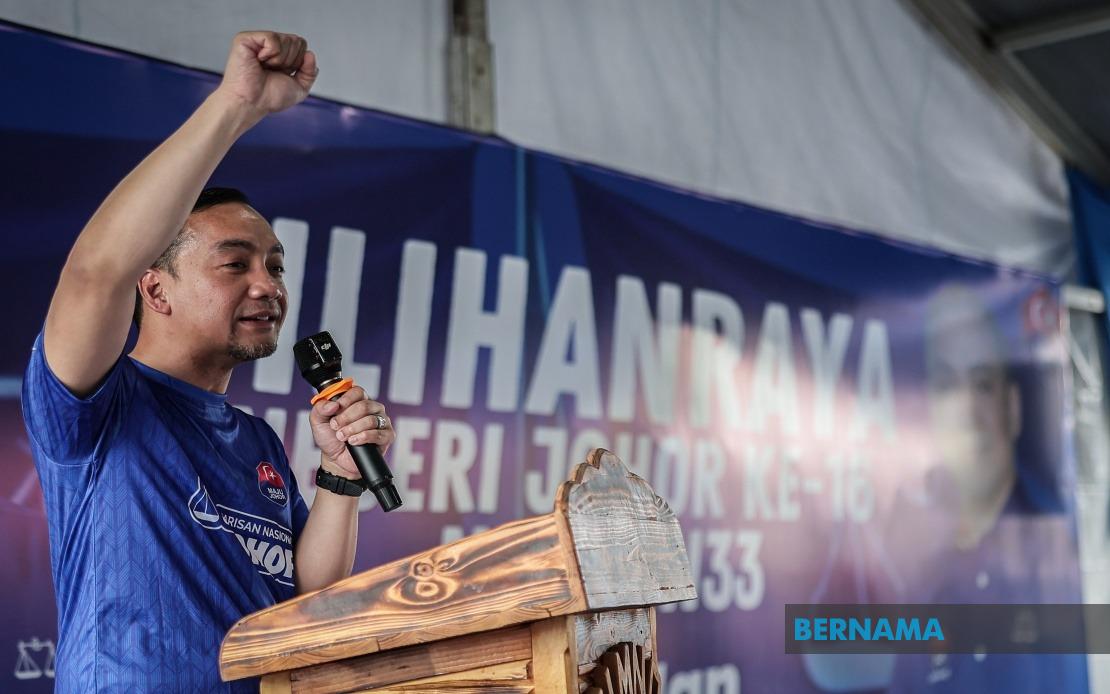
Barisan Nasional's campaign for the Johor state election is riding high on voter enthusiasm for Endau candidate Alwiyah Talib, with coalition chairman Datuk Onn Hafiz Ghazi expressing confidence that grassroots support will carry through to polling day on July 11. Speaking at a campaign event in Mersing on Saturday, the Johor Menteri Besar highlighted the warmth of community reception towards Talib, known affectionately as "Kak Awi", throughout the campaign trail, describing it as deeply encouraging for BN's electoral prospects in the state.
Talib's candidacy represents a significant political shift in the Endau contest. The incumbent previously represented the seat under the Perikatan Nasional banner in the 2022 state election, when she secured victory with a majority of 3,041 votes across a five-candidate race. Before that, she had held the constituency as a BN representative during the 14th General Election, before transitioning to Bersatu. Her return to the coalition marks a notable realignment in Johor's political landscape, particularly as BN seeks to consolidate support ahead of what the state party views as a crucial electoral moment.
Onn Hafiz framed Talib's homecoming within the broader context of UMNO president Datuk Seri Dr Ahmad Zahid Hamidi's "Rumah Bangsa" initiative, an umbrella concept designed to emphasise unity, reconciliation, and inclusive governance across the BN ecosystem. This framing carries strategic weight, signalling that BN welcomes accomplished leaders regardless of their recent political trajectory, provided they are committed to serving their constituents. The messaging suggests the coalition is attempting to position itself as the pragmatic choice for experienced administrators rather than remaining tethered to rigid ideological boundaries.
In his assessment, Onn Hafiz described Talib as a capable administrator with a demonstrated track record of serving the Endau electorate. The Menteri Besar's choice to publicly validate her credentials despite her recent opposition affiliation underscores an effort to neutralise potential criticism from within BN's conservative base while signalling flexibility to swing voters who may view politics as primarily transactional rather than tribal. For Malaysian observers accustomed to the heated rhetoric that often characterises party defections, the measured reception accorded to Talib's move suggests shifting norms within BN's coalition dynamics.
The Endau race is being contested alongside other constituencies in the 16th Johor state election, with BN fielding a full slate of candidates across the state. Onn Hafiz noted that party machinery in both Endau and the neighbouring Tenggaroh seat—where Mohd Youzaimi Yusof carries the BN banner—has mobilised fully in preparation for the contest. This dual-focus approach highlights how state elections in Malaysia's largest southern state continue to shape the broader political narrative at the federal level, given Johor's historical significance as an electoral bellwether and stronghold for the ruling coalition.
The campaign period leading up to polling day has proceeded without major incidents, according to the Menteri Besar, a claim that carries weight in a state where communal sensitivities remain pronounced. Early voting is scheduled for July 7, giving both the ruling coalition and opposition parties a final week to consolidate their ground operations. The compression of the campaign cycle means that momentum built through community engagement becomes disproportionately valuable in determining turnout patterns and persuadable voters' final decisions.
Talib's previous electoral performance provides a data point for assessing likely outcomes in Endau. Her 2022 victory margin of over 3,000 votes, achieved under PN colours in a fragmented five-way contest, suggests underlying personal brand strength within the constituency. However, the electoral mathematics differ significantly when contests consolidate around fewer candidates, and the political environment in mid-2023 differs from conditions two years prior. Whether her return to BN will strengthen her hand through enhanced coalition machinery support, or conversely whether some voters will view her realignment as opportunistic, remains an open question that campaign feedback aims to illuminate.
For BN strategists, the broader significance extends beyond Endau's individual outcome. Johor state elections carry symbolic importance for the national coalition's renewal narrative. After the 2022 federal elections produced a hung parliament and complex coalition-building, state elections offer opportunities to demonstrate coherence, organisational discipline, and electoral appeal. A commanding performance in Johor would provide Onn Hafiz and federal BN leadership with momentum heading into subsequent state contests and the longer trajectory towards the next general election, currently scheduled for no later than 2027.
Onn Hafiz's public confidence in the coalition's position should be contextualised within the conventional role of campaign leaders to project optimism. However, the Menteri Besar's emphasis on smooth campaign conduct and organisational readiness reflects BN's strategic priority of avoiding disruption and presenting an image of competent administration. In Malaysian electoral contests, where incumbent performance and community development often influence voter calculus alongside partisan affiliation, such messaging aims to reinforce BN's positioning as the responsible, functioning government.

