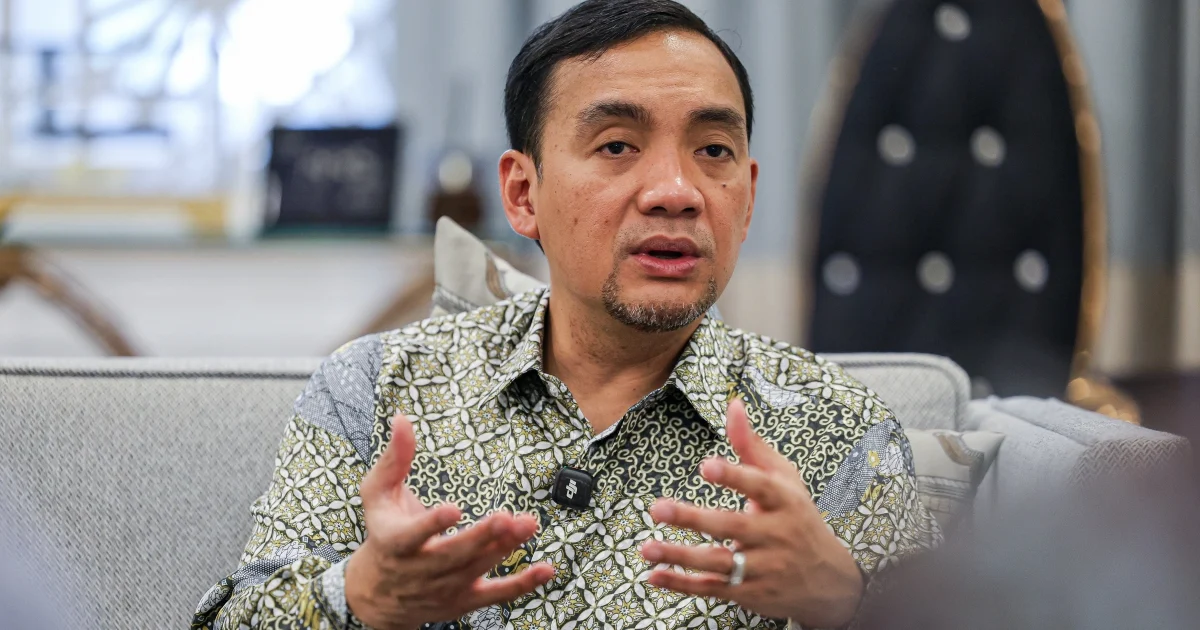
Caretaker Johor Menteri Besar Datuk Onn Hafiz Ghazi has moved swiftly to reject assertions that he attributed the dissolution of the Johor state assembly to a directive from the palace. The statement comes after Datuk Dr Mohd Puad Zarkashi publicly claimed that Onn Hafiz had made remarks characterising the assembly's dissolution as something that the palace had "ordered."
The timing of these allegations carries significant weight in Johor's political landscape, where the relationship between the executive and the royal institution remains a closely watched aspect of state governance. Such claims, if substantiated, would have raised substantial questions about the nature of decision-making at the highest levels of state administration and the degree of influence exercised by the Sultan's office in legislative matters.
Onn Hafiz's denial represents a critical moment in clarifying the constitutional framework governing Johor's political operations. The distinction between the Menteri Besar acting on independent constitutional authority versus receiving direct instructions from the palace carries profound implications for how stakeholders understand the separation of powers within the state's governance structure.
The Johor assembly dissolution itself has been a source of considerable political discussion across Malaysia, particularly given the timing and circumstances surrounding the decision. As caretaker Menteri Besar, Onn Hafiz operates in a constitutionally defined interim period before electoral outcomes determine the state's next government. During such phases, the actions and statements of sitting chief executives face heightened scrutiny from opposition figures, media commentators, and the general public.
Datuk Dr Mohd Puad Zarkashi's claims represent a substantive challenge to the legitimacy of the dissolution decision, attempting to suggest that political considerations rather than constitutional necessity drove the process. By framing the dissolution as a palace-ordered action, the critic implies that ordinary democratic procedures were circumvented in favour of institutional pressure, a charge that strikes at the heart of how Malaysians understand responsible executive governance.
The denial itself warrants careful consideration within the broader context of royal protocol and political communication in Malaysia. Chief ministers and state leaders typically exercise considerable caution when discussing matters involving the Sultan's office, recognising both the constitutional importance of the institution and the sensitivities surrounding any public commentary about royal involvement in state affairs. Onn Hafiz's explicit rejection suggests he views the allegations as serious enough to warrant immediate public clarification rather than remaining silent.
For Malaysian observers and political analysts tracking Johor's trajectory, this exchange highlights the complex interplay between executive prerogative, royal authority, and public perception in state-level politics. The assembly's dissolution fundamentally reshapes the political calendar and electoral opportunities available to various parties competing for legislative control. Understanding whether such consequential decisions flow from the chief minister's independent assessment or from institutional direction materially affects how citizens and politicians evaluate the decision's legitimacy.
The repudiation also carries practical implications for how the caretaker administration conducts its remaining duties before the next state election. Should significant segments of the electorate believe that palace pressure rather than democratic considerations prompted the dissolution, public confidence in the neutrality and impartiality of the interim government could suffer. This might translate into electoral disadvantages for certain parties or broader scepticism toward the legitimacy of any subsequent electoral exercise.
Contextualising these allegations within Malaysia's contemporary political environment reveals deeper questions about governance and institutional accountability. Recent years have witnessed intense scrutiny of the decision-making processes affecting state and federal politics, with observers increasingly demanding transparency about the influence wielded by various constitutional actors. The public airing of such disagreements, whether ultimately founded or not, reflects a democratic culture increasingly willing to interrogate claims about how power actually operates behind closed doors.
The denial from Onn Hafiz effectively places the burden of substantiation on Datuk Dr Mohd Puad Zarkashi and others making similar claims. Without corroborating evidence or additional witnesses coming forward, the allegations risk being dismissed as political posturing designed to delegitimise the dissolution decision. However, the controversy itself ensures that the circumstances and motivations surrounding the assembly's dissolution remain topics of public conversation and political debate throughout the state's electoral campaign period.
As Johor moves toward its next election, the resolution—or lack thereof—of this dispute about the dissolution's origins will likely inform how voters assess the caretaker administration's credibility. Questions about the independence of decision-making and the actual balance of power between elected officials and royal institutions resonate throughout Malaysian political discourse, making clarifications about such matters consequential for public trust in democratic institutions.

