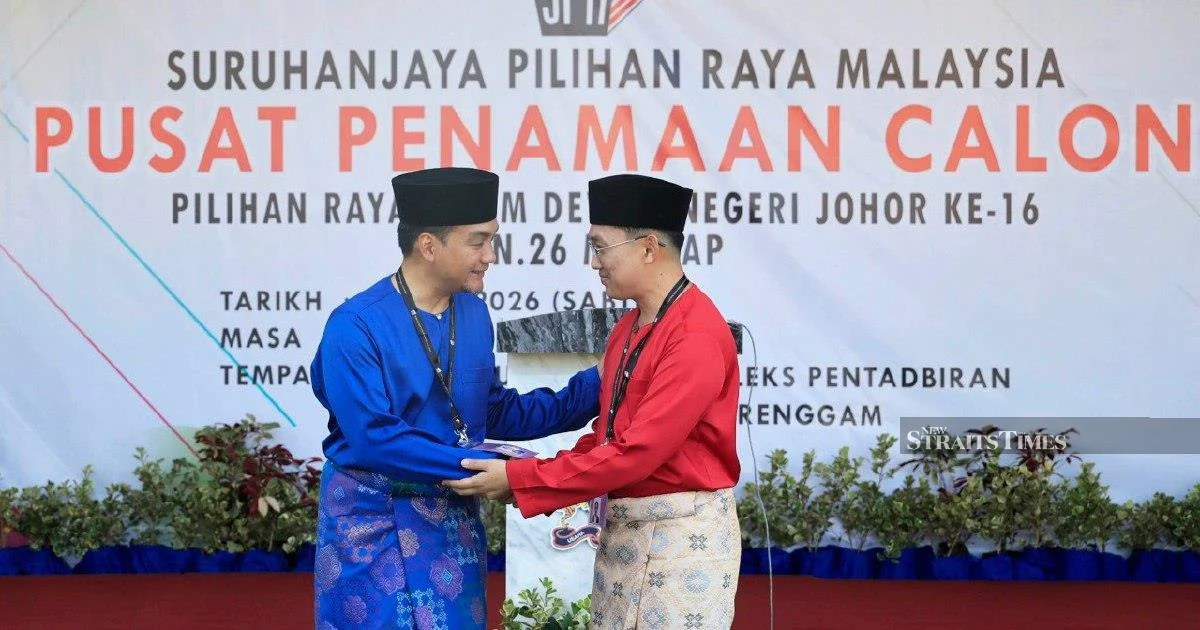
Caretaker Menteri Besar Datuk Onn Hafiz Ghazi is refusing to take the Machap contest for granted as he campaigns for a second term in Johor's July 11 election, expressing candour about the inherent unpredictability of electoral contests in the state.
Speaking from Simpang Renggam, Onn Hafiz struck a notably measured tone when discussing his prospects, emphasising that success in any electoral race cannot be assured. His measured approach stands in contrast to the confidence sometimes displayed by incumbents approaching re-election campaigns, signalling instead a recognition of the competitive dynamics at play in contemporary Malaysian politics.
The Johor state election represents a significant political moment for the state, with the menteri besar's own seat of Machap emerging as a focal point of attention. While Onn Hafiz carries the advantages of incumbency and the machinery of a sitting government, his public acknowledgement that outcomes remain genuinely uncertain reflects both the volatility of voter sentiment and the strengthening of opposition strategies across the peninsula.
For Malaysian voters and political observers, Onn Hafiz's comments underscore a fundamental shift in state-level politics: the era of predictable electoral outcomes has substantially diminished. Even in constituencies where ruling coalitions have traditionally held sway, demographic changes, grassroots mobilisation, and evolving political alliances have created genuine competitive environments that defy easy prediction.
The Machap constituency itself carries particular significance within Johor's political landscape. As the personal seat of the menteri besar, it serves as both a symbolic anchor for the ruling administration and a potential vulnerability should opposition momentum gain traction. The acknowledgement of uncertainty from Onn Hafiz suggests the campaign machinery recognises that winning even traditionally safe seats demands sustained effort and genuine engagement with voter concerns.
Johor's state election dynamics have shifted considerably in recent political cycles. The state has witnessed increasing electoral competition, with opposition parties strengthening their presence and voter sentiment becoming more volatile. This shift reflects broader national trends where Malaysians increasingly cast discriminating votes rather than automatically supporting ruling coalitions, particularly when bread-and-butter issues and governance effectiveness weigh heavily on their minds.
Onn Hafiz's tenure as menteri besar has seen various administrative initiatives and policy directions that have attracted both support and criticism. The fact that he must defend his seat rather than enjoy a coronation speaks to the changing nature of Malaysian electoral politics, where incumbency, while advantageous, no longer guarantees automatic return to power. His willingness to acknowledge this reality demonstrates political maturity and an understanding that complacency remains the primary threat to electoral performance.
The July 11 election itself carries implications beyond Johor's boundaries. Southeast Asia's largest economy, Malaysia continues to grapple with questions of governance, economic management, and social cohesion. State elections serve as vital barometers of public sentiment on these matters, influencing national political calculations and the positioning of coalition partners in federal politics. A strong Johor performance could strengthen the ruling coalition's hand in national politics, while unexpected reversals might signal broader currents of public discontent.
For Machap's voters, the election presents an opportunity to assess their menteri besar's performance and vision for the constituency's future development. Whether they prioritise continuity of administration or seek alternative leadership will depend on how well candidates and parties articulate solutions to local concerns—from infrastructure development to employment opportunities and cost-of-living pressures affecting household budgets.
Onn Hafiz's cautious framing also reflects practical political reality. In an election environment where voters increasingly demand responsiveness and performance-based accountability, no candidate can take electoral support as automatically secured. The traditional markers of political dominance—party machinery, historical voting patterns, and administrative resources—remain relevant but no longer determinative of outcomes.
The caretaker menteri besar's campaign strategy appears to centre on engaging directly with Machap's electorate rather than resting on procedural advantages. This approach acknowledges that winning constituencies in 2023 and beyond requires genuine dialogue with voters, demonstration of tangible achievements, and credible commitments to future development. His public statement essentially signals that his campaign recognises competitive necessity and will mobilise accordingly.
As polling day approaches, the contest in Machap will likely intensify. Opposition parties will seek to capitalise on any administrative shortcomings or unmet voter expectations, while the ruling coalition will emphasise stability, development records, and the risks of political disruption. Onn Hafiz's candidness about electoral unpredictability serves both as realistic assessment and implicit recognition that the days of predetermined outcomes in Malaysian state politics have definitively passed.

