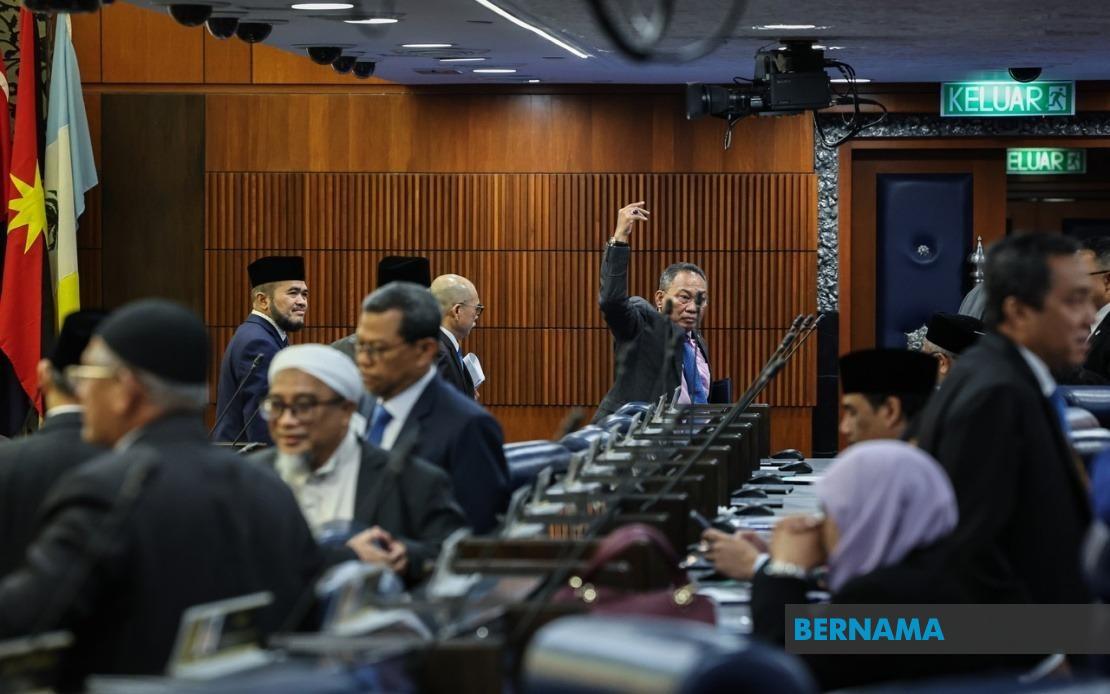
The opposition's walkout from parliamentary proceedings examining the Tabung Haji Royal Commission of Inquiry findings has drawn sharp criticism from political analysts, who argue the move represents a significant abdication of elected representatives' core responsibility to scrutinise government actions and protect public interest. Perikatan Nasional MPs, led by Opposition Leader Datuk Seri Hamzah Zainuddin, absented themselves during the ministerial briefing and subsequent debate on the institution's management failings, depriving the chamber of crucial opposition voices at a moment when robust parliamentary scrutiny was most needed.
The walkout was triggered by the absence of Prime Minister Datuk Seri Anwar Ibrahim and Deputy Prime Minister Datuk Seri Fadillah Yusof, both receiving medical treatment, though the briefing proceeded with Minister in the Prime Minister's Department (Religious Affairs) Dr Zulkifli Hasan presenting findings on governance and operational weaknesses spanning 2014 to 2020. For the 10 million Tabung Haji depositors whose savings and pilgrim funds had been subject to the scrutiny, the opposition's departure signalled a retreat from Parliament's fundamental duty to interrogate institutional malfeasance and demand governmental accountability.
Associate Professor Dr Mazlan Ali of Universiti Teknologi Malaysia argues that opposition lawmakers squandered a strategic parliamentary moment. Rather than using the chamber as a platform for direct questioning of the Minister in the Prime Minister's Department, opposition members chose confrontation over substance, he contends. The academic emphasises that parliamentary procedure permits robust challenge of ministerial explanations even in the absence of the Prime Minister, and that religious affairs administration falls squarely within Dr Zulkifli Hasan's portfolio authority. By walking out rather than engaging, the opposition forfeited the chance to establish a public record of their concerns and extract commitments on follow-up action affecting millions of ordinary Malaysians.
The practical implications extend beyond parliamentary tradition or political propriety. The RCI report documented serious governance lapses affecting a financial institution serving the Muslim community's most sacred obligation—the Hajj pilgrimage. The investigation identified systematic weaknesses in management and operations that required public examination, yet the opposition's absence meant depositors heard only government responses without organised, articulate alternative scrutiny. This represented a democratic deficit in an institution whose legitimacy depends partly on visible parliamentary oversight and challenge.
Dr Nazreena Mohammed Yasin of Universiti Tun Hussein Onn's Department of Social Sciences emphasises that the opposition's presence in the chamber constitutes an essential institutional mechanism for substantive check-and-balance oversight. Parliamentary debates provide the formal setting where elected representatives can interrogate findings, pose difficult questions, and demand explanations that carry the weight of official record and public testimony. Through structured parliamentary questioning, accountability becomes tangible and transparent—government officials must answer before both their parliamentary peers and observing citizens. The opposition's withdrawal eliminated this accountability mechanism precisely when it mattered most.
Critics note that the rationale for boycotting—the Prime Minister's medical absence—reflected political positioning rather than substantive concern for depositor protection. Dr Mazlan Ali observes that the religious minister carried full capacity to explain the RCI's scope and government responses, making the Prime Minister's physical presence immaterial to substantive parliamentary discourse. Furthermore, Datuk Seri Anwar Ibrahim's hospitalization merited respite rather than political exploitation, suggesting opposition calculations prioritised tactical advantage over institutional responsibility.
The Malaysian political context amplifies the seriousness of this dynamic. Parliament's effectiveness as a check on executive power depends fundamentally on opposition participation in debate, scrutiny, and questioning. When opposition parties boycott significant matters affecting public interest—particularly those with direct consequences for vulnerable constituencies like pilgrims and depositors—they risk appearing indifferent to citizen welfare and priorities. The Tabung Haji controversy touched millions of ordinary Malaysians' life savings and religious obligations, making parliamentary abdication particularly damaging to opposition credibility as custodians of public interest.
Dr Nazreena emphasises that MPs bear responsibility not merely for voicing criticism but for ensuring that questions receive substantive answers and that follow-up governmental action undergoes continued parliamentary examination. The RCI report triggered obligations for policy implementation, governance reform, and institutional restructuring—all requiring sustained legislative and executive coordination. Opposition participation would have established baseline commitments and created parliamentary anchors for subsequent monitoring and accountability. By absenting themselves, opposition MPs surrendered leverage and oversight capacity they might otherwise deploy to protect depositor interests throughout implementation phases.
The incident reflects broader tensions in Malaysian parliamentary practice regarding the balance between partisan positioning and institutional responsibility. Opposition parties operate in legitimately adversarial relationship with government, yet Parliament functions only when participants accept shared commitment to institutional purpose alongside competitive politics. The Tabung Haji debate represented a moment when institutional responsibility—protecting millions of citizens' financial and spiritual interests—should have transcended partisan calculation. The walkout suggests opposition leadership prioritised political theatre over substantive engagement.
Analysts warn that such boycotts establish dangerous precedent, particularly concerning major institutional scandals or governance failures. If opposition parties routinely abandon parliament at moments of public accountability, the institution's credibility as a forum for genuine oversight diminishes, and public confidence in representative democracy weakens correspondingly. Citizens observing legislative institutions fail to perform scrutiny functions naturally question the value of electoral participation and parliamentary representation itself.
Moving forward, the opposition faces reputational consequences that extend beyond parliamentary commentary. Depositors and their families may view the walkout as political opportunism sacrificing their interests on the altar of partisan advantage. This perception particularly damages opposition standing among middle-class and religious constituencies whose savings and pilgrim aspirations connected directly to Tabung Haji's performance. The institution's recovery and reform requires sustained public confidence and transparent governmental action—precisely the oversight functions that parliamentary scrutiny provides and that opposition absence undermined.
The Tabung Haji RCI debate ultimately illustrated fundamental principles about parliamentary democracy that transcend Malaysian context. Elected representatives possess authority only to the extent they exercise it responsibly, engaging substantively with public business and holding executives accountable. Strategic boycotts may offer short-term political advantage, but chronic institutional disengagement corrodes the legitimacy foundations upon which democratic opposition ultimately depends. For Malaysian depositors and for the broader health of parliamentary democracy, opposition participation in rigorous scrutiny would have served national interest far more effectively than principled withdrawal.

