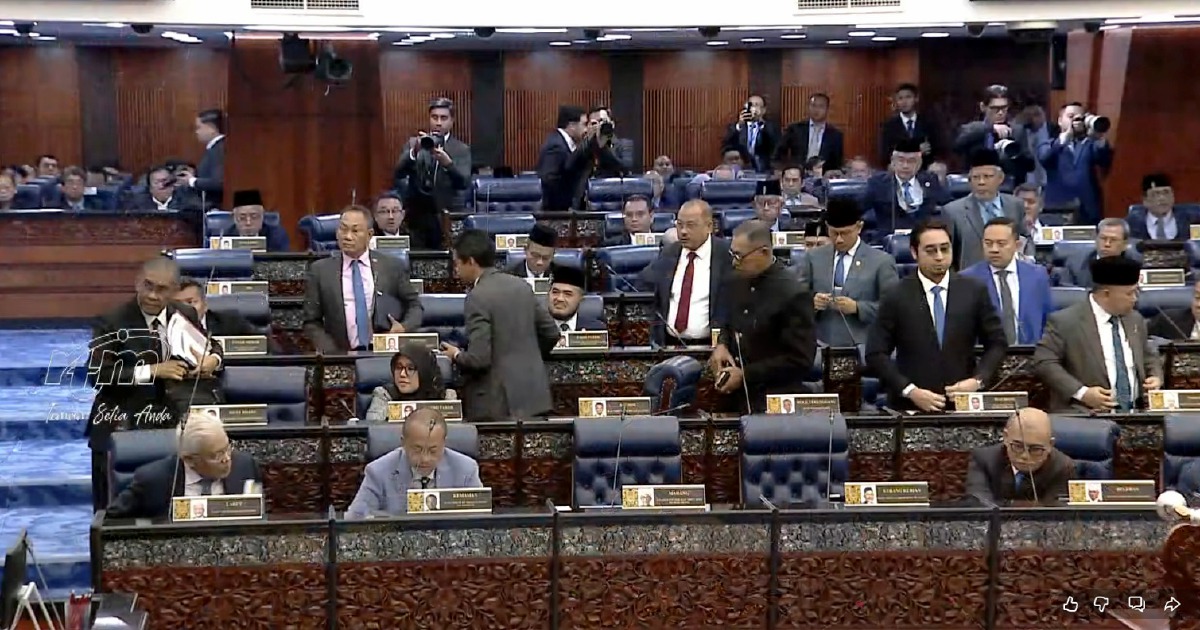
Opposition members of Parliament staged a coordinated departure from the Dewan Rakyat today in response to the Speaker's decision to proceed with the special sitting debate on the Royal Commission of Inquiry report concerning Tabung Haji, despite calls from the opposition benches to delay proceedings until Prime Minister Datuk Seri Anwar Ibrahim could be present in the chamber.
The walkout represents an escalation of tensions around the handling of the Tabung Haji RCI findings, a matter that has attracted considerable political attention given the pilgrimage fund's significance to Malaysia's Muslim community and questions surrounding its financial management. The opposition's insistence on Anwar's presence underscores the gravity they attach to the inquiry's conclusions and their desire to ensure accountability at the highest levels of government during what is likely to be a contentious parliamentary debate.
The parliamentary episode highlights broader procedural tensions between government and opposition factions within Malaysia's legislative chamber. The Speaker's ruling to reject the postponement request places the chair in a delicate position, balancing competing demands for proper parliamentary conduct and the opposition's legitimate concerns about meaningful debate. In Westminster-derived systems like Malaysia's, questions of quorum and ministerial presence carry significant weight in determining whether legislative proceedings possess sufficient authority and legitimacy.
Tabung Haji, formally known as Lembaga Tabung Haji, serves as a crucial financial institution for approximately 6.8 million Malaysian Muslims seeking to fulfil the pilgrimage obligation to Mecca. As such, governance questions affecting the fund carry implications far beyond routine fiscal management. The RCI's investigation into the fund's operations presumably examined matters of financial propriety, investment strategies, and administrative oversight—issues that resonate deeply with a substantial segment of Malaysia's population who depend on Tabung Haji for their hajj arrangements.
Previous concerns about Tabung Haji's financial health have periodically surfaced in Malaysian public discourse, with various stakeholders questioning investment decisions and fund performance. The royal commission's formal inquiry represents an official attempt to address accumulated concerns and establish a comprehensive, authoritative record of the institution's governance. The opposition's determination to ensure full ministerial engagement during parliamentary debate reflects their view that substantive scrutiny requires participation from senior government figures capable of providing explanations and defending policies.
The timing of the walkout also reflects broader political dynamics within the current Malaysian parliament. The opposition's willingness to employ procedural tactics such as walkouts demonstrates their commitment to press certain issues despite potentially limited practical leverage. While such tactics may not directly alter parliamentary outcomes, they serve important functions in signalling political opposition, mobilizing public attention, and establishing a legislative record of dissent for future political contests.
Prime Minister Anwar Ibrahim's absence from Parliament on this occasion remains unexplained in the immediate reporting, though Malaysian parliamentary practice regularly accommodates ministerial absences due to domestic and international commitments. Nevertheless, opposition lawmakers clearly viewed his presence as essential for a credible parliamentary examination of the RCI report. This position reflects a principle that matters affecting major national institutions warrant the attention and accountability of the highest executive leadership.
The Speaker's decision to proceed with the debate without granting a postponement suggests a prioritization of parliamentary schedule continuity and perhaps confidence that the available ministerial representation could adequately address parliamentary enquiries. However, this approach carries political risks, as opposition parties can leverage the episode to argue that the government avoided full accountability by permitting senior leadership to remain absent during crucial scrutiny of a sensitive national institution.
The Tabung Haji RCI report itself remains the central focus of this parliamentary drama. Whatever findings and recommendations the commission delivered will now be subjected to opposition questioning and likely, government defence, in a chamber marked by political tension. The opposition's walkout ensures that the parliamentary record will reflect their objection to the procedures governing this debate, potentially influencing how the RCI's conclusions are received and acted upon by different political constituencies.
Moving forward, the opposition's walkout may presage a broader pattern of contentious parliamentary engagement on the Tabung Haji matter. When parliamentary debate eventually occurs—with or without the Prime Minister—the quality of scrutiny and ministerial accountability will likely attract considerable public and media attention. For Malaysian Muslims invested in Tabung Haji's future, the parliamentary proceedings represent a critical opportunity to understand what the RCI discovered and what corrective measures the government intends to implement. The opposition's procedural stance, whatever its immediate parliamentary effectiveness, signals their determination to keep pressure on the government regarding this institution's governance and financial health.

