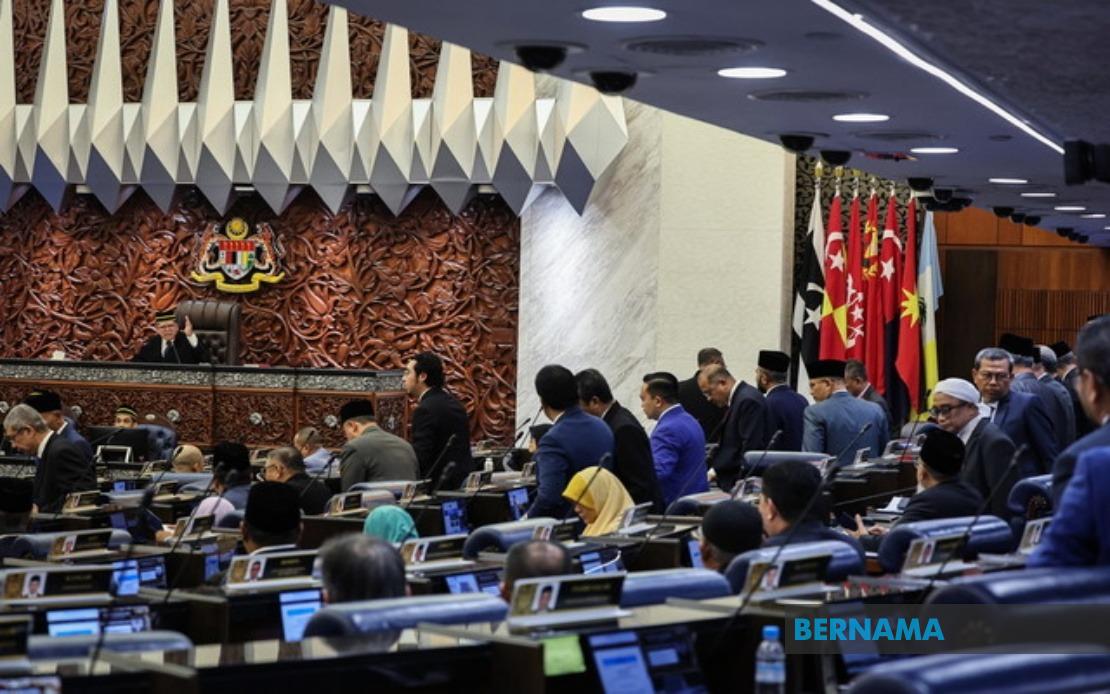
Opposition Members of Parliament staged a coordinated walkout from the Dewan Rakyat today, refusing to participate in a ministerial briefing session concerning the Royal Commission of Inquiry report into Lembaga Tabung Haji's management and operational practices. The boycott underscored deepening parliamentary tensions over how critical matters affecting Malaysia's Muslim pilgrimage fund should be addressed at the highest level of government.
The timing of the walkout proved particularly sensitive given that Prime Minister Datuk Seri Anwar Ibrahim and Deputy Prime Minister Datuk Seri Fadillah Yusof were both absent, citing ongoing medical treatment for undisclosed health matters. Opposition chief whip Datuk Seri Takiyuddin Hassan had formally proposed postponing the entire special sitting in light of these absences, arguing that matters of such national importance warranted participation from the country's top leadership rather than lower-ranking officials.
Dewan Rakyat Speaker Tan Sri Johari Abdul rejected calls for postponement and proceeded with the scheduled briefing, a decision that sparked immediate dissatisfaction among opposition benches. The Speaker's firmness reflected the government's determination to maintain parliamentary momentum on the Tabung Haji inquiry findings, even as opposition lawmakers interpreted the move as disrespectful to established parliamentary protocol and an underestimation of the report's significance.
The briefing session featured Minister in the Prime Minister's Department (Religious Affairs) Dr Zulkifli Hasan delivering details on the RCI findings to the assembled parliamentary members. However, the absence of opposition participation reduced the opportunity for meaningful scrutiny and questioning from lawmakers charged with holding the executive accountable. This dynamic reflects broader parliamentary practice where opposition engagement, regardless of political affiliation, strengthens legislative oversight functions.
Speaker Johari's handling of the dispute revealed the delicate balance parliamentary officials must navigate when managing competing interests. His comments acknowledging those who chose to leave whilst inviting others to remain reflected a pragmatic acceptance that not all MPs would view the matter identically. Yet his framing of the decision as essentially placing public perception at stake added a political dimension to what might have been presented as a purely procedural matter.
The Tabung Haji controversy carries particular weight in Malaysian politics given the institution's cultural and religious significance. As the national pilgrimage savings fund serving millions of Muslim Malaysians, governance lapses or operational failures directly impact ordinary citizens' ability to fulfil the hajj obligation. Public confidence in institutional management therefore transcends partisan politics, making transparent and comprehensive parliamentary examination essential regardless of which party occupies government benches.
Opposition MPs' walkout strategy carries political calculations on multiple levels. By boycotting proceedings, they avoided appearing to endorse what they characterized as inadequate parliamentary procedure whilst simultaneously creating a visual record of their protest for constituents and media coverage. Conversely, the move risked portraying opposition lawmakers as uninterested in scrutinizing an issue affecting pilgrims' welfare, particularly if their absence prevented substantive questioning of the RCI findings.
The absence of Anwar and Fadillah raised legitimate questions about crisis management priorities within the executive branch. Malaysian prime ministers typically make exceptions for matters deemed exceptionally urgent or sensitive, attending parliament despite medical conditions when necessary for national interest. The decision to proceed without them, whether justified by genuine medical necessity or other considerations, created space for opposition criticism about the government's commitment to transparency on the Tabung Haji matter.
Regionally, the incident reflects broader parliamentary dynamics across Southeast Asia where opposition-government relations often strain over procedural matters when underlying substantive disagreements exist. Malaysia's Westminster-derived system theoretically accommodates robust legislative scrutiny, yet practical implementation frequently encounters political tensions, particularly when governments enjoy substantial parliamentary majorities that reduce their dependence on opposition cooperation.
The Tabung Haji RCI itself represents acknowledgment of serious governance concerns requiring high-level investigation and remedy. How parliament subsequently addresses the report's recommendations will substantially influence confidence in the institution among the millions of Malaysians who contribute to the fund. The opposition walkout, whilst making a procedural point, potentially undermined their own ability to influence those outcomes during this specific parliamentary session.
Moving forward, the government faces pressure to schedule follow-up discussions that accommodate opposition participation under circumstances opposition leadership deems appropriate. Alternatively, the incident may prompt broader parliamentary reform discussions about handling matters of national religious and economic importance. Balancing executive prerogatives with legislative rights to scrutiny represents an enduring tension in Malaysian democracy that episodes like today's walkout bring repeatedly into sharp focus.

