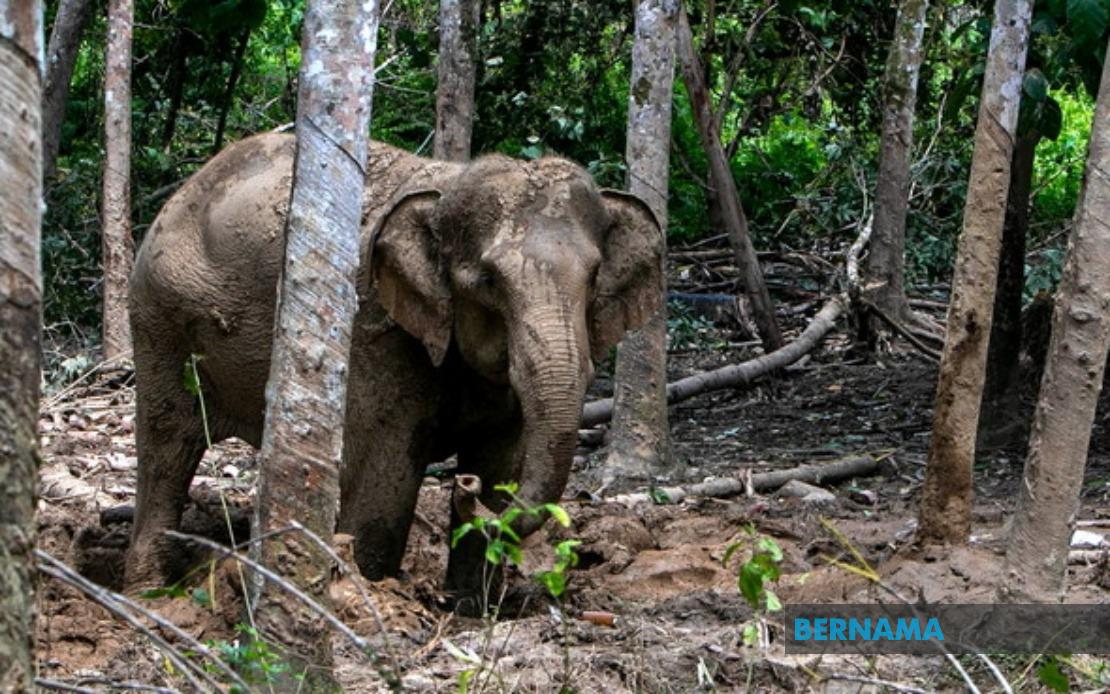
A resident of Kampung Orang Asli Perjek in the Legap Resettlement Scheme in Sungai Siput, Perak, is recovering from serious injuries sustained during a confrontation with an elephant last Friday evening. The incident, which occurred when the villager attempted to protect his community's crops from a foraging herd, highlights the escalating tensions between wildlife and indigenous communities in peninsular Malaysia's agricultural zones.
According to the Department of Wildlife and National Parks (PERHILITAN), officers from the Sungai Siput district office responded to an emergency call at approximately 10 pm after residents reported elephants had penetrated the settlement. Upon arrival, investigators established that four elephants had breached the perimeter of the village and begun consuming cassava and banana plants that form a critical part of the community's subsistence farming system. This pattern of crop raiding represents a growing challenge for remote communities whose livelihoods depend on vulnerable agricultural resources.
The injured villager, alongside several neighbours, made the decision to chase the animals away rather than allow their crops to be destroyed. During this intervention, he approached the herd too closely and triggered a defensive response from one of the elephants. The animal attacked him with considerable force, causing multiple injuries and internal bleeding that rendered him unconscious at the scene. The severity of his condition underscores the genuine physical threat that direct confrontation with these large animals poses, particularly to individuals without specialized training or protective equipment.
Neighbouring residents quickly mobilized to rescue the injured man, transporting him to Raja Permaisuri Bainun Hospital in Ipoh where medical staff have stabilized his condition. He currently remains under observation and treatment, though early reports suggest his injuries, while serious, are not believed to be life-threatening. The swift community response reflects the close-knit nature of these settlements and their capacity for mutual support during crises.
Drone surveillance deployed by PERHILITAN confirmed that the elephant herd had withdrawn from the village following the confrontation, reducing the immediate threat of further encounters. However, the department's follow-up assessment identified vulnerabilities in the settlement's defenses and implemented additional management protocols to minimize the likelihood of repeated incursions. These measures represent an acknowledgment by wildlife authorities that reactive responses alone are insufficient to address the underlying conflict between elephant migration patterns and human settlement in their traditional ranges.
The incident has prompted PERHILITAN to reinforce public messaging about the dangers of engaging directly with wild elephants without professional guidance. The department's advisory emphasizes that individual villagers, regardless of their motivation to protect property, lack the training, tools, and tactical awareness necessary to manage encounters with these intelligent and powerful animals safely. This guidance reflects international best practices in human-wildlife conflict mitigation, though it presents a genuine dilemma for subsistence farming communities facing potential crop destruction.
Recognizing the economic hardship that such incidents impose on vulnerable populations, authorities have committed to facilitating access to the Wildlife Attack Victim Assistance initiative, administered through the Ministry of Natural Resources and Environmental Sustainability. This financial safety net is intended to ease the burden on the injured villager's family during his recovery period and compensate for lost income resulting from his temporary inability to work. The availability of such support mechanisms, though valuable, underscores a broader systemic challenge: the costs of wildlife conservation are disproportionately borne by the poorest and most geographically isolated communities.
For Orang Asli settlements like Kampung Orang Asli Perjek, incidents of this nature represent more than isolated accidents. They reflect deeper questions about land use patterns, conservation priorities, and the rights of indigenous communities to both subsist safely and maintain their livelihoods. The Legap Resettlement Scheme, like many similar programs, was designed to consolidate scattered indigenous populations, yet such consolidation sometimes places communities in zones of active wildlife movement and interaction. This tension between development objectives and ecological realities creates recurring flashpoints.
The broader regional context is significant for Malaysian policymakers and conservation specialists. Elephant populations across Southeast Asia have stabilized or grown in some areas thanks to protected status and habitat preservation, yet this success has intensified encounters with human settlements at the margins of protected zones. Thailand, Borneo, and other parts of the region grapple with similar challenges. Malaysia's experience managing these conflicts through institutional responses like PERHILITAN's hotline (1-800-88-5151) and online complaint portal offers potential models for other nations, though improvements in early warning systems and habitat management remain essential.
Moving forward, sustainable solutions will likely require integrated approaches combining better barriers around settlements, improved early warning technologies, habitat enrichment programs that discourage elephants from seeking crops, and community-based monitoring systems. Investment in these preventive measures, rather than reliance on reactive emergency response, could reduce both the frequency of attacks and the psychological burden on communities living in elephant country. The Sungai Siput incident serves as a sobering reminder that as human and wildlife ranges continue to overlap, conventional approaches to coexistence will demand continuous refinement and adequate resource allocation.

