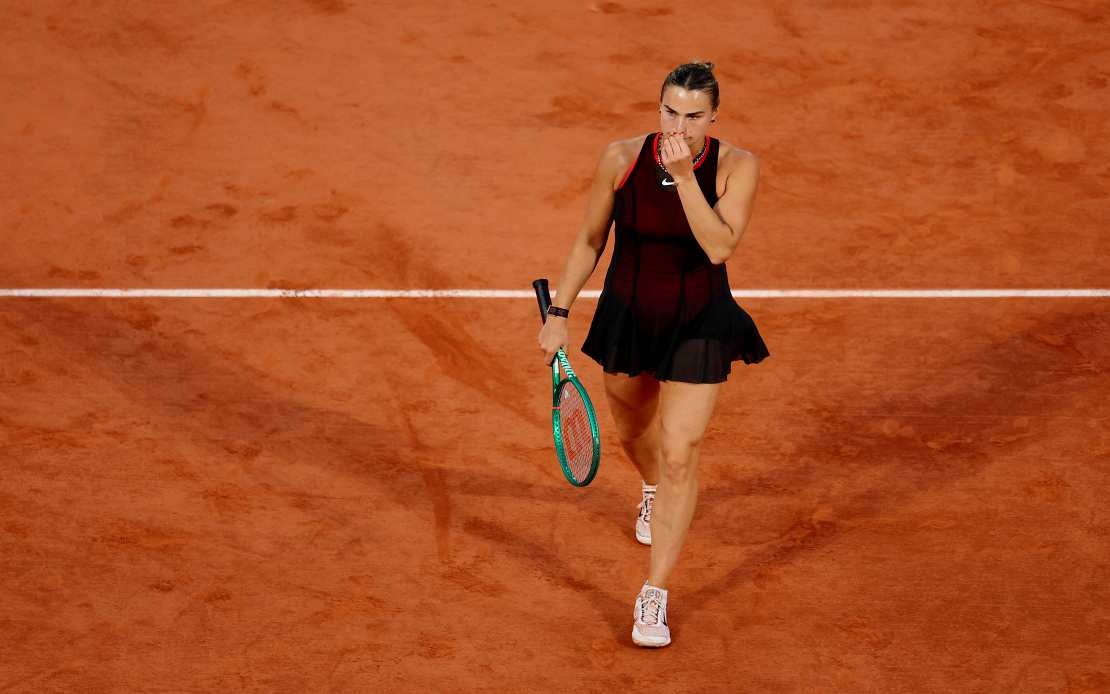
Japan's Naomi Osaka produced a commanding performance to eliminate top-seeded Aryna Sabalenka of Belarus 6-2, 7-6(2) at Wimbledon on Sunday, achieving a career milestone by reaching the quarterfinals of the All England Club. The 14th-seeded Japanese star delivered a masterclass in aggressive tennis against the world No. 1, culminating in a breakthrough moment for her on the grass courts of London. Her advance represented not only a personal triumph but also a significant milestone for Japanese tennis, as Osaka became the first Japanese woman to reach the last eight at Wimbledon since Ai Sugiyama accomplished the feat nearly two decades earlier in 2004.
Osaka's journey to the quarterfinals carries particular resonance given her recent struggles against Sabalenka. The world No. 1 had dominated their recent meetings, winning all three encounters in the lead-up to Wimbledon, including a fourth-round encounter at Roland Garros just weeks before the grass-court championship. That winning streak had weighed on Osaka's mindset entering the match, creating additional psychological burden that she needed to overcome. However, on the most hallowed ground in tennis, the Japanese champion rediscovered the form and mental fortitude that had previously earned her four Grand Slam titles, executing her gameplan with precision and converting crucial opportunities when they presented themselves.
The significance of this victory transcends the mere scoreline or tournament progression. For Osaka, it represents a symbolic turning point in her comeback narrative. The four-time Grand Slam champion has navigated considerable personal and professional challenges in recent years, including extended absences from competition and questions about her ability to perform consistently at the highest level. Her exuberance during the on-court interview reflected genuine emotion rather than mere tournament satisfaction. She expressed that competing at Wimbledon had reignited the pure joy associated with professional tennis, emphasizing how meaningful it felt to recapture that feeling in such a prestigious venue. This rediscovery of passion carries implications beyond Wimbledon, potentially signalling renewed confidence heading into the remainder of the season.
Osaka's breakthrough also holds broader significance for women's tennis development in Asia. Japan has produced numerous accomplished players, yet sustained success at major tournaments has remained elusive for Japanese women since Sugiyama's appearance at the 2004 Wimbledon quarterfinals. Osaka's achievement demonstrates that Japanese players can compete at the elite level and overcome formidable opponents on grass, traditionally regarded as a surface where Asian players have faced particular challenges. Her advancement may inspire younger Japanese players and validate ongoing investment in tennis development programmes across the region.
The manner of victory revealed important tactical dimensions of Osaka's game. Her aggressive baseline play overwhelmed Sabalenka in the opening set, where the Belarusian appeared unable to establish her usual rhythm. The second set presented greater resistance, with both players elevating their performance levels, yet Osaka maintained her composure during the tiebreak, converting pressure situations into winners when decisive moments arrived. This combination of sustained aggression and clutch performance under pressure demonstrates the mental and technical prerequisites necessary to defeat the world's top-ranked player.
Osaka's path to the semifinals now leads through Czech 10th seed Karolina Muchova, a talented counterpuncher whose game presents a markedly different challenge than the baseline power exhibited by Sabalenka. Muchova possesses excellent court movement and creative shot-making capabilities that could trouble Osaka if the Japanese champion loses her focus or becomes complacent following her impressive victory. The psychological momentum generated by defeating the top seed could either enhance Osaka's confidence or create unrealistic expectations that complicate her approach to subsequent matches.
Meanwhile, the Japanese men's singles campaign experienced premature termination when world No. 151 Shintaro Mochizuki fell to defending champion Jannik Sinner in the fourth round. The Italian top seed dominated comprehensively, winning 6-3, 7-6(0), 6-3 to advance his own title defence. Mochizuki's run as a qualifier represented an admirable achievement given his ranking, yet proved insufficient against one of tennis's most formidable current practitioners. Sinner's clinical performance underscored the gulf between elite players and those competing at Mochizuki's level.
The contrasting fortunes of Japan's representatives highlight the unpredictability of tennis tournaments and the multiple variables determining success at Grand Slam level. While Mochizuki's tournament concluded, Osaka's advancement maintained Japanese representation in the latter stages and generated considerable national interest in her quarterfinal appointment. Her success potentially attracts greater domestic attention to tennis and validates the sport's profile within Japanese popular culture and sporting consciousness.
Looking forward, Osaka's resurgence at Wimbledon carries implications for the remainder of the summer season and beyond. Should she continue performing at this elevated level, particularly against elite opponents, questions about her competitive standing may transition from speculation to confirmation that she remains capable of winning major championships. The grass-court success suggests she possesses the technical and mental foundations necessary to challenge consistently at the highest level, though sustained performance across multiple tournaments and surfaces remains the true measure of genuine comeback achievement.

