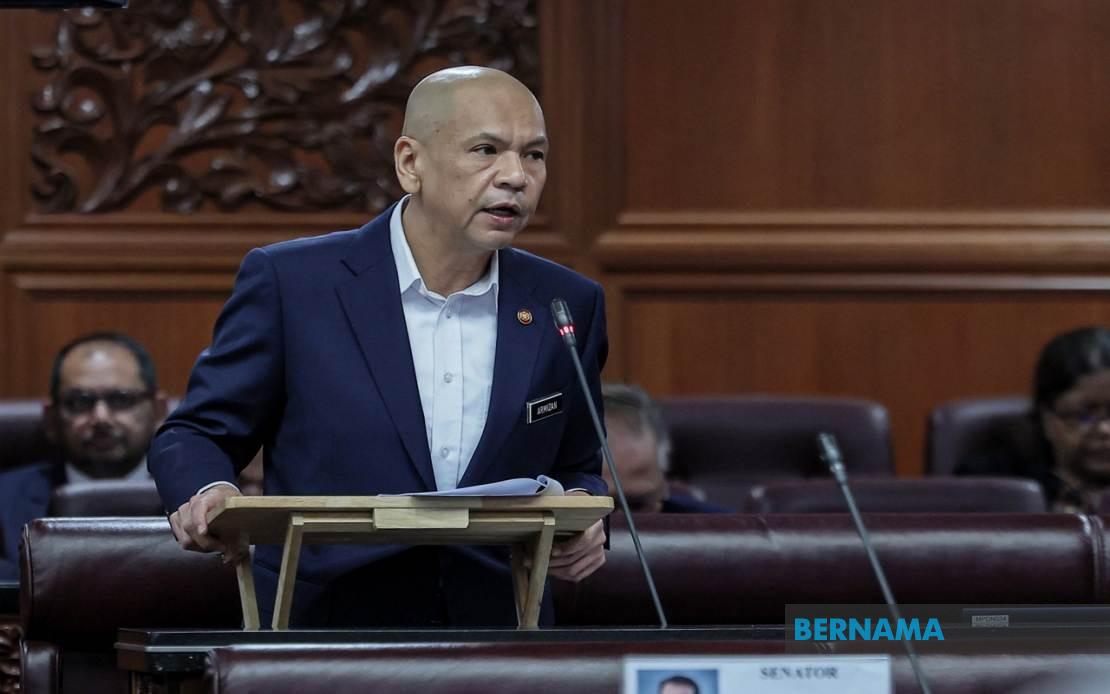
The Ministry of Domestic Trade and Cost of Living announced substantial progress in rolling out its flagship Rahmah MADANI Sales Programme during the first half of 2024, with Datuk Armizan Mohd Ali confirming that 15,881 sales events were executed nationwide between January and June. This achievement demonstrates the government's accelerated effort to embed consumer assistance into the regular fiscal calendar as a permanent intervention mechanism rather than a temporary relief measure.
Complete geographical coverage represents a critical milestone in the programme's evolution. All 600 state constituencies have now hosted at least one sales event, whilst every Federal Territory zone in Putrajaya, Kuala Lumpur, and Labuan has participated in the initiative. This universal reach is particularly significant for a geographically dispersed country like Malaysia, where ensuring equitable access to subsidised goods across urban, semi-urban, and remote communities presents considerable logistical complexity. The inclusive approach reflects the government's commitment to preventing any demographic group from falling through administrative gaps.
Yearly growth trajectories reveal the programme's expanding momentum. The 15,881 sessions held in the first six months of 2024 already surpass the 12,419 total recorded throughout 2024, indicating accelerated deployment during the latter half of the year. When examined against 2023's baseline of 6,870 events, the upward trend becomes even more pronounced, suggesting a near-doubling of implementation capacity within twelve months. This exponential growth reflects both improved coordination mechanisms and strengthened resource allocation.
Annual targets have been significantly recalibrated to reflect intensified demand. The government initially projected 23,040 sales sessions for 2024 but subsequently raised this ceiling to 30,000 following a May announcement by Prime Minister Datuk Seri Anwar Ibrahim. This adjustment represents a strategic response to the energy and supply crisis precipitated by regional tensions in West Asia, positioning the sales programme as a countercyclical fiscal tool designed to shield consumers from commodity price volatility. The higher ceiling acknowledges that consumer assistance requires sustained intervention beyond conventional quarterly relief packages.
Structural reforms have fundamentally transformed the programme from ad hoc bargain events into an institutionalised economic instrument. The first strategic pillar involves permanent budget allocation through a dedicated activity code, eliminating the uncertainty that previously characterised temporary relief measures. Unlike previous iterations that depended on discretionary funding, this budgetary integration guarantees consistent resource availability and permits multi-year planning. Malaysian retailers and consumers can now anticipate reliable intervention points throughout the fiscal year.
Predictable scheduling has replaced the improvisation characteristic of earlier initiatives. The second approach establishes annual targets and deployment calendars for each of the 600 constituencies and 40 zones, ensuring systematic coverage rather than haphazard event distribution. This structured methodology allows local authorities, retail partners, and participating communities to prepare logistical arrangements well in advance. For Malaysian households, particularly those in lower-income brackets, advance notification enables budgeting decisions and meal-planning optimisation around predictable price reduction windows.
Private-sector mobilisation has emerged as a cornerstone mechanism for expanding programme reach. The government has secured 2,695 strategic retail partners as of late June, encompassing major retailers, small businesses, and cooperative entities. This network amplification dramatically increases the physical locations where subsidised goods are available, reducing consumer travel burdens whilst distributing logistics costs across multiple commercial operators. The partnerships represent a pragmatic public-private collaboration model that minimises direct government operational load whilst maximising consumer accessibility.
Delivery innovation encompasses diverse formats tailored to varying demographic needs and seasonal purchasing patterns. In-store sales events hosted within established supermarkets attract urbanised shoppers accustomed to conventional retail environments, whilst open-air markets reach traditional consumers and rural populations. Mobile sales units extend programme benefits to geographically remote settlements and areas with limited commercial infrastructure. Seasonal thematic variations aligned with festive occasions, payroll cycles, and educational calendars reflect sophisticated demand-side analysis, ensuring sales events coincide with periods of heightened purchasing power and consumer necessity.
Public information accessibility has been substantially enhanced through the introduction of a dedicated Rahmah MADANI calendar system commencing in 2025. This transparency mechanism enables citizens to identify upcoming sales events in their local constituencies and zones, facilitating advance planning and optimal shopping decisions. Previously, informal communication channels and word-of-mouth had limited reach, particularly among elderly populations and those with reduced digital literacy. Centralised scheduling information democratises access to programme benefits and removes information asymmetries that historically disadvantaged marginalised communities.
The programme's expansion reflects broader governmental recognition that cost-of-living pressures demand structural responses beyond conventional monetary policy. Regional supply chain disruptions, commodity price volatility, and inflationary pressures necessitate targeted consumer assistance mechanisms that operate beneath systemic wage adjustment frameworks. The Rahmah MADANI approach acknowledges that purchasing-power erosion affects household welfare immediately, requiring rapid intervention deployment that circumvents the lag times inherent in broader macroeconomic adjustments.
For Southeast Asian observers, Malaysia's institutionalisation of periodic consumer subsidisation offers instructive precedent. As regional economies grapple with inflationary environments and consumer purchasing-power erosion, structured sales programmes represent accessible policy alternatives to welfare expansion or wage indexation. The Malaysian model demonstrates that sustained intervention requires dedicated budgeting, private-sector engagement, and sophisticated scheduling mechanisms that align with seasonal consumer demand patterns. The programme's success metrics extend beyond immediate sales volumes to encompass public confidence restoration and distributive equity across geographical regions.

