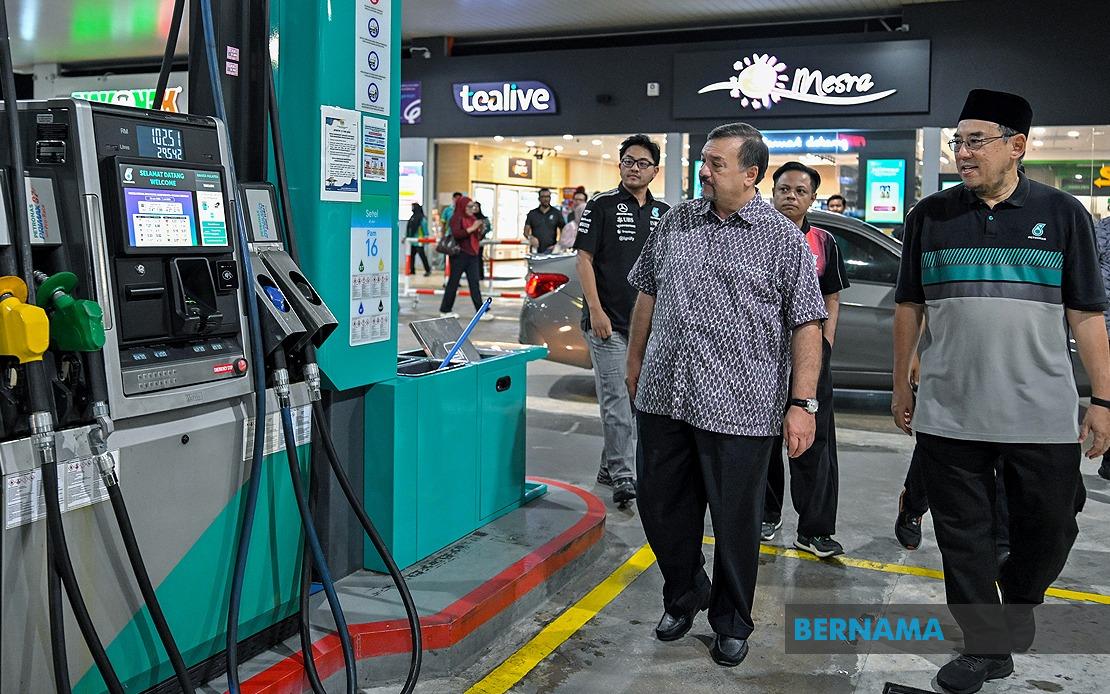
The rollout of Malaysia's BUDI Madani Diesel programme is gathering momentum, with the official portal registering more than 18,000 applications for an additional 100 litres of subsidised diesel per month by the evening of June 28. Second Finance Minister Datuk Seri Amir Hamzah Azizan announced the figures while visiting a Petronas station on the NKVE Damansara route, underscoring the government's confidence in the initiative's smooth operation during its critical early phase.
In its opening days, the programme has processed over 40,000 transactions involving users taking advantage of the subsidised diesel offering, a volume that suggests substantial demand among eligible owners of diesel-powered pickup trucks and SUVs. The uptake reflects both the financial incentive embedded in the scheme and the apparent absence of technical barriers at the point of fuel purchase. Amir Hamzah's inspection, conducted alongside Treasury secretary-general Tan Sri Johan Mahmood Merican, signals high-level government attention to the implementation, even as the system appears to be functioning without reported glitches.
The BUDI Madani Diesel initiative offers registered vehicle owners a flexible quota structure, permitting consumption of up to 200 litres of subsidised fuel monthly under a tiered pricing model. From the outset, users have accessed diesel at RM2.15 per litre, a subsidised rate that remains substantially below market prices and represents a tangible saving for commercial operators and rural users dependent on diesel vehicles. Beginning Wednesday, June 30, the programme adjusts the subsidy downward slightly, reducing the price to RM2.10 per litre—a modification that still preserves the underlying cost advantage while potentially improving the scheme's fiscal sustainability.
The government has structured the application process to be accessible across multiple channels, recognizing that digital literacy and internet access vary across Malaysia's diverse population. Eligible applicants can submit requests through the official BUDI MADANI portal online, or seek assistance from officers stationed at Inland Revenue Board offices and Urban Transformation Centres nationwide. Major oil companies have also positioned service counters to provide guidance, a distributed support model designed to reduce bottlenecks and ensure that geographic location does not become a barrier to participation.
A particular innovation within the programme addresses a common practical challenge: the distinction between a vehicle's registered owner and its actual daily user. The government has introduced a quota transfer facility permitting applications through the same digital portal, enabling registered owners to nominate another individual as the beneficiary of subsidised fuel allocations. Once approval is granted, the system links the quota to the user's identity card number rather than solely to the vehicle registration, allowing verification at petrol station pumps to proceed smoothly through identity confirmation. This design demonstrates administrative sophistication and reflects lessons learned from previous subsidy schemes where ownership mismatches created compliance complications.
The mechanics of quota transfers safeguard the scheme's integrity while preserving flexibility. When a transfer receives approval, the designated quota amount remains tied to the vehicle itself but becomes usable exclusively by the individual whose identity card has been registered in the system. At the point of purchase, petrol station operators can verify through their connected systems whether a quota has been transferred, and if so, to whom. This prevents the quota from being monetized or diverted to unauthorized users, a concern that undermined earlier fuel subsidy initiatives in the region.
Amir Hamzah's statement that no technical issues have surfaced among system operators or at petrol stations reflects careful pre-launch preparation and suggests that backend infrastructure integration between the BUDI MADANI portal, participating fuel retailers, and banking systems has achieved the necessary interoperability. The absence of reported failures in the early implementation window is significant given the scale of transactions and the number of points where system breakdowns could occur. However, this initial period typically represents peak government attention and resource allocation; sustained performance depends on whether the system continues to function reliably as transaction volumes normalize and administrative focus potentially shifts elsewhere.
For Malaysian businesses reliant on diesel vehicles—particularly in agriculture, transport, and construction sectors where fuel represents a material operating cost—the programme offers measurable relief. A small business owner with a diesel pickup truck can now anticipate monthly fuel expenditure savings of approximately RM8 to RM10 across the subsidised quota, which compounds significantly over a year. For fleet operators managing multiple vehicles, the collective savings could influence business margins in competitive sectors, particularly in rural areas where diesel dependence remains high and alternative energy sources remain unavailable or economically impractical.
The full launch of BUDI Diesel is scheduled for July 1, marking the transition from controlled early implementation to national rollout. The government's emphasis on ensuring smooth operations ahead of this date reflects awareness that programme failures or service interruptions during the full launch could erode public confidence and generate complaints that consume political capital. The extended implementation window in Peninsular Malaysia since June 27 provides a buffer period to identify and resolve unforeseen issues, calibrate system capacity, and train personnel before peak demand arrives.
From a regional perspective, Malaysia's BUDI Madani Diesel programme joins similar fuel subsidy initiatives across Southeast Asia as governments attempt to balance inflation mitigation against fiscal constraints. Unlike blanket subsidies that benefit all consumers equally, the targeted approach focusing on diesel vehicle owners reflects policy evolution toward means-testing and demand-side management. The quota structure—limiting subsidised consumption to 200 litres monthly—prevents unlimited subsidy exposure while still providing meaningful relief to working vehicle owners. This design contrasts with earlier Malaysian subsidy regimes that lacked consumption ceilings, contributing to fiscal pressure and unintended beneficiary distribution.
Looking forward, the programme's success hinges on sustained technical performance, prevention of fraud and unauthorized quota transfers, and maintenance of public awareness about application procedures and quota limits. The government's distributed support network across LHDN offices, UTCs, and oil company counters will face sustained demand, particularly in the weeks following July 1 launch. Monitoring compliance and preventing quo abuse—such as individuals applying for multiple quotas or falsifying transfer documentation—requires ongoing vigilance and coordination among tax authorities, petrol station operators, and enforcement bodies.
The reception of over 18,000 applications within 36 hours demonstrates clear demand for the BUDI Diesel programme among eligible vehicle owners, validating the government's assessment that targeted fuel subsidies can meaningfully assist working Malaysians without creating the fiscal distortions associated with universal fuel price caps. As the initiative scales nationally, operational resilience and administrative integrity will determine whether it achieves both its immediate goal of cost relief and its broader objective of demonstrating that carefully designed subsidies can function effectively within modern governance frameworks.

