Singapore's inaugural SG Partnerships Fund has mobilised remarkable grassroots enthusiasm, attracting over 200 applications since its April 2026 launch. The S$50 million initiative, announced by Prime Minister Lawrence Wong during his February Budget speech, represents a significant commitment to channelling government resources through citizen-led enterprises and non-profit ventures. Speaking at the Singapore Government Partnerships Office's community exchange event on July 4 at the Common Ground Civic Centre in Bedok North, Senior Minister of State for Culture, Community and Youth Low Yen Ling underscored how the fund's multi-tiered structure creates accessible pathways for Singaporeans to transform community ideas into tangible reality.
The fund's architecture reflects thoughtful design principles that accommodate initiatives at vastly different stages of development and ambition. The seed tier, offering grants up to S$5,000, targets individuals, grassroots organisations, and newly registered entities piloting novel concepts within their immediate communities. This modest but catalytic funding level has proven unexpectedly popular with applicants, according to SGPO director Hasliza Ahmad. The appeal lies fundamentally in its accessibility and philosophy: rather than requiring ambitious, fully-formed proposals demanding substantial investment, the seed tier encourages citizens to "step up" and "start small," democratising the funding landscape for community builders who might otherwise lack capital to test their ideas.
The sprout tier serves the next rung of the development ladder, providing up to S$50,000 for established organisations seeking to deepen their sectoral impact beyond initial pilots. This middle ground addresses a critical funding gap, allowing organisations that have proven viability to scale operations and reach without the rigorous requirements accompanying major grants. The newest addition, the scale tier launched in July 2026, targets mature organisations with demonstrated track records pursuing sector-wide transformation. These applications can access grants reaching S$1 million, positioning them to drive systemic change rather than localised initiatives. This stratified approach reflects sophisticated understanding of how social innovation develops: from experimentation to proven models to systemic influence.
Beyond financial grants, the SGPO has positioned itself as a connective tissue linking applicants to expertise, networks, and institutional knowledge essential for success. Recipients benefit from mentorship, guidance on fund utilisation, and strategic connections with relevant social service agencies and other funding sources. This holistic support architecture acknowledges that capital alone proves insufficient; emerging initiatives require navigation support, peer learning, and access to professional networks that accelerate development and enhance impact. The fund thus functions less as a transactional disbursement mechanism and more as an enabling ecosystem for community entrepreneurship.
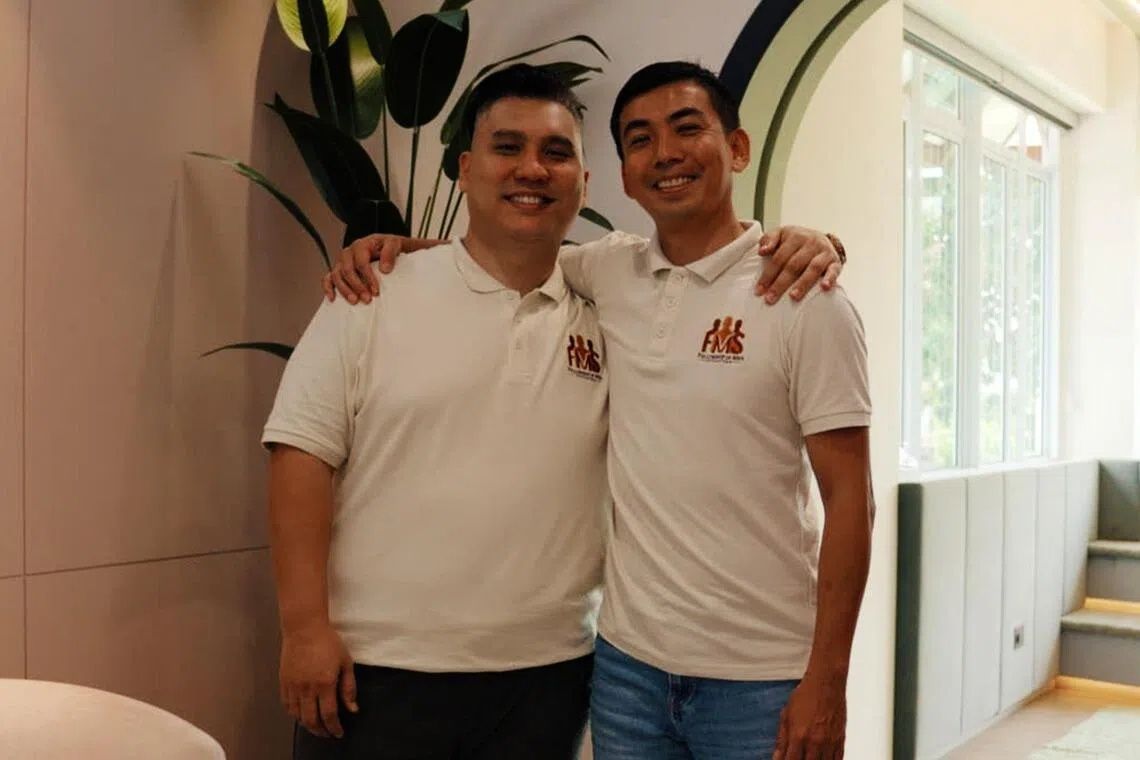
The Fellows for Movement Singapore initiative exemplifies how modest seed funding catalyses meaningful community work. Co-founded by Ben Ang, 45, and Ismail Didih Ibrahim, 41, the non-profit emerged from five years of grassroots engagement at a family service centre. Recognising that crisis intervention follows rather than prevents harm, the pair pivoted toward prevention-focused work addressing male mental health and help-seeking behaviours. Rather than continuing conventional service delivery, they resigned from stable employment in January 2026 to pursue this vision, demonstrating the depth of commitment among Singapore's emerging social entrepreneurs. Their programmes blend community engagement, structured mentoring, and guided group work using relatable, hands-on activities—specifically designed as accessible entry points for men uncomfortable pursuing formal therapeutic intervention.
The S$5,000 seed grant enabled Fellows for Movement to conduct a substantive engagement session involving 24 men and their families at a professional culinary school kitchen in Geylang. This venue upgrade—from Ang's home kitchen to properly equipped facilities—fundamentally transformed the programme's quality and accessibility. The three-hour session combined practical cooking activity with facilitated conversations exploring self-care, masculinity, relationship dynamics, and the normalisation of help-seeking. This innovative pedagogical approach addresses a critical gap in Singapore's mental health landscape: men consistently underutilise professional services, partly owing to stigma and discomfort with clinical settings. By embedding emotional support within relatable, skill-building activities, Fellows for Movement creates psychological safety for conversations that might otherwise remain unvoiced. Ang's vision extends beyond immediate beneficiaries toward broader cultural transformation—reframing masculinity beyond provider and protector roles to encompass emotional capacity and vulnerability.
Little Wishes represents another compelling exemplar of seed-tier impact, particularly regarding youth-driven social innovation. Loke Wai Yee, a 21-year-old LASALLE College of the Arts student, identified a structural inequity within Singapore's seasonal "angel tree" giving initiative. Despite widespread awareness during Christmas seasons, the physical trees appeared only in limited mall locations, effectively restricting access for both donors with limited budgets and younger prospective givers. Recognising this gatekeeping problem, Loke mobilised 12 peers to create an online platform democratising gift-giving to disadvantaged children. Rather than perpetuating resource scarcity through geographic and economic limitations, Little Wishes shifts the paradigm by enabling micro-donations across diverse price points, curated thematically to align with donor budgets and beneficiary needs.
The seed grant's material impact on Little Wishes extended beyond financial capacity to capability development. Professional website design, previously unaffordable for a youth-driven passion project, became achievable with grant funding. The August launch date reflects realistic timeline management enabled by outsourcing technical development rather than attempting amateur implementation. Loke's candid reflection—acknowledging that internal website development would have proven technically compromised—reveals how strategic funding allocation elevates project quality. The platform is positioned to serve 80 beneficiary children during initial implementation, with SGPO support extending beyond finance to include agency connections, guidance on accessing complementary funding sources, and sustained mentorship. Loke's characterisation of SGPO as "journeying with us" captures the philosophical distinction between transactional funding and transformative partnership.
For Malaysian observers, the SG Partnerships Fund model presents instructive parallels and contrasts worth examining. Singapore's systemic approach—combining tiered funding accessibility with integrated mentorship, network connections, and guidance—demonstrates how government can operationalise commitments to citizen engagement beyond rhetorical endorsement. The fund's popularity among applicants suggests genuine market demand for community-led social solutions and latent entrepreneurial energy awaiting catalytic support. Yet the programme's success also reflects Singapore's distinctive institutional context: sophisticated bureaucratic capacity for managing complex funding mechanisms, relatively high baseline social trust in government processes, and concentrated wealth enabling substantial fund allocation. For Malaysia, adapted approaches might emphasise building grassroots monitoring mechanisms and ensuring fund accessibility extends meaningfully beyond urban centres.
The broader significance transcends funding mechanics toward what these initiatives reveal about contemporary civic participation. Both Fellows for Movement and Little Wishes emerged from recognised community needs rather than government directive—demonstrating organic understanding of unmet social demands. This bottom-up insight generation, when systematically resourced, potentially generates more responsive, contextually appropriate solutions than top-down programme design. The fund's messaging emphasising "starting small" and iterative development acknowledges that systemic social challenges rarely yield to single, comprehensive interventions. Instead, widespread experimentation across diverse approaches, with learning capture and potential scaling of successful models, creates adaptive capacity within social systems.
As the fund processes its current applications and the scale tier gains traction following July's launch, ongoing evaluation will illuminate whether tiered funding structures genuinely democratise access or reproduce existing inequities through complexity and information asymmetries. The enthusiastic initial response—200 applications—suggests strong resonance with Singapore's community-oriented citizens. Sustained success, however, requires that support infrastructure reaches applicants lacking privileged access to institutional networks and that outcomes demonstrate genuine community benefit beyond funding distribution. The experiences of Ang, Didih, and Loke illustrate the transformative potential when modest catalytic investment meets committed community agents. Replicating this success at scale demands continued institutional innovation alongside financial commitment.

