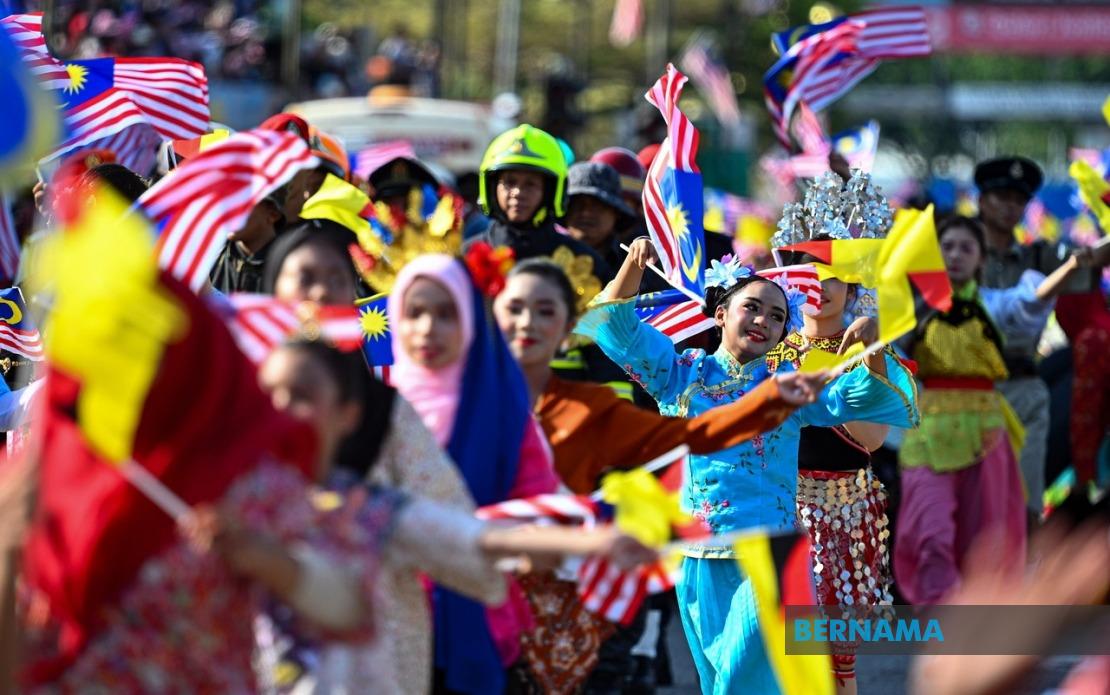
A significant outpouring of public enthusiasm marked Negeri Sembilan's National Day celebration in Seremban on Sunday, with more than 30,000 visitors descending on Dataran Majlis Bandaraya Seremban to participate in the festivities. The gathering, which drew people from all segments of the community regardless of race or background, underscored the enduring appeal of Malaysia's most important national commemoration and the capacity of such occasions to unite diverse populations around shared civic values.
Menteri Besar Datuk Ismail Lasim attributed the impressive attendance to the genuine enthusiasm residents felt about marking the occasion together. He recounted conversations with attendees who had made the effort to arrive before dawn, some as early as 5.30 am, demonstrating what he characterised as a deep love for country and appreciation for the cultural programme staged throughout the morning. The decision to arrive hours before proceedings commenced spoke to the intentionality with which families and community members approached the event, viewing it not as a casual public gathering but as a meaningful civic ritual worthy of early sacrifice and sustained presence.
The dignitaries overseeing proceedings reflected the event's significance within the state's political calendar. The Yang Dipertuan Besar of Negeri Sembilan, Tuanku Muhriz Tuanku Munawir, and Tunku Ampuan Besar Tuanku Aishah Rohani Tengku Besar Mahmud, arrived at approximately 8.20 am and were formally welcomed by Ismail, establishing the official tone and ceremonial weight of the occasion. Their presence signalled institutional endorsement of the celebration and provided a focal point around which the assembled masses could orient their patriotic expressions.
The parade itself demonstrated substantial logistical coordination, mobilising 82 separate contingents encompassing more than 4,000 active participants. The contingents represented a cross-section of institutional Malaysia, spanning government ministries and departments, state-backed agencies, local government structures, community organisations, educational establishments from secondary through tertiary levels, and commercial entities. This breadth of representation ensured that National Day observance functioned not merely as a government-sponsored event but as a collective expression of national identity drawing support and participation from all major pillars of society.
The ceremonial core of the parade reflected military tradition and institutional formality. The Main Guard of Honour comprised officers and personnel from the 15th Battalion Royal Malay Regiment (RAMD) stationed in Senawang, numbering 106 in total and led by Major Dr Muhammad Hazim Abdul Qhalib. The unit's ceremonial roles were distributed among specialised officers including the Colours officer and Regimental Sergeant Major, while an accompanying military band comprising musicians from the 24th Battalion RAMD and the Malaysian Army Basic Training Centre Brass Band provided musical accompaniment, performing traditional military repertoire including Sembah Tari, Aladom, Seruan Tentera and Tentera Benteng.
Beyond the formal military component, the parade featured a broader representation of national security and defence apparatus, adding visual spectacle and public education value to proceedings. Participants included uniformed contingents from the Royal Malaysia Police, Immigration Department, Fire and Rescue Department of Malaysia, Health Ministry, Malaysian Civil Defence Force, and the Seremban City Council. Additionally, the parade showcased an array of vehicles spanning both contemporary defence and security equipment and vintage or classic automobiles including antique bicycles, creating visual interest and drawing sustained spectator attention throughout the event's duration.
Menteri Besar Ismail acknowledged that organisers had deliberately scaled back parade contingent numbers and supporting assets compared to previous years, motivated by concerns about exposing the attending public to prolonged exposure amid unfavourable atmospheric conditions associated with regional haze. Despite the smaller complement of participants, the overall scale and quality of the celebration remained substantial, indicating that event planners had achieved balance between public safety considerations and maintaining the ceremonial gravitas and entertainment value necessary to sustain public engagement and enthusiasm.
Family attendance constituted a significant component of the day's attendance profile, reflecting the way National Day observance functions across Malaysian society as a intergenerational ritual invested with educational and cultural meaning. Siti Ruayiza Rebin, a 42-year-old housewife, exemplified this pattern, explaining that she had made it a practice throughout her children's lives to bring them to National Day celebrations, deliberately cultivating their understanding of independence and their appreciation for historical sacrifice. She extended this commitment to school-based independence activities, viewing the domestic sphere and formal educational settings as complementary venues for transmitting values of national awareness and historical consciousness to younger generations.
Other family participants articulated similar motivations grounded in the educational and developmental functions they attributed to National Day observance. Mohd Khairul Azmi, a private-sector employee aged 45, brought his two young children, both of whom demonstrated excitement at witnessing parade elements rarely available to public view, specifically the vintage vehicles and military assets. His family had arrived by 6 am to secure optimal viewing positions, prioritising access to close observation of the procession. Khairul emphasised that such celebrations furnished valuable opportunities for children to engage with history, develop understanding of contributions made by preceding generations, and internalise the significance of national independence as an achievement requiring recognition and gratitude.
These personal narratives illustrated how National Day celebrations function within family dynamics as occasions for deliberate cultural transmission and values education. Rather than constituting mere public spectacle or obligatory state ritual, such events served in these accounts as meaningful opportunities for parents to instil in children an appreciation for national history and an understanding of the collective sacrifice underpinning contemporary independence. The sustained commitment to attendance despite early morning arrivals and extended periods in public spaces suggested that families perceived genuine value in this intergenerational engagement, viewing it as contributing substantively to their children's development of civic consciousness and national identity.
The Negeri Sembilan celebration thus demonstrated the continued resonance of National Day observance across Malaysian society despite the passage of nearly seven decades since independence. The gathering brought together governmental institutions, security forces, civil society organisations, educational establishments, commercial entities, and diverse family groups in shared commemoration. For many participants, particularly families with children, the occasion functioned not simply as patriotic expression but as an active site of cultural reproduction where understanding of national history and appreciation of historical sacrifice were deliberately cultivated and transmitted across generations, ensuring that the meaning and significance of independence remained alive and relevant within contemporary Malaysian consciousness.

