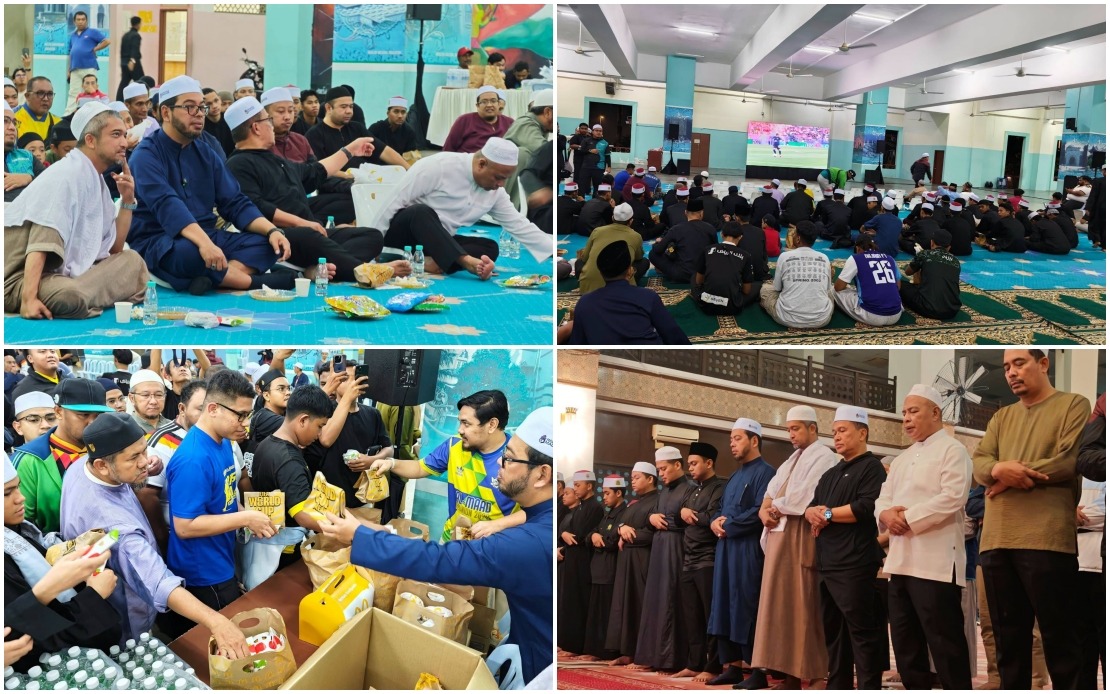
A mosque in Wangsa Maju hosted an unusual gathering when more than 300 predominantly young worshippers arrived at Masjid Usamah bin Zaid before dawn to participate in Qiyamullail, the voluntary night prayers observed during Ramadan, followed by a live screening of the 2026 World Cup Group E encounter between Germany and Ivory Coast. The event, which drew crowds from the early morning hours, reflected a deliberate attempt to weave religious observance with contemporary cultural interests that resonate with Malaysian youth.
The initiative garnered support from government officials who recognised the strategic value of such programming. Minister in the Prime Minister's Department (Religious Affairs) Dr Zulkifli Hassan observed that the occasion demonstrated how young people's passion for football could be channelled toward spiritually enriching activities, presenting an alternative model for religious engagement that does not dismiss secular interests but rather contextualises them within a faith framework.
The football match itself delivered compelling entertainment, with Germany securing a 2-1 victory over Ivory Coast in what observers described as a competitive Group E fixture. Rather than treating the match as mere background entertainment, the organisers enhanced the experience by bringing in credible sporting personalities to provide expert commentary during the halftime interval. Football legend Shahril Arsat and Khushairi Aizad, a former player in the Selangor FA President's Cup, offered tactical analysis of both teams' playing approaches and match dynamics, lending professional insight that elevated the viewing experience beyond casual spectatorship.
The scale of coordination required to execute this event underscored the broad institutional support for what organisers termed a wisdom-based approach to dakwah, or Islamic outreach. Federal Territories Islamic Religious Council (MAIWP) chief executive officer Datuk Nizam Yahya and Malaysian Islamic Development Department (JAKIM) deputy director-general Datuk Ajib Ismail both participated actively in the programme's execution. Rather than merely attending in an official capacity, these senior figures joined Dr Zulkifli and the Federal Territories Mufti in preparing roti canai breakfast for the assembled worshippers, embodying a hands-on commitment to the event's community-building dimensions.
The breadth of organisational involvement signalled how multiple layers of Malaysia's Islamic institutional apparatus had aligned behind the concept. The Federal Territories Mufti Department, JAKIM, MAIWP, the Federal Territories Islamic Religious Department (JAWI), Malaysian Islamic Dakwah Foundation (YADIM), and Malaysian Islamic Economic Development Foundation (YAPEIM) all contributed to planning and execution. Youth-focused organisations including Angkatan Belia Islam Malaysia (ABIM) and the shooting association Persatuan Menembak Agama (PMA) participated alongside the host mosque's management and corporate food sponsors, creating a network of stakeholders with shared interest in attracting young Muslims to religious spaces.
This model of religious programming speaks to broader challenges facing Islamic institutions across Southeast Asia, where maintaining youth engagement remains a persistent concern. Rather than viewing popular culture and sports as impediments to religious observance, this approach integrates them strategically. The timing of the event during Qiyamullail, which specifically emphasises voluntary spiritual exertion and devotional intensity, created a natural juxtaposition where the physical and mental discipline of staying awake through the night for prayers preceded the more leisurely activity of watching a football match, establishing a progression from spiritual to recreational.
The success in drawing over 300 participants, particularly younger worshippers, suggests that carefully designed programming addressing contemporary interests while anchoring them in religious practice can achieve significant penetration. For Malaysian policymakers and religious authorities seeking to counter narratives of religious decline or youth disengagement from faith communities, such events provide evidence that institutional Islam retains considerable capacity for innovation and cultural relevance.
The gender composition of the gathering and the specific emphasis on attracting youth through football reflects strategic recognition that sports command enormous attention among Malaysian young people across demographic lines. By positioning a World Cup screening as an accessory to religious worship rather than a substitute for it, organisers employed a form of religious programming that takes seriously the leisure preferences of contemporary Muslims rather than dismissing them as frivolous or incompatible with piety.
The provision of complimentary meals prepared by government officials added a layer of community care that extended beyond the primary religious and sports activities. This hospitality dimension, executed personally by senior officials, conveyed a message that religious institutions and government bodies view youth spiritual formation as sufficiently important to warrant direct, hands-on involvement from leadership. Such gestures, though often overlooked in formal reporting, carry significant symbolic weight in community settings.
Looking forward, the model demonstrated at Masjid Usamah bin Zaid may influence how other Islamic institutions approach youth engagement in Malaysia and the broader Southeast Asian region. The template combining spiritual observance with contemporary cultural interests, supported by multi-agency coordination and prominent official participation, offers a replicable framework that does not require religious compromise but rather demonstrates that faith and culture need not exist in opposition.
%22%2F%3E%3C%2Fpattern%3E%3C%2Fdefs%3E%3Crect%20width%3D%22100%25%22%20height%3D%22100%25%22%20fill%3D%22url(%23ph3ozefg)%22%2F%3E%3Crect%20width%3D%22100%25%22%20height%3D%22100%25%22%20fill%3D%22url(%23ph3ozefp)%22%2F%3E%3Ctext%20x%3D%2250%25%22%20y%3D%2250%25%22%20text-anchor%3D%22middle%22%20dominant-baseline%3D%22central%22%20fill%3D%22rgba(255%2C255%2C255%2C0.95)%22%20font-family%3D%22Georgia%2C%20'Times%20New%20Roman'%2C%20serif%22%20font-weight%3D%22700%22%20font-size%3D%22320%22%20letter-spacing%3D%22-0.02em%22%3EIran%3C%2Ftext%3E%3C%2Fsvg%3E)
%22%2F%3E%3C%2Fpattern%3E%3C%2Fdefs%3E%3Crect%20width%3D%22100%25%22%20height%3D%22100%25%22%20fill%3D%22url(%23ph4hqahg)%22%2F%3E%3Crect%20width%3D%22100%25%22%20height%3D%22100%25%22%20fill%3D%22url(%23ph4hqahp)%22%2F%3E%3Ctext%20x%3D%2250%25%22%20y%3D%2250%25%22%20text-anchor%3D%22middle%22%20dominant-baseline%3D%22central%22%20fill%3D%22rgba(255%2C255%2C255%2C0.95)%22%20font-family%3D%22Georgia%2C%20'Times%20New%20Roman'%2C%20serif%22%20font-weight%3D%22700%22%20font-size%3D%22272%22%20letter-spacing%3D%22-0.02em%22%3ETrump%3C%2Ftext%3E%3C%2Fsvg%3E)
%22%2F%3E%3C%2Fpattern%3E%3C%2Fdefs%3E%3Crect%20width%3D%22100%25%22%20height%3D%22100%25%22%20fill%3D%22url(%23ph2adawg)%22%2F%3E%3Crect%20width%3D%22100%25%22%20height%3D%22100%25%22%20fill%3D%22url(%23ph2adawp)%22%2F%3E%3Ctext%20x%3D%2250%25%22%20y%3D%2250%25%22%20text-anchor%3D%22middle%22%20dominant-baseline%3D%22central%22%20fill%3D%22rgba(255%2C255%2C255%2C0.95)%22%20font-family%3D%22Georgia%2C%20'Times%20New%20Roman'%2C%20serif%22%20font-weight%3D%22700%22%20font-size%3D%22320%22%20letter-spacing%3D%22-0.02em%22%3EIran%3C%2Ftext%3E%3C%2Fsvg%3E)