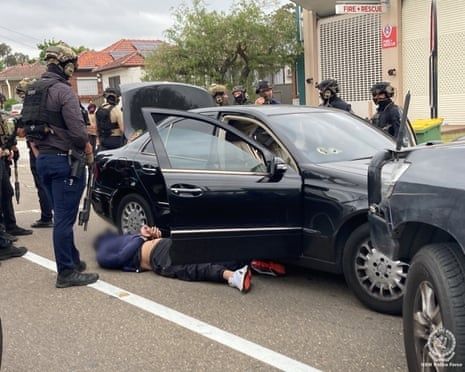
New South Wales police have intensified their crackdown on transit crime, announcing the arrest of 356 individuals during the sixth iteration of Operation Waratah, a dedicated initiative launched in 2024 to combat violent and sexual offences occurring within the state's sprawling public transport ecosystem. The three-day enforcement phase, conducted between Thursday and Saturday, represents the latest concentrated effort to protect commuters travelling on trains, light rail trams, buses and ferries across one of Australia's most populous states.
The scale of the deployment underscores the seriousness with which authorities are approaching transport security. More than 400 uniformed officers were mobilised each day to cover stations, platforms and vehicles throughout NSW, creating a visible police presence aimed at both deterring potential offenders and reassuring passengers. This represents a substantial commitment of policing resources to a specific geographic and operational focus, reflecting growing community concerns about personal safety on public transit systems.
The cumulative impact of Operation Waratah since its establishment has been substantial. The arrest figures announced Monday bring the operation's total to more than 1,800 individuals charged across all phases, indicating a sustained pattern of enforcement activity rather than isolated incidents. This trajectory suggests that police are identifying and apprehending a significant number of individuals engaged in criminal behaviour within transport networks, though it also raises questions about the nature and prevalence of such offences in the broader community.
During this particular three-day phase alone, officers seized 28 knives or weapons from individuals encountered during patrols and transit checks. The recovery of edged weapons and other implements from public transport demonstrates a concerning trend of people carrying dangerous items while using systems designed for civilian commuter movement. Such seizures are typically publicised to illustrate the hidden security threats that routine policing operations can uncover and neutralise.
Drug-related detections also formed a significant component of the operation's outcomes. Police recorded 137 drug detections during the three-day period, suggesting that narcotics-related offences remain a persistent challenge within transit environments. The intersection of drug possession and public transport usage creates compounding safety concerns, as impairment can contribute to aggressive or unstable behaviour affecting other passengers and staff members.
The individuals arrested faced a combined total of 645 separate charges, indicating that many apprehended persons were charged with multiple offences rather than single infractions. This charging pattern reflects the complexity of criminal activity within public spaces, where individuals may simultaneously commit several distinct offences during a single encounter with law enforcement. The average of approximately 1.8 charges per arrested person suggests a mix of serious and secondary offences.
The logistics of maintaining this enforcement presence across NSW's sprawling transport infrastructure are considerable. During the three-day operation, officers conducted patrols covering 539 trains, demonstrating the sheer volume of rolling stock that must be monitored within the state. Additionally, they checked 127 buses and 29 light rail trams, representing a systematic and organised approach to coverage rather than random or ad-hoc enforcement efforts.
For Malaysian readers, the NSW operation offers several points of reflection regarding public transport safety. Many Southeast Asian cities operate similarly extensive transit networks serving millions of daily commuters, and the safety concerns identified in Sydney—weapons carrying, drug offences, violent and sexual crimes—are universal challenges facing urban transport authorities across the region. The resource-intensive nature of Operation Waratah, requiring hundreds of officers daily, underscores the significant commitment required to maintain visible security in transit systems.
The operation also illustrates how sustained, coordinated police initiatives can generate measurable data about crime patterns within specific environments. By concentrating enforcement efforts over defined periods across multiple phases, NSW Police have created documented snapshots of offence prevalence, weapon seizures and drug detection rates. This empirical approach to identifying and addressing transit crime provides valuable intelligence for resource allocation and strategic planning, something increasingly important as Asian cities grapple with similar challenges.
The effectiveness of Operation Waratah may ultimately be assessed not only through arrest and seizure statistics, but through broader impacts on passenger confidence and actual crime reduction. Visible policing operations can have deterrent effects extending beyond those actually apprehended, while also providing reassurance to commuters who may otherwise feel vulnerable during transit journeys. These intangible benefits are difficult to quantify but remain central to the legitimacy and public acceptance of intensive enforcement programmes.

