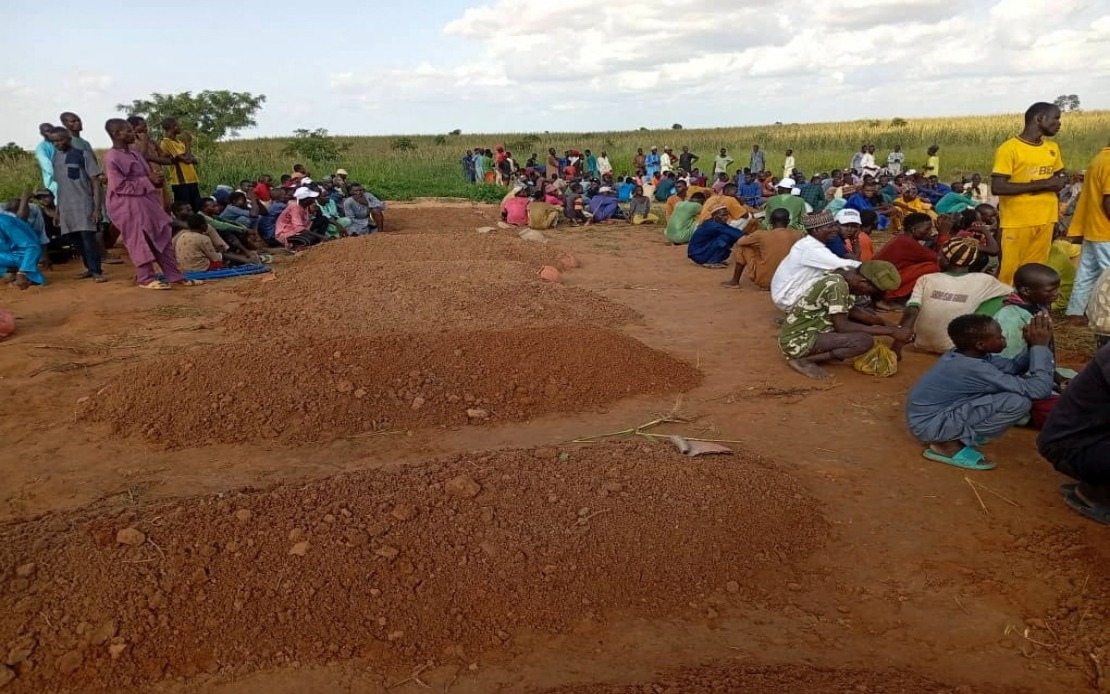
A catastrophic boat accident in Nigeria's northwestern Sokoto State has claimed the lives of over 40 people, the majority of them children, as an overcrowded vessel sank while transporting agricultural workers to rice fields. The tragedy, which occurred near Gorau town in Goronyo Local Government Area on Thursday, represents one of the most devastating maritime incidents in the region in recent months and has reignited critical questions about water safety standards across West Africa's most populous nation.
According to Abdulkadir Yusuf, manager of the National Inland Waterways Authority (NIWA) in Sokoto State, initial death toll estimates stand at approximately 40 victims, though the figure remains subject to confirmation as recovery operations continue. However, eyewitness accounts suggest the true scale of the disaster may be considerably larger. One observer at the scene reported approximately 47 bodies being prepared for burial at a community mosque in Gorau on the evening of the incident, their forms carefully wrapped in traditional cloth and woven mats in accordance with local burial customs.
The vessel was transporting farmers and agricultural labourers heading to rice cultivation activities—either planting or harvesting operations—when it suddenly capsized. Nasiru Adamu, a lawmaker representing the affected area in the Sokoto State House of Assembly, estimated the boat carried nearly 70 passengers at the moment of disaster. The age demographics of those aboard paint a particularly tragic picture: Adamu noted that the majority of casualties were between 10 and 15 years old, suggesting families or community groups had travelled together for the farming expedition.
Local resident Samaila Garba, 55, became one of many bereaved community members confronting the human toll of the accident. His 13-year-old granddaughter, Jamila Usman, numbered among those who perished. In interviews with rescue workers and journalists, Garba independently corroborated casualty figures, stating he had counted at least 42 bodies recovered from the waterway—predominantly women and children, pointing to a pattern wherein vulnerable populations bore the heaviest losses.
Rescue and recovery efforts mobilised quickly following the incident, with local diving teams and emergency responders scouring the waterway to locate both survivors and additional victims. As of Thursday evening, Adamu disclosed that 16 passengers had been successfully rescued, offering slim consolation amid widespread mourning throughout the affected communities. The ongoing search operations reflected determination to recover all remains and establish a definitive accounting of those lost.
This catastrophe cannot be viewed as an isolated misfortune but rather as symptomatic of deeper, systemic deficiencies plaguing Nigeria's inland waterway sector. Overcrowding—evident in the vessel carrying nearly 70 passengers—represents a chronic violation of safety protocols that authorities have struggled to contain. Poor maintenance of boats, inadequate inspection regimes, and weak enforcement of regulatory standards have created an environment where tragedy becomes tragically predictable, particularly during the rainy season when water levels rise and conditions deteriorate.
The Sokoto incident follows a disturbingly similar disaster just eight months prior. In January, northeastern Nigeria's Yobe State witnessed a boat capsizing after a severe leak developed in the hull, resulting in at least 25 fatalities. That incident, like the current tragedy, involved preventable oversights: a vessel in poor mechanical condition bearing too many passengers. The repetition of such scenarios underscores the absence of meaningful intervention or reform within the sector, despite documented patterns of recurring loss.
For Malaysian and Southeast Asian readers, the Sokoto disaster offers sobering lessons about the consequences of regulatory neglect in developing maritime contexts. Nigeria's inland waterways—critical transportation arteries for millions across the Niger and its tributaries—operate largely outside comprehensive safety oversight frameworks. Unlike established maritime jurisdictions with robust inspection, certification, and enforcement mechanisms, West African inland water transport remains vulnerable to corner-cutting operators prioritising revenue over passenger welfare.
The disproportionate impact on children and women in such incidents reflects broader vulnerabilities within marginalised communities. Rural agricultural workers, often among the poorest segments of society, lack meaningful agency in negotiating safer passage and cannot afford alternatives. When families depend on waterway transport to reach farmland, and operators face neither meaningful penalties nor reputational consequences for violations, the incentive structure systematically favours negligence over safety compliance.
Regional authorities across West Africa would benefit from examining successful maritime safety frameworks developed in Asia-Pacific nations, where comparable challenges of extensive inland waterway networks serving large populations have been substantially addressed through coordinated regulatory approaches, mandatory operator training, regular vessel inspections, and passenger capacity enforcement. The contrast between these regions and current Nigerian practice demonstrates that technological solutions matter less than institutional commitment to implementation.
The immediate aftermath of the Sokoto tragedy will likely involve local inquiries and expressions of official concern, following patterns established after previous disasters. Meaningful prevention of future incidents, however, demands structural reform: establishment of credible regulatory bodies with adequate funding and enforcement capacity, mandatory vessel certification programmes, operator training and licensing requirements, imposition of genuine consequences for violations, and community awareness campaigns emphasising passenger rights. Without such systematic interventions, the inland waterways of Nigeria and throughout West Africa will continue to claim preventable casualties among populations with few alternatives.
As rescue teams complete their work in Goronyo Local Government Area and affected communities enter collective mourning, the tragedy stands as stark testament to the cost of neglecting infrastructure governance and public safety in developing economies. The Sokoto incident is neither inevitable nor exceptional—it is a choice reflected in policy failures and regulatory indifference that nations throughout the region can still reverse.

