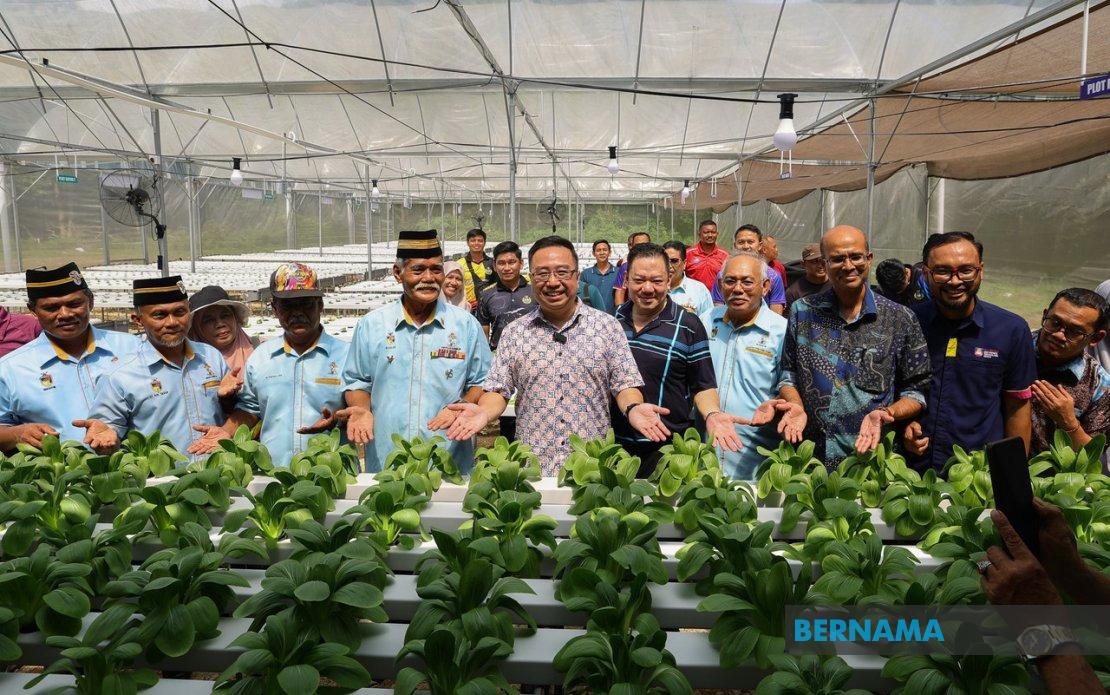
A social innovation initiative backed by the Malaysian government has extended its reach to over 6,700 individuals from different communities through a series of 67 targeted development projects, channelling RM13.97 million in resources from 2021 onwards. Launched in Port Dickson, the Malaysia Social Innovation Programme represents a strategic push to harness technology for lifting living standards while promoting food security and economic participation at the grassroots level. The Yayasan Inovasi Malaysia, which oversees the scheme, has positioned social and technological advancement as inseparable, embedding skills training and economic opportunities within each initiative.
Science, Technology and Innovation Minister Datuk Chang Lih Kang outlined the programme's philosophy at the opening of a new aquaponics facility in Pasir Panjang, emphasising how targeted technology deployment can address multiple challenges simultaneously. Since its establishment in 2015, the foundation has worked to scale technology adoption across Malaysia's communities in a deliberate, inclusive manner. The minister framed the effort as investment in sustainability, noting that each project combines immediate poverty alleviation with longer-term capacity building.
The Pasir Panjang aquaponics site exemplifies this approach, receiving RM251,616 in dedicated funding. The integrated farming system merges fish cultivation with vegetable production in a closed-loop environment, where nutrient-enriched water from fish tanks serves as natural fertiliser for crops before being recirculated. This methodology dramatically reduces water consumption and waste compared to conventional farming, while maximising output from constrained spaces—a particular advantage in densely populated or land-scarce regions typical of Malaysian settlement patterns.
The technology layer extends beyond basic infrastructure. Solar-powered systems paired with Internet of Things sensors allow real-time monitoring of water quality, temperature, and system performance, enabling operators to detect and respond to problems before losses occur. This capacity for intelligent management transforms farming from a labour-intensive guesswork exercise into a data-informed practice, lowering operational risk and raising predictability for small-scale producers who typically operate on thin margins.
Production metrics underscore the scheme's tangible impact. The Pasir Panjang operation alone generated over 800,000 kilogrammes of vegetables within a single year, demonstrating scalability at the community level. Fish farming components remain in growth phases, indicating significant upside potential as management practices mature. For participants in the Negeri Sembilan area, particularly the over 100 members of the JLJD Veterans Association engaged as both recipients and operational partners, the initiative has created income-generating opportunities while leveraging their expertise and networks.
Distribution channels represent an understated but critical dimension. The Federal Agricultural Marketing Authority provides assistance connecting producers directly to consumers, bypassing traditional middlemen who typically extract substantial margins. This structural innovation helps ensure that efficiency gains achieved through better farming methods translate into improved household income rather than simply lowering prices while producers remain trapped in poverty.
Universiti TeknologiITM played a pivotal research and development role in designing the aquaponics system, demonstrating how academic institutions can contribute practical expertise to community-level challenges. The partnership model—combining ministerial policy backing, foundation implementation, university technical support, and community participation—reflects a more sophisticated approach to development than purely top-down resource deployment. Each stakeholder contributes distinct value rather than duplicating effort.
The programme's emphasis on food security carries particular resonance for Malaysia's agricultural sector, which faces structural vulnerabilities including land scarcity, water stress, and climate variability. Community-based aquaponics operations offer resilience through reduced external dependency, localised production, and efficient resource use. For a nation concerned about supply chain interruptions and rising food import costs, distributed small-scale farming provides insurance against systemic shocks.
The skills development component distinguishes this approach from simple charity. Participants acquire technical knowledge about system management, water quality testing, basic business practices, and product marketing. These competencies generate value extending far beyond any single project, positioning individuals to pursue related livelihoods or upgrade existing agricultural practices. The psychological shift from aid recipient to skilled operator carries significance often overlooked in development metrics.
Scaling considerations shape the programme's longer-term trajectory. With 67 projects already implemented across diverse geographies and community types, the foundation has accumulated operational experience and refined deployment models. Documenting successes and failures at Pasir Panjang and elsewhere enables faster replication at lower cost in subsequent sites. The RM13.97 million invested across seven years represents modest spending relative to overall government social expenditure, suggesting room for expansion if political commitment sustains.
For Malaysian policymakers, the scheme illustrates technology's potential as an equaliser when deliberately designed for accessibility. Rather than assuming communities lack capacity, the programme supplies tools and knowledge, then trusts participants to manage operations. This philosophy contrasts sharply with welfare approaches that emphasise dependency. Early evidence suggests communities respond positively when given genuine agency and realistic pathways to self-sufficiency.
Regionally, Malaysia's experience offers a model worth examining for other Southeast Asian nations facing comparable challenges of agricultural modernisation, food security, and inclusive economic participation. The integration of renewable energy, IoT monitoring, and community governance within a social innovation framework positions the approach as replicable and adaptable to different contexts. As climate pressures intensify farming challenges across the region, such models may become increasingly valuable.

