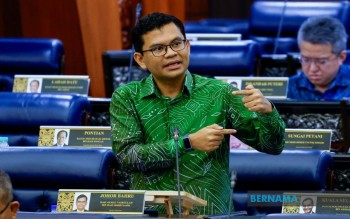
The Malaysian government has emphasized the substantial untapped resources within its Small and Medium Enterprise Stabilisation Relief Facility, signalling ongoing commitment to bolster small business resilience amid economic headwinds. Economy Minister Akmal Nasrullah Mohd Nasir disclosed during parliamentary proceedings that more than RM4 billion of the RM5 billion allocation under Bank Negara Malaysia's scheme remains accessible to micro, small and medium enterprises grappling with liquidity pressures and operational uncertainties.
As of mid-June 2026, the facility had processed financing approvals totalling over RM700 million for more than 1,000 enterprises, demonstrating uptake amongst the MSME sector yet pointing to considerable capacity for additional drawdowns. Akmal's remarks during the Minister's Question Time session addressed concerns raised by Mohd Syahir Che Sulaiman regarding employment losses and business contraction stemming from supply disruptions and global economic volatility. The availability of such substantial reserves underscores government determination to provide relief precisely when many smaller operators face mounting pressure to maintain operational continuity.
Beyond the direct financing mechanism, the government has established a parallel guarantee framework through Syarikat Jaminan Pembiayaan Perniagaan Bhd, injecting an additional RM5 billion in guarantees designed to unlock credit access for enterprises that might otherwise struggle to meet conventional lending requirements. This dual approach—combining direct financing alongside guarantee backing—reflects recognition that small businesses often encounter friction in securing conventional bank facilities, particularly during periods of economic uncertainty. The guarantee facility effectively reduces lender risk and may accelerate approval processes for qualifying applicants.
The government has streamlined application procedures to encourage uptake, instructing financial institutions to process submissions within seven working days. This compressed timeline represents a significant departure from conventional banking timescales and reflects policy design intended to address urgent cash flow needs without protracted bureaucratic delays. SMEs facing liquidity constraints are directed to engage directly with their existing financial institution relationships to explore tailored solutions matching their specific operational requirements and repayment capacity.
Complementing direct financing measures, the government has launched the Progressive Acceleration for Capability and Employability Economic Resilience Package, a comprehensive initiative exceeding RM710 million in total allocation. This broader intervention recognizes that business survival depends not solely on immediate cash injections but equally on workforce stability, skills development, and systemic support for employment continuity. The package operates across four distinct pillars addressing social safety nets, human capital development, non-traditional worker segments, and emerging entrepreneurial talent.
Under the employment insurance framework, PERKESO has received allocation exceeding RM580 million specifically to strengthen the Employment Insurance System, providing targeted assistance to workers experiencing job displacement. This component reflects understanding that business resilience requires stable, confident consumer spending and labour market confidence. Simultaneously, the government has committed RM100 million through HRD Corp directed toward training and job placement initiatives, leveraging the MYFutureJobs platform to connect displaced or upskilled workers with emerging opportunities across sectors.
The package extends targeted support to non-traditional employment segments increasingly significant within Malaysia's evolving labour landscape. Gig workers and flexible workforce participants, categories historically underserved by conventional social protection systems, receive dedicated assistance through RM20 million allocated via the Skills Education Fund Corporation for specialized training programmes. This recognition of gig economy workers reflects demographic and labour market shifts, ensuring policy frameworks acknowledge contemporary employment realities beyond traditional employment relationships.
Small enterprise and start-up development receives specific attention through TalentCorp's RM10 million allocation directed toward industrial training initiatives. This investment targets younger, emerging business operators seeking to build competitive advantage through workforce capability enhancement. The focus on young talent and emerging entrepreneurship alongside established SME support suggests policy recognition that business ecosystem vitality requires nurturing the next generation of operators and innovators.
Government oversight extends beyond direct financing and employment support to encompass supply chain resilience and price stability. Authorities have intensified monitoring of essential goods supply, pricing dynamics, and critical raw material availability affecting manufacturing, food production, agricultural, and services sectors. This intervention reflects awareness that business operational challenges extend beyond liquidity constraints to encompass input cost volatility and supply reliability—factors directly influencing production decisions and business investment confidence.
Global supply disruptions and international economic uncertainty continue generating operational challenges for Malaysian enterprises heavily integrated into regional and global value chains. Akmal indicated the government would provide comprehensive parliamentary explanation regarding supply crisis mitigation strategies through a formal ministerial statement, subject to legislative approval. This commitment to detailed public explanation signals government recognition that supply-side challenges warrant sustained policy attention and transparent communication regarding strategic responses.
The cumulative policy architecture—encompassing direct SME financing, employment insurance expansion, skills development investment, gig worker support, supply chain oversight, and parliamentary transparency—reflects multifaceted government approach to business continuity challenges. Rather than relying solely on capital provision, the framework addresses interconnected dimensions of business resilience: access to finance, workforce stability, skill alignment with emerging opportunities, and operational input reliability. For Malaysian SMEs, the landscape presents both substantial financial resources and comprehensive support infrastructure designed to navigate contemporary economic volatility.

