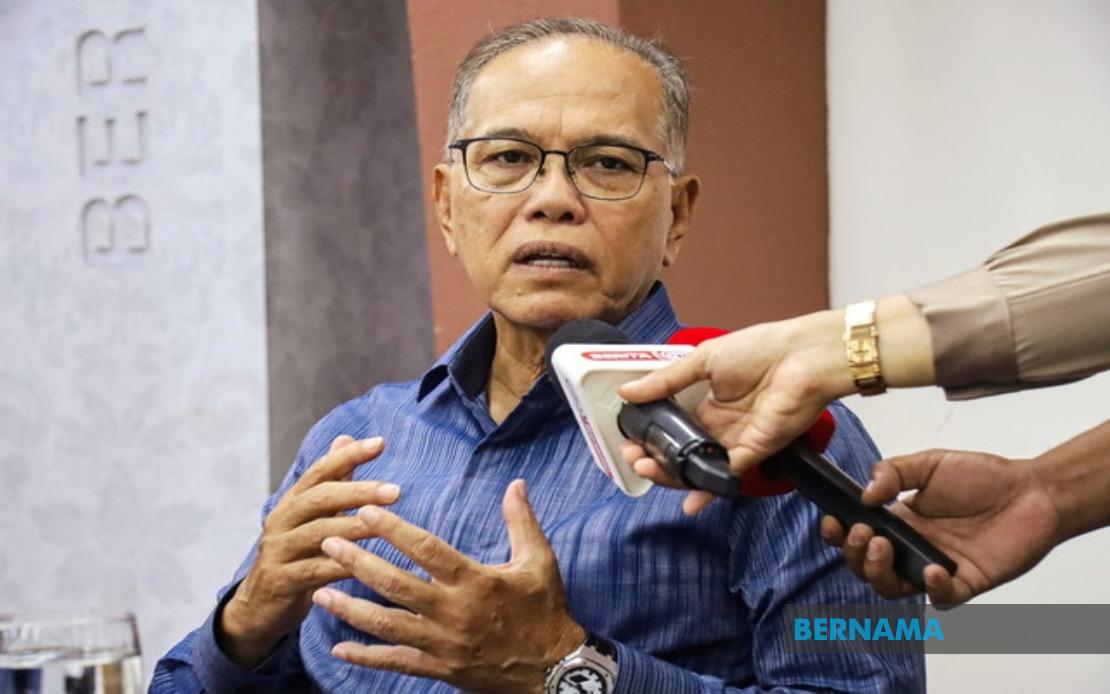
Pahang's Barisan Nasional has signalled its determination to preserve the state-level Unity Government arrangement with Pakatan Harapan through the 16th General Election, marking a significant statement of political continuity in a state where coalition arrangements have become increasingly complex. Menteri Besar Datuk Seri Wan Rosdy Wan Ismail made the declaration while presiding over a student assistance programme in Kuantan on Wednesday, emphasising that the administration's focus remains on delivering tangible benefits to Pahang's residents rather than engaging in destabilising political manoeuvres.
The statement carries particular weight given Pahang's status as a bellwether for coalition politics in Malaysia's east coast region. When GE15 concluded in 2022, the state's 42-seat assembly reflected a fractured political landscape: Barisan Nasional and Perikatan Nasional each secured 17 seats, whilst Pakatan Harapan managed only eight. Rather than allow this numerical deadlock to paralyse governance, the Pahang Regent Tengku Hassanal Ibrahim Alam Shah consented in late November 2022 to the formation of a government uniting BN and PH—a pragmatic solution that has now persisted for nearly two years.
Wan Rosdy's comments suggest the coalition partners have moved beyond the period of post-election uncertainty that typically characterises multiparty arrangements in Malaysian state politics. By publicly committing to maintain this partnership until GE16, the Menteri Besar appears to be signalling to voters, party members, and federal-level leadership that Pahang BN views the arrangement as more than a temporary fix. This contrasts sharply with the calculus that often guides state-level politics, where coalition partnerships frequently collapse as parties position themselves ahead of the next election cycle.
However, Wan Rosdy's simultaneous statement that Pahang BN remains open to forming cooperation with other parties in preparation for GE16 introduces a note of ambiguity into what might otherwise appear an ironclad commitment. This language suggests that whilst the current partnership with PH may continue through the election itself, the state coalition could be reconfigured in the election's aftermath depending on results and negotiations. Such flexibility is standard practice in Malaysian coalition politics, where post-election arithmetic determines which partners form the government.
The Unity Government model at state level mirrors arrangements implemented at federal level since the formation of the Anwar Ibrahim administration in October 2022. That national coalition between BN, PH, and various other parties has proven more durable than many observers expected, though it continues to face periodic strains and defections. Pahang's commitment to maintain its version of this arrangement through GE16 suggests that the coalition model, whatever its internal tensions, has achieved sufficient legitimacy and operational success to warrant continuation.
Wan Rosdy used his public appearance to highlight an education initiative that illustrates how the state government has moved beyond transitional governance. The Makmur Pahang Initiative has allocated RM118,000 to 118 tertiary students undertaking further studies in Egypt and New Zealand, with additional support through the Pahang Foundation for students in Jordan and Morocco. The programme reflects conscious investment in human capital development and international engagement, suggesting the administration views its tenure as sufficiently stable to implement long-term policy initiatives rather than merely managing day-to-day administration.
The Menteri Besar's remarks about programme curation reveal administrative sophistication. He noted that course selection factors in Islamic elements and relevance to contemporary employment markets, indicating that the state is thinking strategically about educational outcomes rather than simply distributing bursaries. This attention to curricular alignment with state development priorities suggests a government confident enough to make substantive policy choices.
For Malaysian and regional observers, Pahang's coalition stability carries broader implications. East coast states have historically leaned towards PAS and Perikatan Nasional, making Pahang's continued BN-PH partnership notable. Should this arrangement persist through GE16 and beyond, it would demonstrate that the Unity Government model can take root in constituencies traditionally aligned with opposition blocs. Conversely, should Pahang revert to Perikatan dominance after the next election, it would signal limits to the coalition's regional penetration.
The commitment also reflects calculations about federal-state dynamics. Pahang has benefited from alignment with the federal Anwar administration, which controls budgetary allocations and development project approvals. Wan Rosdy's willingness to maintain the partnership through the next election cycle suggests BN state leadership sees advantages in continuing that alignment, at least until voters have had their say nationally.
Wan Rosdy's emphasis on the administration's focus on constituent well-being rather than factional manoeuvring represents a familiar rhetorical strategy in Malaysian politics, yet it contains genuine substance. The Makmur Pahang Initiative and similar programmes require institutional continuity and policy consistency—qualities that unstable coalitions struggle to provide. By framing the Unity Government as serving citizens rather than merely satisfying elite bargains, the Menteri Besar is constructing a narrative that legitimises the arrangement beyond the technicalities of seat arithmetic.
Looking ahead to GE16, Wan Rosdy's statements suggest Pahang will not be a battleground for coalition-versus-coalition conflict in the manner that some other states might become. Whether the BN-PH partnership extends beyond the general election itself remains an open question, but its preservation through that contest appears assured barring dramatic political upheaval. For coalition partners seeking to demonstrate the viability of their model, such stability—even if temporary—constitutes a significant asset.

