The Pahang state government has moved to clarify its approach toward the degazettement of Permanent Forest Reserves, insisting that decisions to remove forestland from protected status are neither arbitrary nor conducted without oversight. Speaking in Kuantan on August 30, Menteri Besar Datuk Seri Wan Rosdy Wan Ismail underscored that the state applies rigorous mechanisms and established protocols when managing the removal of forest reserves, even as the process diverges from some of the safeguards introduced under recent federal legislation.
The clarification comes amid scrutiny over Pahang's refusal to adopt two protective measures mandated by the National Forestry Act (Amendment) 2022. These provisions—requiring public inquiries and the provision of replacement land before degazettement—have become increasingly important as environmental advocates press for greater transparency in forest management decisions across Malaysia. Pahang stands as the fourth state to opt out of these safeguards, joining a small group that has chosen alternative approaches to forest reserve management within their constitutional authority.
Wan Rosdy attributed the state's position to Pahang's jurisdictional powers over land and forest administration. Under Malaysia's federal structure, states retain significant autonomy in managing their natural resources, and the Menteri Besar argued that Pahang's regulatory framework achieves comparable oversight through different mechanisms. Rather than conducting public inquiries, the state government relies on internal administrative procedures that, officials contend, ensure accountability and adherence to established criteria before any forest reserve loses its protected designation.
The Menteri Besar also noted that Pahang's approach is not isolated within Malaysia. Several other states have similarly declined to incorporate the National Forestry Act amendments into their forestry procedures, suggesting a broader pattern among state administrations that view the federal amendments as unnecessary given their existing management frameworks. This reflects ongoing tensions between federal environmental standards and state-level regulatory autonomy, a dynamic that has characterised Malaysian environmental governance for decades.
For Malaysian observers concerned with forest conservation, the distinction between public inquiry requirements and administrative procedures carries significant implications. Public inquiries typically allow civil society, indigenous communities, environmental organisations, and affected stakeholders to formally present objections and alternative perspectives before decisions become final. Administrative procedures, by contrast, operate within government structures and may lack equivalent transparency. This difference has prompted environmental groups to advocate more strongly for uniform adoption of the federal amendments across all states.
The implications for Southeast Asia's broader conservation landscape are also notable. As regional governments balance development pressures against environmental commitments, Malaysia's fragmented approach to forest reserve protection—where standards vary by state—complicates efforts to maintain consistent biodiversity safeguards and watershed management across the peninsula. The region increasingly looks to individual nations to demonstrate coherent environmental governance as climate change impacts intensify.
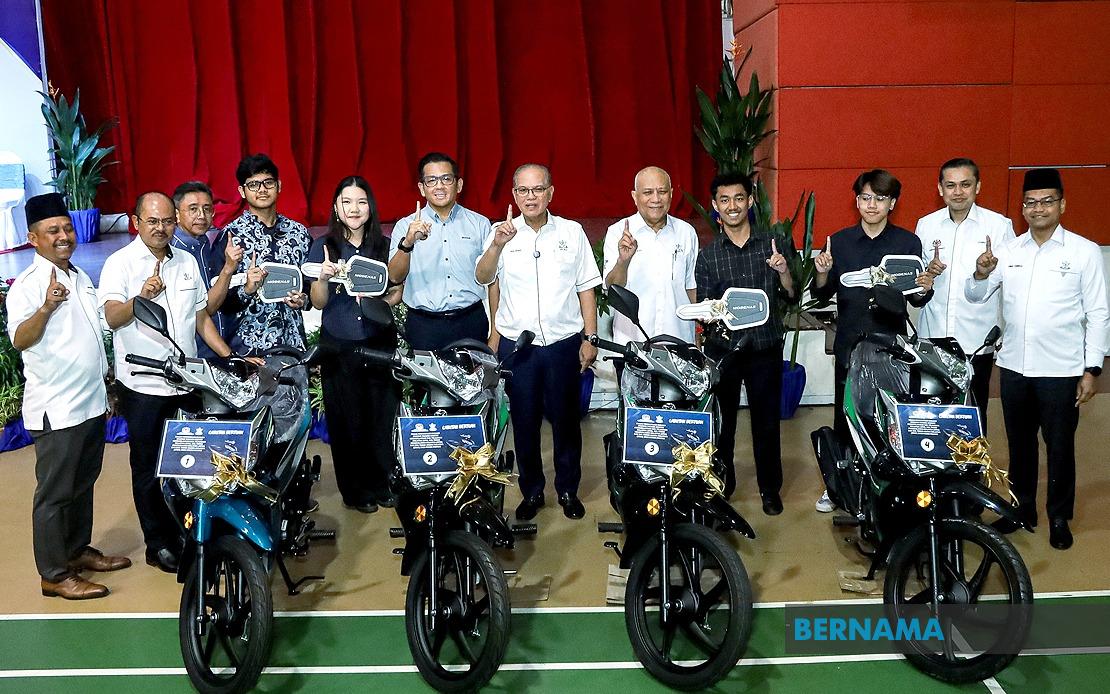
Beyond forest policy, the Menteri Besar announced a separate initiative addressing youth financial inclusion. Pahang will introduce an interest-free loan scheme enabling young Malaysians aged eighteen to twenty-one to purchase motorcycles. The programme specifically targets students enrolled at public and private higher education institutions, both IPTA and IPTS respectively. Officials characterised the initiative as an investment in youth development, recognising that affordable transportation remains a barrier for many tertiary students, particularly those from lower-income backgrounds.
Wan Rosdy indicated that the motorcycle loan scheme will be formally presented to the Pahang State Legislative Assembly during the 2027 budget session, suggesting the government is progressing beyond preliminary discussions toward implementation. The initiative reflects growing recognition among Malaysian state governments that youth unemployment and underemployment warrant targeted economic interventions. Access to affordable transport can facilitate job-seeking, internship participation, and economic participation more broadly, particularly in areas with limited public transportation infrastructure.
Simultaneously, the Pahang government recognised academic achievement through an awards ceremony honouring over two thousand students who achieved distinguished results in the 2025 Sijil Pelajaran Malaysia (SPM), Sijil Tinggi Agama Malaysia (STAM), and Sijil Tinggi Persekolahan Malaysia (STPM) examinations. The state allocated RM2.4 million in incentives to these high-achieving students, demonstrating continued commitment to rewarding educational excellence and encouraging continued academic progression. Such recognition programmes remain common among Malaysian state governments seeking to foster an achievement-oriented culture among youth.
The convergence of forest policy clarification and youth-focused economic initiatives in a single government announcement reflects the multifaceted challenges confronting state administrations. Pahang, like other Malaysian states, must simultaneously navigate environmental stewardship, economic development, and youth opportunity creation—objectives that frequently present competing demands. How the state ultimately reconciles these priorities will provide insights into the broader direction of Malaysian environmental and social policy as the country advances through the remainder of this decade.

