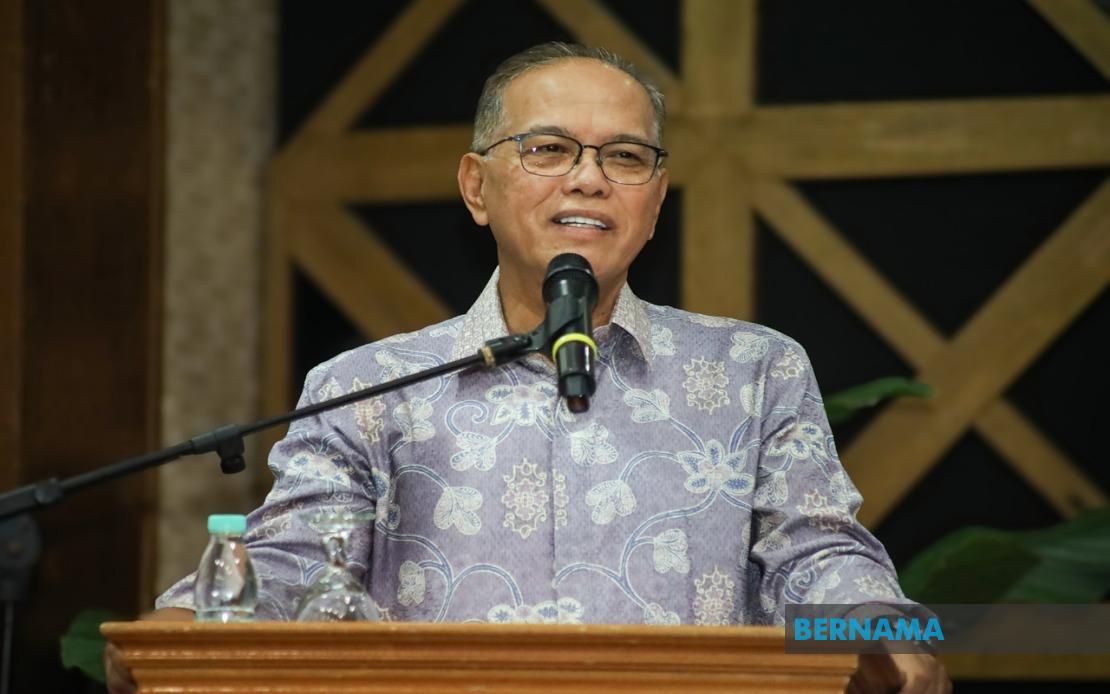
The Pahang government has committed more than RM5 million in 2024 to bolster its Technical and Vocational Education and Training sector, signalling a deliberate shift towards anticipatory human capital development rather than reactive workforce preparation. Menteri Besar Datuk Seri Wan Rosdy Wan Ismail outlined this investment strategy during the 50th anniversary celebration of Politeknik Sultan Haji Ahmad Shah (POLISAS) in Kuantan, framing it as part of a broader philosophy to cultivate talent before industrial opportunities materialise in the state.
The allocated funds flow into multiple channels aimed at creating a comprehensive skills ecosystem across Pahang. Infrastructure enhancements and improved training facilities at Pahang Skills, the TVET Pahang Talent Development programme, and the emerging Pahang Rail Academy represent key recipients of the injection. This diversified approach suggests the state government recognises that vocational training success depends not merely on institutional investment but on physical infrastructure that supports quality instruction and hands-on learning experiences.
Wan Rosdy's articulation of the state's TVET philosophy reveals a strategic thinking that diverges from conventional approaches in Malaysia. Rather than waiting for foreign direct investment or industrial clusters to establish themselves before mobilising workforce development, Pahang intends to build its human capital reserves in anticipation of future economic opportunities. This proactive stance assumes that competitive advantage in attracting and retaining investment increasingly depends on the availability of a trained, skilled workforce ready for deployment.
The Menteri Besar specifically highlighted the importance of strengthening the relationship between educational institutions and industry partners. He emphasised that classroom learning must translate directly into workplace competence, a perennial challenge in vocational education systems. This recognition points to ongoing gaps between theoretical instruction and practical application—a concern that has plagued Malaysian TVET providers for years. By prioritising industry linkages, Pahang appears committed to ensuring that its RM5 million investment produces graduates with immediately deployable skills rather than certificates lacking real-world relevance.
POLISAS itself represents a significant institutional pillar in this ecosystem. Established in 1976, the polytechnic has graduated 60,000 individuals over its half-century of operation, making it one of Pahang's largest talent pipelines. The institution's longevity and track record position it as a natural anchor for the state government's broader TVET strengthening agenda. Wan Rosdy signalled that POLISAS would continue serving as a strategic partner in the state's vocational education architecture, suggesting ongoing collaboration rather than redundancy or institutional competition.
Beyond the immediate TVET allocation, the Menteri Besar's remarks hint at broader budgetary pressures facing Pahang and its expectations for federal support. He appealed to the federal government to accord Pahang special consideration in Budget 2027, arguing that the state's size and geographic expanse necessitate proportionally larger development allocations. This plea reflects a persistent tension in Malaysian fiscal federalism—the challenge of adequately funding development in large, geographically dispersed states with distributed populations.
Wan Rosdy's articulation of Pahang's budgetary priorities extends beyond traditional infrastructure. While roads and healthcare remain important, he emphasised that development allocations should encompass education, economic initiatives, welfare programmes, and religious promotion. This inclusive framing suggests the state government views TVET as one component of a multifaceted development strategy rather than an isolated sectoral initiative. The integration of vocational education within a broader socioeconomic framework reflects sophisticated understanding of how skills development contributes to multiple policy objectives simultaneously.
The timing of this RM5 million TVET commitment carries significance within Malaysia's broader economic positioning. As regional competition for manufacturing and technology investment intensifies, states that can demonstrate workforce readiness gain competitive advantage. Pahang's proactive approach positions it as an attractive investment destination for industries requiring skilled technical workers, particularly in sectors like rail transport, where the new Pahang Rail Academy suggests deliberate sectoral targeting.
For Malaysian policymakers observing from other states, Pahang's approach offers instructive lessons about matching human capital development to anticipated economic opportunities. Rather than assuming market forces will automatically generate demand for skilled workers, the state has taken deliberate steps to create supply in anticipation of demand. This anticipatory model contrasts with reactive approaches that struggle to close skills gaps only after labour shortages become acute.
The Menteri Besar's commitment to tabling an improved state budget in November during the State Legislative Assembly sitting indicates that TVET funding represents merely one component of anticipated enhanced allocations. Whether the state government successfully secures commensurate federal budget support will significantly influence implementation capacity. The gap between allocated funds and actual disbursement remains a critical concern in Malaysian state governance, where committed budgets do not always translate to on-the-ground programme delivery.
Looking forward, the success of Pahang's RM5 million TVET investment will be measured not in funds committed but in tangible outcomes—graduates employed in relevant fields, reduced skills gaps in targeted industries, and measurable improvements in wage levels for TVET programme completers. These metrics matter far more to ordinary Pahang residents than budgetary announcements. The state government's philosophy of preparing talent before investment arrives remains sound, but execution will ultimately determine whether this initiative transforms Pahang's economic trajectory or represents another well-intentioned announcement lacking sustained follow-through.

