Pahang has emerged as the employment leader on Malaysia's East Coast, with new official figures revealing a labour force participation rate of 65.3 per cent during the first quarter of 2026. The state's unemployment rate stands at a modest 1.9 per cent, reflecting a competitive job market that has absorbed workers across multiple sectors. These metrics underscore the effectiveness of coordinated national and state-level efforts to create sustainable employment pathways for the region's workforce.
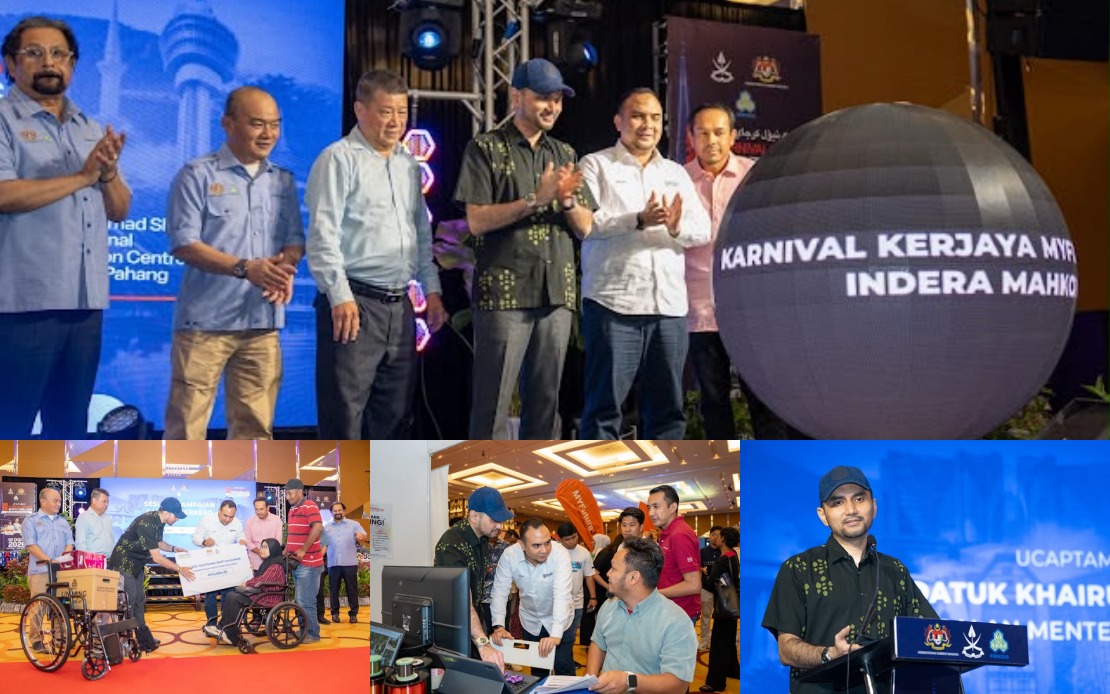
The achievement comes as the government intensifies its focus on bridging the gap between job seekers and employers through technology-enabled platforms and community engagement initiatives. Deputy Human Resources Minister Datuk Khairul Firdaus Akbar Khan highlighted during the opening of the Indera Mahkota MyFutureJobs Career Carnival 2026 that such results reflect years of strategic intervention in the labour market. The carnival itself demonstrated the scale of opportunity, offering 6,000 job vacancies sourced from 30 employers spanning construction, manufacturing, services, and emerging technology sectors.
Central to Pahang's employment success has been the MYFutureJobs platform, administered by the Social Security Organisation (PERKESO). Since its inception in 2023 through to late July 2026, the scheme has facilitated employment for 26,877 job seekers across Pahang alone. This represents a substantial intervention in reducing structural unemployment and helping workers transition into formal employment. The platform's reach extends beyond major urban centres, addressing employment challenges in satellite towns and smaller communities where job information and opportunities are traditionally harder to access.
Beyond simply connecting workers to vacant positions, PERKESO has invested heavily in building institutional capacity for employment matching. The organisation conducted 1,277 interview programmes and career carnivals throughout Pahang during the three-year period, creating touchpoints for direct employer-candidate interaction. These events have proven more effective than digital job boards alone, particularly in reaching workers with limited internet penetration or digital literacy. More than 10,000 job vacancies were advertised through the MYFutureJobs portal, with 11,857 registered job seekers on the platform in 2026 alone, indicating growing awareness and adoption among younger demographics.
The government's employment strategy extends beyond job placement to encompass skills development and workforce adaptation. Khairul Firdaus emphasised that the Human Resources Ministry recognises the rapid pace of industry transformation, necessitating continuous upskilling opportunities for the existing workforce. Training programmes offered through the ministry's ecosystem are designed to bridge gaps between workers' current competencies and sector-specific demands. This proactive approach to human capital development is particularly relevant for Pahang, where traditional industries such as mining and agriculture are undergoing mechanisation and digitalisation.
Complementing employment initiatives is the Sahabat MADANI programme, launched at the Indera Mahkota event by Prime Minister's political secretary Datuk Ahmad Farhan Fauzi. The initiative represents a shift toward community-centred governance, mobilising volunteers to address local challenges and serve as intermediaries between government agencies and grassroots communities. In Pahang specifically, the programme has recruited 2,000 members, exceeding initial targets and establishing a substantial volunteer network across the state. This volunteer infrastructure has implications beyond employment, potentially enhancing delivery of government services in rural and underserved areas.
The Sahabat MADANI framework emphasises principles of mutual responsibility, social cohesion, and inclusive development that resonate particularly in diverse East Coast communities. By positioning volunteers as both community servants and government observers at the grassroots level, the initiative creates feedback mechanisms for policy refinement. Ahmad Farhan's call for expanding membership beyond the 2,000-member target indicates government ambitions to deepen community participation in the MADANI governance model. For young Malaysians in Pahang and neighbouring states, the volunteer movement offers pathways to civic engagement and social impact alongside employment opportunities.
The integration of employment support and community volunteering reflects a broader government strategy to address not only joblessness but also social disconnection and community fragmentation. Rural areas and remote communities in Pahang, historically marginalised from economic opportunities and government services, stand to benefit disproportionately from coordinated deployment of employment initiatives and volunteer networks. This dual-track approach acknowledges that sustainable prosperity requires both income generation and social cohesion.
For Malaysian policymakers and regional observers, Pahang's performance offers instructive lessons in labour market management. The state's ability to achieve 65.3 per cent labour force participation, substantially above the national average, suggests that targeted intervention, community partnership, and sustained institutional commitment can materially improve employment outcomes. The consistency of results across three years of programme operation indicates that these gains are not cyclical aberrations but reflect structural improvements in the job market. Other East Coast states and regions grappling with youth unemployment and rural-urban migration pressures may find Pahang's model worthy of adaptation.
Looking forward, the government's commitment to strengthening Sahabat MADANI alongside MYFutureJobs suggests an intention to deepen employment service penetration, particularly in underserved territories. This investment in last-mile service delivery is significant for Southeast Asia, where digital divides and geographic isolation frequently preclude workers from accessing formal labour markets. Pahang's experience demonstrates that hybrid approaches combining online platforms with ground-level community engagement can substantially improve labour market functionality and inclusion.
The emphasis on continuous skills enhancement represents a forward-looking recognition that employment creation alone is insufficient in rapidly evolving economies. Workers must remain adaptable, capable of transitioning across sectors and adopting emerging technologies. Training programmes integrated within employment initiatives ensure that job placement leads to sustained career trajectories rather than temporary position-filling. For Malaysian workers and employers alike, this comprehensive approach to labour market development positions the economy to respond more effectively to sectoral shifts and industrial transformation.
As Malaysia navigates post-pandemic economic recovery and technological disruption, the Pahang model warrants replication and refinement. The state's low unemployment rate and high participation metrics reflect successful orchestration of multiple policy instruments and stakeholder engagement. Success at the state level now depends on maintaining momentum, continually updating training curricula to reflect industry evolution, and expanding volunteer networks to ensure no communities are excluded from opportunity. The coming years will reveal whether Pahang can sustain these achievements while responding to emerging challenges in labour market dynamics and community development.

