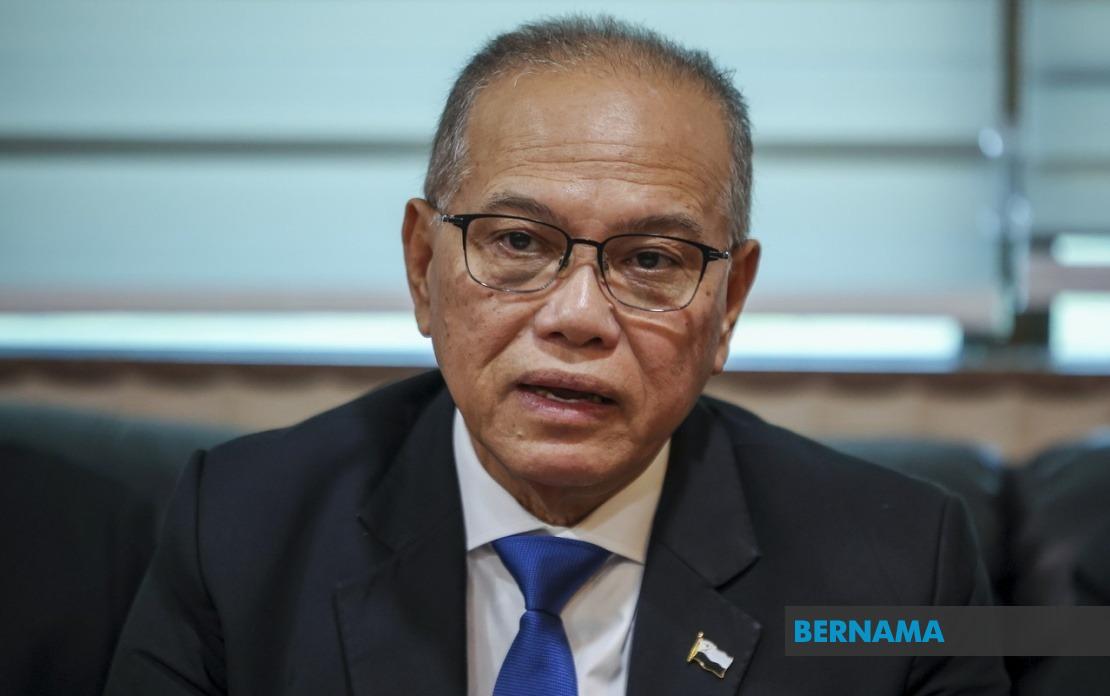
Pahang's fiscal performance continues to demonstrate resilience and upward momentum, with state revenue collections reaching RM921.72 million by late August—a figure that positions the administration well towards its full-year target. Menteri Besar Datuk Seri Wan Rosdy Wan Ismail disclosed this progress during the Pahang State Legislative Assembly sitting at Wisma Sri Pahang, casting the achievement as validation of the state government's sustained financial management and economic strategy.
The RM921.72 million collected represents 72 per cent of the state's RM1.279 billion revenue objective for the year, suggesting that Pahang remains on pace to fulfil its budgetary commitments provided collection momentum persists in the final months. Such performance gains are particularly noteworthy given the volatile global economic environment and domestic fiscal pressures affecting many Malaysian states, underscoring Pahang's comparative stability. The strong collection rate also provides crucial financial flexibility for development initiatives and social programmes.
Pahang's economic foundations appear particularly robust when examined through the lens of gross domestic product expansion. The state's GDP climbed to RM71 billion in 2025, up from RM68.8 billion the previous year—a trajectory reflecting both sectoral diversification and sustained investment attraction. This growth narrative extends beyond raw output figures; it signals underlying structural improvements in the state's productive capacity and labour market dynamics, factors that typically sustain revenue generation over the medium term.
Investment inflows constitute another dimension of Pahang's economic momentum. The state government recorded RM11.47 billion in committed investments as of August 2026, with realised investments reaching RM1.044 billion. These figures represent the pipeline of future economic activity and employment generation, though the gap between committed and realised investments warrants monitoring to ensure projects progress from announcement to actual implementation. The realisation rate will ultimately determine whether these commitments translate into tangible growth and tax base expansion.
Wan Rosdy's remarks, delivered in response to a question from Datuk Mohd Sharim Md Zain regarding economic performance and the Pahang 1st agenda, positioned fiscal stability as the prerequisite for broader developmental objectives. By maintaining budgetary discipline while expanding revenue collection, the state creates operational space to pursue strategic initiatives without excessive reliance on debt financing—a posture increasingly important as interest rates remain elevated and external financing costs have climbed.
The state government has deployed accumulated fiscal surplus towards the Makmur Pahang Initiative, a social and economic empowerment programme designed to distribute development gains directly to residents. Between 2024 and 2026, the government allocated RM173.93 million to this initiative, with disbursements escalating annually from RM38.8 million in 2024 to RM84.59 million in 2026. This increasing allocation trajectory reflects either growing programme scope or deliberate expansion of benefit distribution as state finances strengthen—both interpretations suggest confidence in sustained revenue growth.
The administration's intention to enhance IM Pahang allocations through the forthcoming state budget signals forward-looking confidence in the revenue outlook. Incremental investment in direct benefit schemes also carries political dimensions, as such programmes tend to reinforce voter perception of tangible government delivery. For Malaysian states, the capacity to maintain both fiscal discipline and welfare expenditure expansion represents a politically sensitive balancing act; Pahang appears to have navigated this tension reasonably effectively, though sustainability depends on whether revenue growth momentum can be sustained.
From a regional perspective, Pahang's fiscal trajectory holds implications for understanding East Coast economic dynamics. The state remains economically significant given its natural resource endowments, port infrastructure at Port Klang's proximity, and emerging tourism and manufacturing sectors. Strong state finances facilitate investment in port facilities, transport networks, and industrial parks—infrastructure that benefits not only Pahang but also interlinking supply chains across Peninsular Malaysia and beyond. When Pahang performs well financially, it can theoretically invest in public goods that generate positive spillovers for neighbouring states and regional competitiveness.
The revenue performance also reflects operational efficiency in tax collection and compliance frameworks. Achieving 72 per cent of annual targets by late August—roughly seven-eighths into the fiscal year—suggests either front-loaded collection patterns or consistent monthly performance. Understanding which pattern prevails matters for fiscal forecasting; sustained monthly performance indicates predictability, while front-loading might signal seasonal or project-dependent collections that could fluctuate in subsequent periods. The sustainability of Pahang's revenue trajectory therefore hinges not merely on achieving absolute targets but on establishing consistent, reliable collection mechanisms.
For Malaysian readers and policymakers, Pahang's experience offers a case study in state-level fiscal management during economically uncertain times. The state's ability to grow GDP, attract investment, and expand revenue while simultaneously increasing social expenditure suggests that fiscal discipline and development-oriented spending need not be mutually exclusive—provided economic growth provides the underlying tax base expansion. This model may hold lessons for other states grappling with similar budgetary pressures and development expectations, particularly in terms of sequencing investments and maintaining credibility with investors.
Looking ahead, the critical variable will be whether Pahang can sustain its investment attraction and economic growth momentum in the face of potential external headwinds. Global economic slowdowns, shifts in regional supply chains, or commodity price fluctuations could all impact future fiscal performance. The robustness of current projections depends substantially on assumptions embedded in investment pipeline realisation rates and GDP growth projections—assumptions that warrant periodic scrutiny as circumstances evolve.

