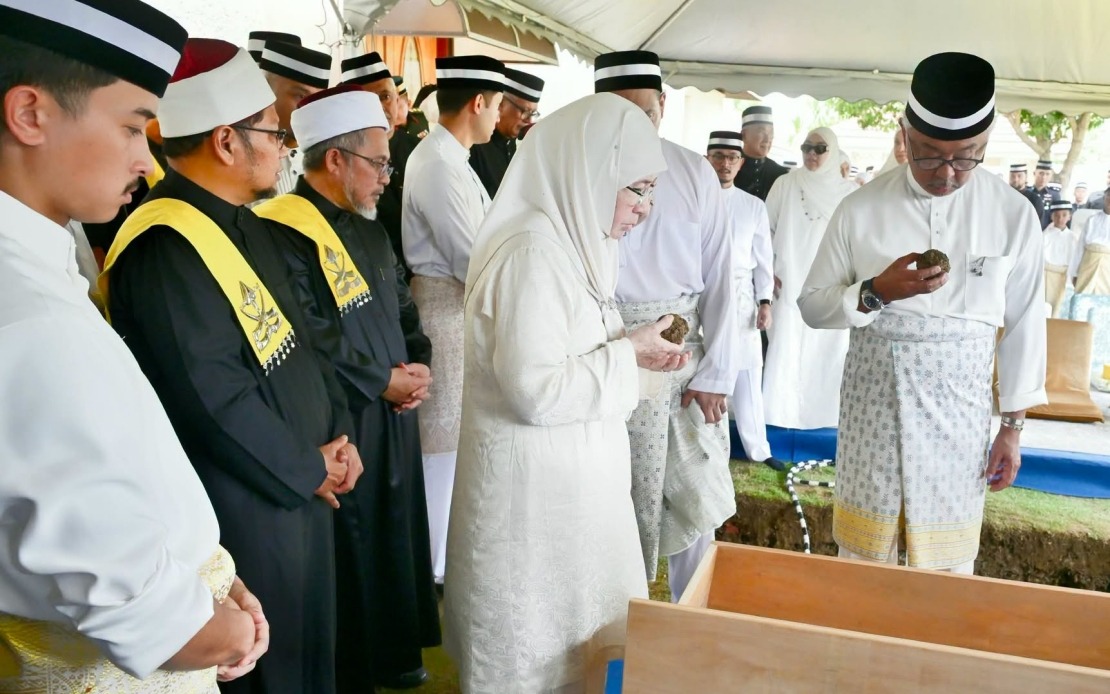
The Sultan of Pahang, Al-Sultan Abdullah Ri'ayatuddin Al-Mustafa Billah Shah, has declared an official three-day period of mourning for the Pahang royal family in the wake of his elder sister's death. Tengku Puteri Seri Kemala Tengku Datuk Seri Aishah, who passed away on Wednesday evening at a Kuala Lumpur hospital, was remembered as a significant figure within the state's royal household. Her funeral rites were completed at the Royal Mausoleum in Pekan the same afternoon, with the mourning observance beginning immediately thereafter and extending through Saturday.
According to a formal statement released by Maj Gen Datuk Mohamed Zahari Yahya, the Comptroller of the Royal Household of the Sultan of Pahang, all members of the royal family have been instructed to adhere to specific protocols during the mourning interval. The dress code stipulations represent a central element of the observance, reflecting traditional practices within Malaysia's royal institutions. Female members are required to wear white garments throughout the three-day period, while their male counterparts must similarly don white attire and also wear a traditional head covering during this time of reflection and remembrance.
The death marks a significant loss within the palace hierarchy, particularly for the Sultan and the Tengku Ampuan of Pahang Tunku Azizah Aminah Maimunah Iskandariah. As the reigning Sultan's elder sibling, Tengku Puteri Seri Kemala held an important position within the state's dynastic structure, and her passing represents a poignant moment for both the immediate royal circle and the broader Pahang community. The formal acknowledgment through the three-day mourning protocol underscores the weight placed on familial bonds within Malaysia's royal traditions.
Beyond the immediate royal household, the state authorities have extended an invitation to the broader population of Pahang to participate in commemorative acts of remembrance. Citizens have been specifically encouraged to recite Al-Fatihah, the opening chapter of the Quran, as a spiritual gesture honouring the deceased and supporting the royal family during this period. This public dimension of the mourning process reflects the integration of Islamic observances within Malaysia's constitutional monarchy framework, where the Sultan's personal losses are often treated as collective moments of reflection for the state.
The appeal for prayers and supplication extends beyond mere formality, representing a request for the community to petition for divine mercy and forgiveness on behalf of the late Tengku Puteri. The language employed in the official statement emphasises the spiritual dimension of the passing, framing it within Islamic tradition while simultaneously acknowledging the profound emotional impact on those closest to her. This dual focus on both the internal family experience and the external community response demonstrates how Malaysian royal protocols navigate between private grief and public ceremonial duty.
Tengku Puteri Seri Kemala's death at 9.15 pm on Wednesday evening concluded what may have been a period of illness, though specific health circumstances were not disclosed in official announcements. The relatively swift completion of funeral arrangements reflects both the efficiency of royal administrative procedures and the desire to observe Islamic burial practices, which traditionally prioritise swift interment. Her internment at the Royal Mausoleum in Pekan, the traditional burial ground for Pahang's senior royalty, emphasised her standing within the state's dynastic lineage and ensured her resting place would remain in proximity to her birthplace and family seat.
The three-day mourning declaration, while drawing from Malaysia's established royal protocols, serves multiple functions within the state's governance framework. It provides a structured period for official expressions of condolence, enables the royal household to manage ceremonial responsibilities with public dignity, and creates space for the Sultan and his immediate family to observe their grief while maintaining the continuity of state functions. The specificity of the dress code requirements ensures that the mourning observance remains visually evident throughout the period, allowing both the royal family and the broader public to recognise and respect the moment.
For Malaysian royalty watchers and students of constitutional monarchy, such observances offer insight into the enduring protocols that structure royal life across the peninsula's sultanates. Each state maintains distinct practices while operating within a broader framework of Islamic principles and Malaysia's federal constitutional arrangements. The Pahang declaration exemplifies how individual sultanates continue to balance modernisation with the preservation of ceremonial traditions that anchor their legitimacy and cultural significance within their respective societies.
The passing of Tengku Puteri Seri Kemala and the subsequent mourning declaration arrives at a time when Malaysia's royal institutions continue to navigate their roles in contemporary governance. The ceremonial response to her death, though traditional in character, reflects the ongoing relevance of these protocols in maintaining social cohesion and reaffirming the cultural and spiritual dimensions of Malaysia's constitutional framework. Her legacy within the Pahang royal household will endure through the family records and institutional memory of the state, while the three-day observance provides a final public acknowledgment of her place within both her immediate family and the broader Pahang community.

