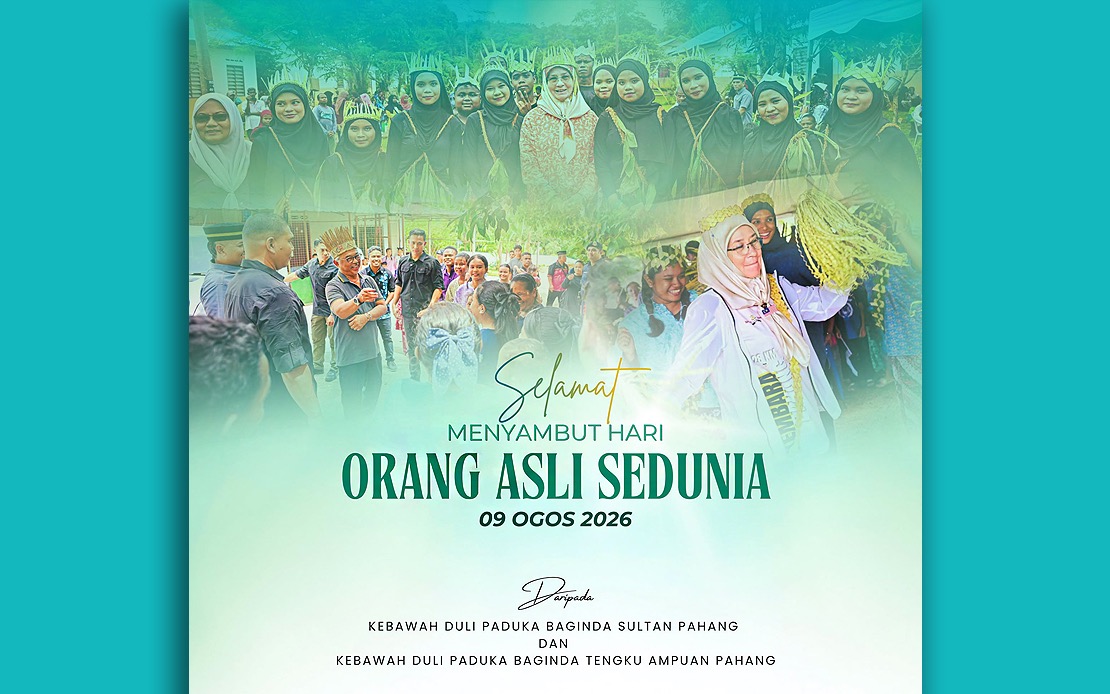
The Sultan of Pahang, Al-Sultan Abdullah Ri'ayatuddin Al-Mustafa Billah Shah, and Tengku Ampuan Pahang Tunku Azizah Aminah Maimunah Iskandariah have issued a formal recognition of the Orang Asli community's profound significance to Pahang's cultural landscape. In a statement released through official channels, the royal couple emphasised how indigenous communities have shaped and enriched the state's traditions, customs and heritage—elements that form the bedrock of Pahang's distinct identity within Malaysia's diverse cultural tapestry.
The timing of this acknowledgement is particularly meaningful as it coincides with observance of the 2026 International Day of the World's Indigenous Peoples, a United Nations-designated occasion that amplifies global attention on the rights, welfare and contributions of indigenous populations. By aligning their message with this international recognition, Pahang's leadership has positioned the state within a broader conversation about indigenous rights and cultural preservation that resonates across Southeast Asia and beyond.
Central to the royal message is a forward-looking commitment to expanding tangible opportunities for the Orang Asli community across multiple dimensions of development. The statement specifically highlights education as a priority area, reflecting broader Malaysian concerns about ensuring that marginalised communities gain equitable access to quality schooling. Educational advancement has long been identified as a critical lever for breaking cycles of poverty and enabling intergenerational mobility, concerns that resonate deeply within Pahang's Orang Asli populations.
Beyond education, the royal couple's statement explicitly encompasses economic development and human capital enhancement. This signals recognition that cultural preservation alone cannot address the material challenges facing many Orang Asli families, many of whom face significantly higher rates of poverty compared to national averages. By framing economic opportunity as intertwined with cultural protection, the statement attempts to navigate the delicate balance between modernisation and cultural continuity—a persistent tension in indigenous development policy across Southeast Asia.
A particularly noteworthy element of the royal message is its explicit safeguard regarding cultural identity. Rather than presenting development as a one-directional process of assimilation or modernisation, the statement insists that educational and economic gains must occur while ensuring that Orang Asli identity, customs and heritage remain central to community life. This formulation reflects evolving best practices in indigenous policy that reject the false dichotomy between development and cultural preservation, instead framing them as complementary objectives.
The statement's emphasis on skills development points toward contemporary workforce challenges in Malaysia. The nation's economy increasingly demands specialised technical capabilities, yet Orang Asli communities historically have faced barriers to vocational training and skills certification. By explicitly naming skills development, the royal message suggests awareness of these structural gaps and a commitment to ensuring indigenous Pahangites can participate competitively in the modern economy.
The broader call for unity, respect and cooperation reflects an understanding that Orang Asli wellbeing cannot be advanced through top-down initiatives alone. Sustained progress requires buy-in from the wider Pahang community and cooperation across governmental and non-governmental actors. By urging all residents to uphold these values, the royal statement attempts to cultivate an enabling environment where Orang Asli advancement becomes a shared state priority rather than a marginalised concern.
For Malaysian policymakers and civil society observers, this royal acknowledgement carries practical significance. Formal recognition from state leadership can catalyse resource allocation, programme design and institutional attention. Pahang's significant Orang Asli population—concentrated in areas such as Kuantan—stands to benefit from renewed focus on community-centred initiatives. The statement's specific mention of education, economic development and skills training suggests potential policy direction that relevant state agencies might operationalise.
Regionally, Pahang's approach mirrors growing recognition across Southeast Asia of indigenous communities' contemporary relevance. Malaysia, Indonesia, Thailand and the Philippines all grapple with balancing indigenous rights and development imperatives. By articulating commitment to both cultural preservation and material advancement, Pahang's leadership offers a model that other jurisdictions may study and adapt to their own contexts.
The statement also carries implications for how Malaysia positions itself on international indigenous affairs platforms. As a multiethnic nation with substantial indigenous populations, Malaysia's track record on Orang Asli rights and development frequently attracts international scrutiny. Royal pronouncements affirming community value and pledging enhanced opportunities contribute to Malaysia's broader narrative on indigenous inclusion, though civil society observers continue to emphasise that rhetorical commitments must translate into measurable improvements in service delivery, land rights protection and community economic participation.
Moving forward, the significance of this statement will ultimately depend on how effectively announced commitments translate into concrete programmes, budget allocations and institutional reforms. Orang Asli communities across Pahang will watch closely to assess whether expanded educational access, economic development initiatives and skills training opportunities materialise, and whether such initiatives genuinely centre indigenous agency and priorities rather than imposing externally designed solutions.

