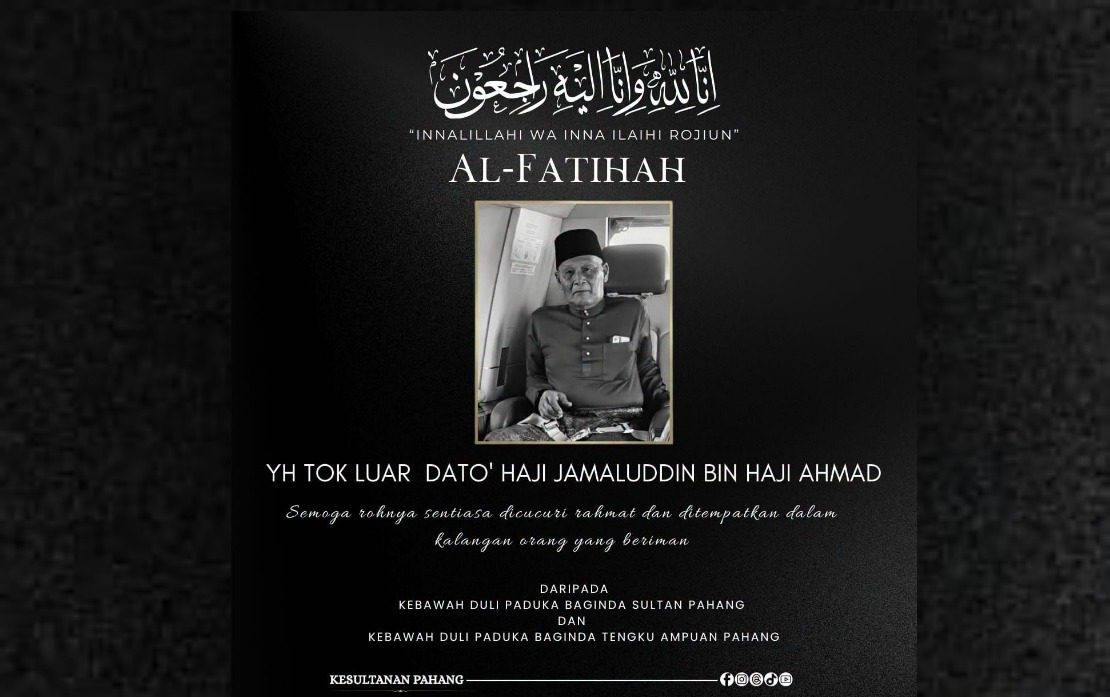
The royal household of Pahang has expressed profound grief over the death of Tok Luar Datuk Jamaluddin Ahmad, who passed away at Tengku Ampuan Afzan Hospital in Kuantan early on June 28. Sultan Al-Sultan Abdullah Ri'ayatuddin Al-Mustafa Billah Shah and Tengku Ampuan Tunku Azizah Aminah Maimunah Iskandariah issued statements mourning the loss of the respected figure, whose death was confirmed at 6:48 am through official hospital records.
In their official statement released via the Kesultanan Pahang Facebook channel, the royal couple remembered Jamaluddin as a steadfast devotee of the Pahang Sultanate institution. The characterisation reflects the significant role such individuals often play within the traditional power structures that underpin Malaysia's constitutional monarchy system. Tok Luar positions, in the Pahang context, represent custodians of cultural heritage and institutional continuity, making such figures integral to the ceremonial and administrative frameworks that support the sultanate.
The royal message conveyed more than ceremonial sympathy, encompassing spiritual well-wishes rooted in Islamic tradition. Their Majesties prayed that Jamaluddin's soul would receive divine mercy and forgiveness, that his virtuous actions during his lifetime would be recognised and accepted before Allah, and that he would ultimately be numbered among the faithful and righteous servants. This layered blessing reflects the integrated role of Islamic observance within Malaysia's royal protocols and the cultural significance accorded to such transitions within Muslim-majority communities.
The gesture of royal condolence serves multiple functions within Malaysia's social and constitutional fabric. Such statements reinforce the symbolic position of the Sultan as both temporal and spiritual custodian of Pahang's welfare, extending the royal institution's reach into moments of communal significance beyond formal governance. For families grieving the loss of respected community members, official acknowledgment from the throne validates the deceased's contributions and provides a measure of public recognition that resonates throughout regional networks.
Tok Luar Datuk Jamaluddin's death also underscores the generational transitions occurring within traditional leadership structures across Malaysia. As elder figures who embody historical continuity pass away, their departures often prompt broader reflection on institutional knowledge, cultural transmission, and the evolving relationship between traditional authority and contemporary governance frameworks. In Pahang specifically, such losses resonate within established networks that have influenced local administration, ceremonial proceedings, and community cohesion for decades.
The Sultan and Tengku Ampuan additionally directed prayers toward the deceased's family, seeking that they find strength, resilience, and equanimity as they navigate their loss. This aspect of the royal message acknowledges grief as a legitimate communal experience while positioning the sultanate as a source of spiritual fortitude during times of personal adversity. In Malaysian society, such royal acknowledgment often provides comfort that extends beyond the immediate family to encompass broader social circles connected to the deceased.
The invocation of Al-Fatihah that concluded the official statement represents the standard Islamic prayer for the deceased observed across Malaysia's Muslim communities. Its inclusion in official royal communications reinforces the seamless integration of Islamic practice within state functions and demonstrates how religious observance operates as a binding element throughout Malaysia's institutional hierarchy. The formulaic yet sincere nature of such statements reflects centuries of established court protocol adapted to contemporary communication methods.
Tengku Ampuan Afzan Hospital, where Jamaluddin spent his final moments, stands as a major medical facility serving Pahang's population and represents the sophisticated healthcare infrastructure that characterises modern Malaysia. That the Tok Luar received care at this institution speaks to accessibility to quality medical services regardless of social standing, though such final outcomes inevitably prompt reflection on mortality and the finite nature of human life across all social strata.
The timing and framing of this condolence statement reflects the importance Pahang's royal administration places on acknowledging the passing of significant figures within the state's traditional hierarchy. By issuing formal recognition through official channels, the sultanate maintains continuity of customary respect while adapting to digital-age communication norms. Such digital statements now constitute permanent records within public consciousness, available for future reflection on Pahang's notable figures and the successive waves of leadership transitions that characterise institutional life.
For residents of Pahang and observers of Malaysia's constitutional structures, Tok Luar Datuk Jamaluddin Ahmad's passing represents the natural if sorrowful cycle through which institutions renew themselves. The royal family's measured response demonstrates institutional resilience and continuity even as individual contributors to that framework complete their earthly journeys. In broader Southeast Asian context, Malaysia's formal integration of Islamic tradition with constitutional monarchy remains distinctive, and moments such as these illustrate how this particular political arrangement functions in practice.

