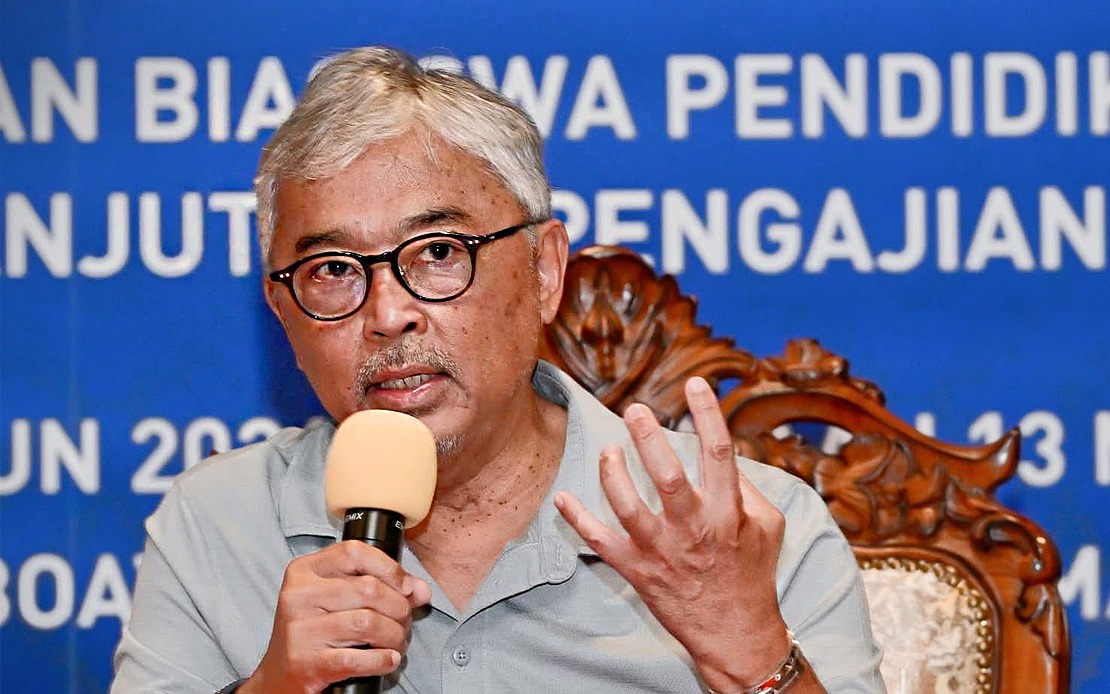
The Sultan of Pahang, Al-Sultan Abdullah Ri'ayatuddin Al-Mustafa Billah Shah, has issued a call for higher education institutions throughout the state to expand scholarship opportunities for students originating from Tioman Island. Speaking at an awards ceremony recognizing two outstanding scholars from the remote island community, His Royal Highness framed the initiative as crucial to developing human capital from rural and geographically isolated regions that often face educational disadvantages.
The Sultan's intervention comes as Institut Jantung Negara University College (IJNUC) prepares to welcome two merit-based scholarship recipients from Tioman Island into its programs. Rather than viewing this as an isolated charitable gesture, the royal decree positions the university's commitment as a template that other Pahang-based institutions should emulate, signaling broader expectations about corporate responsibility in the higher education sector.
In his address, conveyed through the Pahang Sultanate's official social media channels, the Sultan emphasized that geographical remoteness should not become a barrier to educational opportunity. The phrasing of his statement—that island residents "are still our children"—carries particular weight in Malaysian governance, where royal patronage frequently translates into institutional prioritization. This framing shifts the conversation from optional charity to incumbent duty, placing moral pressure on universities operating within the state's jurisdiction.
The Sultan's remarks also contained explicit guidance for the two scholarship recipients themselves, underscoring the performative and educative dimensions of the award ceremony. Rather than treating scholarship recipients as passive beneficiaries, His Royal Highness outlined a demanding framework for success: absolute commitment to academic excellence, rigorous time management, unwavering focus, and an understanding that their achievements would serve as benchmarks for future generations on Tioman Island. This messaging reflects broader discourse about meritocracy and individual responsibility within Malaysian governance structures.
Beyond the immediate scholarship announcement, the Sultan's intervention reveals important assumptions about regional development priorities in Pahang. Tioman Island, while renowned internationally as a tourist destination, remains a relatively isolated community where economic opportunities concentrate in limited sectors. The emphasis on higher education as a pathway for island youth reflects recognition that geographic constraints require deliberate intervention to prevent the perpetuation of educational disparities between urban centers and peripheral regions.
The Sultan's commendation of IJN extends beyond its scholarship initiative, acknowledging the institution's broader contributions to Pahang communities through consistent corporate social responsibility programming. By specifically mentioning IJN's interventions in remote areas such as Kampung Bantal alongside its international reputation in cardiac medicine, the Sultan articulates a vision of institutional excellence that encompasses both specialized technical leadership and grassroots community engagement. This balanced appreciation suggests that the royal assessment of institutional prestige now incorporates social commitment as a defining metric.
For IJNUC specifically, the royal endorsement carries significant institutional capital. As a university college specializing in medical education, IJNUC's scholarship program targets academically accomplished students from a demographic group typically underrepresented in higher education. The Sultan's public recognition elevates the program from internal initiatives to matters of state interest, potentially influencing future funding decisions, regulatory considerations, and the institution's visibility among prospective students and employers.
The implications for Southeast Asian higher education extend beyond Pahang's borders. Malaysia's federal structure distributes educational policymaking across multiple levels of government, and royal pronouncements from state sultans often influence institutional behavior across their domains. The Pahang Sultan's explicit call for expanded scholarship access mirrors broader regional conversations about inclusive growth and human capital development across ASEAN, where geographic disparities in educational access remain significant development challenges.
The Sultan's insistence that failure is "not an option" for scholarship recipients warrants careful examination. While framing success as non-negotiable reflects legitimately high expectations, it also potentially reflects broader cultural narratives about meritocratic advancement that may inadequately account for systemic barriers. However, the Sultan's simultaneous call for institutional support through scholarships acknowledges that individual effort, while necessary, requires structural enablement through educational access.
Tioman Island's specific circumstances illustrate how geographic isolation intersects with educational opportunity in Malaysia. The island's population, while small, represents a community whose development trajectory could be significantly altered by targeted higher education initiatives. The Sultan's framing suggests that such interventions should be understood not as charitable additions to institutional missions but as core responsibilities of universities operating within the state framework.
The Sultan's commentary on IJN's medical excellence and international recognition situates scholarship provision within a broader institutional narrative about combining technical specialization with community engagement. This positioning may encourage other Pahang-based institutions, regardless of their primary focus areas, to consider how scholarship initiatives could both serve community needs and enhance institutional reputational positioning.
Moving forward, the Sultan's intervention establishes a platform for monitoring institutional responsiveness to his call. University administrators across Pahang will likely interpret this royal expression as encouragement to develop or expand scholarship programs targeting underserved communities. The extent to which institutions follow this guidance will reveal how directly royal input influences higher education policy implementation at the state level and whether the call generates systematic policy change or remains a singular encouraging statement.
Ultimately, the Sultan's initiative represents a recognition that educational equity requires deliberate institutional action and that universities occupy positions of significant social responsibility. By elevating Tioman Island students' educational aspirations to a matter of state interest, the Sultan has reframed what might otherwise be routine institutional decisions as elements of broader developmental governance, potentially establishing precedents for how Pahang approaches educational access across its various communities.

