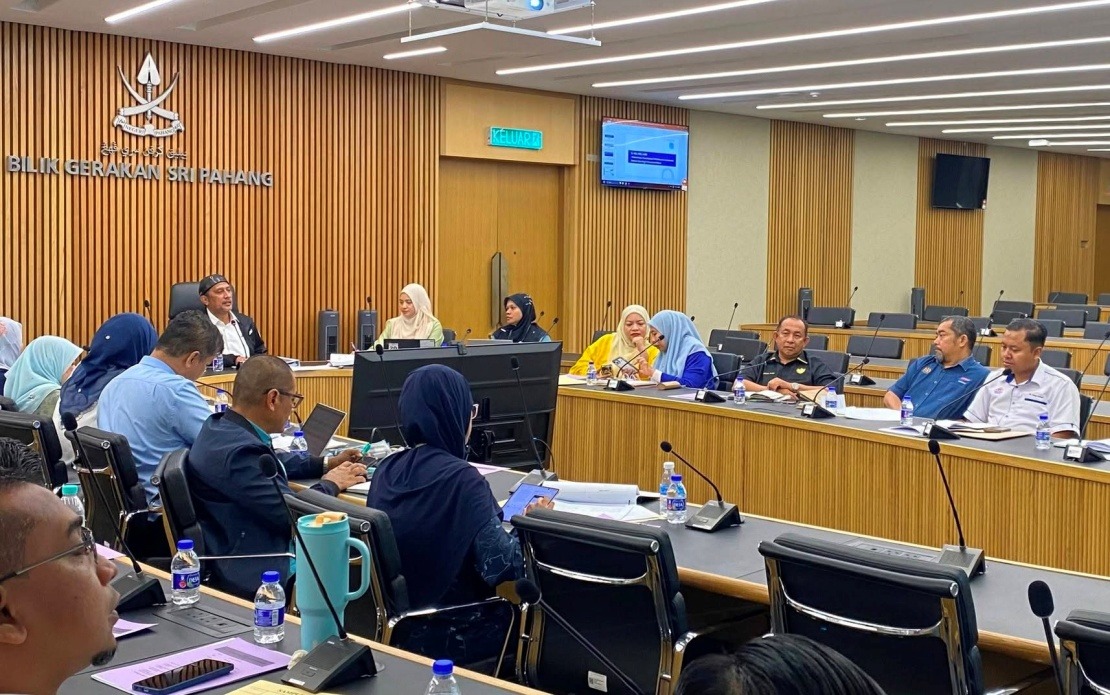
The Pahang state government has signalled its intention to request multiple agencies collaborate on untangling a complex land dispute that has left members of the Orang Asli community in Kampung Sungai Cot, Maran, caught between competing claims. The Department of Orang Asli Development (JAKOA), the Pahang Land and Mines Office (PTG), and the Land and District Office will be tasked with examining possible resolutions, according to Datuk Seri Syed Ibrahim Syed Ahmad, who chairs the state's Islamic Religious Affairs, Rural Development and Orang Asli Affairs Committee.
In a formal statement, Syed Ibrahim emphasized that the government intends to address the dispute through legally-grounded deliberation and collaborative consultation, prioritizing an equitable outcome for all stakeholders. The approach reflects official acknowledgment that the situation is more nuanced than public characterizations have suggested, and that a rush to judgment could prove counterproductive. This measured tone suggests recognition that Orang Asli land matters carry heightened sensitivity both politically and communally.
At the heart of the dispute lies a classic administrative overlap. Twelve Orang Asli individuals submitted written claims to JAKOA asserting their right to work the land in question. However, the same parcel was subsequently granted approval to a private company through a decision made by the State Executive Council (MMK) on November 4, 2015, creating a legal and operational conflict that neither party has been able to resolve unilaterally. The existence of both claims on the official record has prevented clear title from passing definitively to either side.
Since the contradiction surfaced, JAKOA representatives have engaged in discussions with affected Orang Asli claimants to explore possible compromises. These talks have revealed a narrowing of the issue: only six of the original twelve individuals continue actively to pursue their claims through JAKOA's formal processes. During these meetings, the remaining claimants contended that the disputed land formed part of their ancestral territory. However, the authorities conducting the inquiry were unable to substantiate these assertions using documentation and records available to them, highlighting a fundamental evidentiary gap that now stands as a central obstacle.
This verification problem underscores a broader historical challenge in Orang Asli land recognition across Malaysia. Traditional occupancy and oral histories, while culturally significant and often credible, frequently lack the written documentation and surveyed boundaries that modern land administration systems demand. The gap between indigenous memory and state record-keeping has left countless Orang Asli communities vulnerable to claims from third parties, even when their connection to the land stretches back generations.
Pahang's overall Orang Asli demographic context illustrates both the scale of the issue and progress made in recent years. The state is home to 264 registered Orang Asli villages housing more than 90,000 residents. Of these, 30 villages have achieved formal gazetted status under Section 6 and Section 7 of the Orang Asli Act 1954, alongside additional protections afforded by Section 62 of the National Land Code. In a further step toward land security, the state government has approved ownership transfers to the Orang Asli community across 16 villages using Section 76 of the National Land Code.
Beyond the immediate Kampung Sungai Cot dispute, a substantial queue of pending applications demonstrates both continuing demand for land formalization and systemic backlogs in processing. Currently, 75 applications for land gazettement are in various stages of advancement. Of these, 31 have moved far enough along to warrant consideration at an MMK meeting, while 44 remain entangled in overlapping claims that must be resolved before gazettement can proceed. An additional 143 applications are still in the preliminary measurement phase conducted by JAKOA, meaning years may pass before these communities see any resolution.
The Maran situation exemplifies the friction that emerges when overlapping administrative approvals collide with indigenous rights claims. The company holding the 2015 approval holds a legitimate government decision in its favor, yet Orang Asli communities increasingly expect meaningful recognition of their connection to ancestral lands. Neither position is without merit under Malaysian law, which recognizes both private property rights and Orang Asli customary entitlements—but the two can conflict sharply at ground level.
Syed Ibrahim's invocation of a "consultative approach" and "best solution for the benefit of all parties" signals an openness to creative remedies beyond simple winner-take-all outcomes. Possibilities might include phased compromise, partial land transfers, joint-use arrangements, or compensatory land swaps elsewhere. However, the practical viability of such solutions depends heavily on the company's willingness to negotiate and the government's capacity to identify alternative suitable land for transfer.
For Malaysia's broader Orang Asli affairs, the Pahang government's decision to engage proactively offers a template worth observing. Many similar disputes across the peninsula remain unresolved, festering as sources of frustration within indigenous communities and complicating resource management. A visible, transparent process in Maran—even if imperfect—could establish precedent for handling comparable cases more efficiently and equitably than past ad-hoc approaches.
The challenge ahead for Pahang lies in translating bureaucratic intention into tangible progress. JAKOA, PTG, and the Land and District Office will need to operate with genuine coordination rather than pursuing institutional turf wars. They must also find ways to credit Orang Asli historical claims even when written proof is scarce, recognizing that indigenous communities' deep roots in the land merit weight in deliberation. The resolution of Kampung Sungai Cot's dispute may ultimately hinge less on administrative procedure than on political will and the recognition that Orang Asli land security remains a moral and constitutional obligation that supersedes narrow commercial interests.

