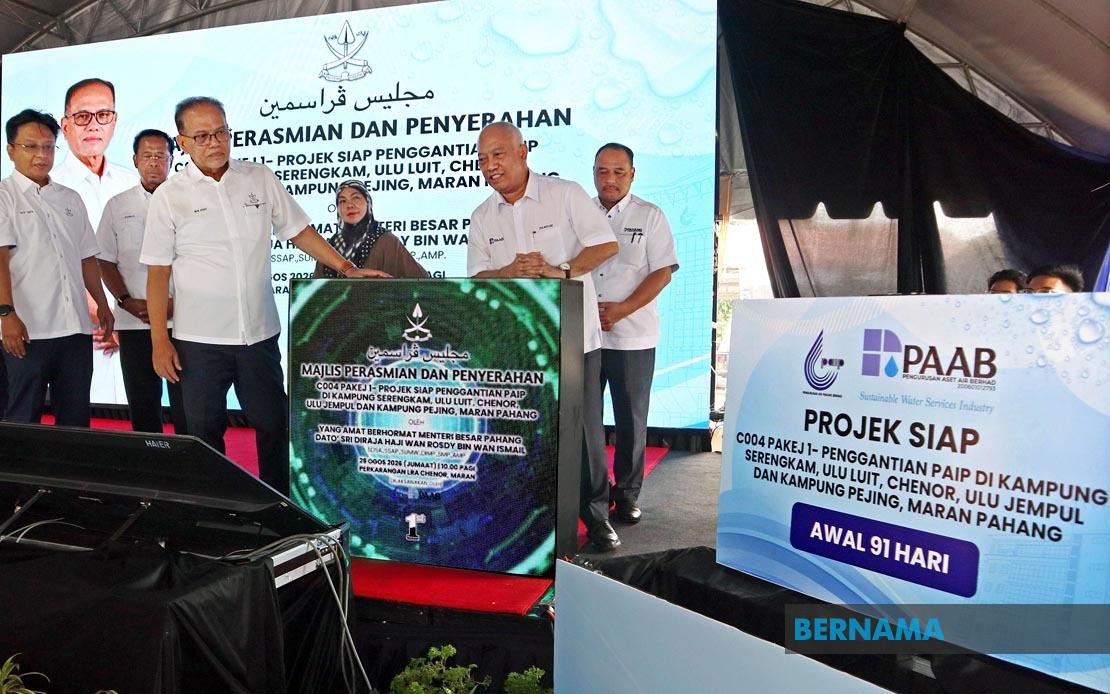
The Pahang government is preparing a methodical approach to resolve the recurring problem of shallow waters in Sungai Pahang, with particular concern for affected communities in areas like Kampung Pesagi. Menteri Besar Datuk Seri Wan Rosdy Wan Ismail announced the commitment during his visit to Maran district on Wednesday, emphasizing that any intervention must be grounded in thorough research rather than ad hoc measures. The shallowing of Malaysia's longest river has created tangible difficulties for residents whose livelihoods and daily activities depend on adequate water depth, making this a pressing issue for state authorities.
Wan Rosdy outlined a structured process that begins with collecting detailed intelligence from district-level administrators and other relevant agencies about the current state of the riverbed and water conditions. This foundational data will then be presented to the state executive council for detailed examination and refinement before decisions on specific remedial actions proceed. The Menteri Besar's emphasis on obtaining comprehensive reports underscores recognition that the problem likely has multiple contributing factors—from geological changes to upstream water management to sedimentation patterns—that require understanding before resources are deployed.
The state government's cautious approach reflects awareness that superficial fixes rarely address structural water management challenges in tropical river systems. Short-term interventions might provide temporary relief, while medium and long-term strategies would likely involve more substantial infrastructure modifications or watershed management adjustments. Wan Rosdy indicated that the council will deliberate on which combination of these timeframe-specific measures suits Sungai Pahang's particular circumstances, suggesting recognition that different sections of the river may require different solutions depending on local topography and usage patterns.
Beyond the immediate river problem, the Menteri Besar's comments highlight the economic importance of maintaining healthy river conditions throughout Pahang. Communities dependent on fishing, water transport, and agriculture alongside the river cannot function effectively when water levels drop significantly. Tourism and recreational activities that draw visitors to the region also depend on navigable river conditions. The ripple effects of a chronically shallow river thus extend beyond simple environmental management into questions of regional economic resilience and livelihood security for thousands of residents.
The Maran district visit also showcased progress on parallel infrastructure initiatives that form part of Pahang's broader development agenda. The completed pipe replacement programme at the Chenor Water Treatment Plant addresses separate but related water infrastructure challenges. Four districts have already achieved resolution rates exceeding 90 percent in addressing water supply problems, with Maran expected to join that cohort shortly. This demonstrates simultaneous attention to both water quantity and water distribution systems—complementary priorities in a state seeking to modernize its essential services.
Wan Rosdy pointed to the Tenaga Nasional Berhad (TNB) infrastructure development in Kampung Awah as another example of the state's investment in long-term growth platforms. The 500kV Transmission Main Intake Substation project, involving approximately RM350 million in capital allocation and targeted completion by 2030, positions Pahang to strengthen its power grid infrastructure. By creating a more robust energy transmission network connecting strategic East Coast locations, the state aims to build the kind of infrastructure that attracts manufacturing and technology investment.
Energy infrastructure resilience carries particular significance for Southeast Asian economic competitiveness. Investors considering regional locations increasingly prioritize areas with reliable, redundant power systems capable of supporting continuous industrial operations. By completing this transmission network enhancement, Pahang signals serious commitment to becoming a preferred destination for capital-intensive industries. The project's 2030 completion timeline aligns with broader Malaysian infrastructure modernization goals and positions the state advantageously relative to competitors in the region.
Wan Rosdy characterized infrastructure development and sustained implementation of investment projects as essential to economic growth and employment creation. This framing reflects understanding that state-level prosperity increasingly depends on foundational systems—reliable water supply, adequate power availability, navigable rivers, and modern transportation links. Without these fundamentals functioning effectively, even well-intentioned business development efforts struggle to gain traction. The coincidence of addressing Sungai Pahang's shallowing problem alongside major energy infrastructure work demonstrates a holistic approach to state development.
For Malaysian readers and Southeast Asian observers, Pahang's methodical approach to the river problem offers a case study in how state governments balance urgency against the need for proper analysis. Riverside communities need solutions, yet premature action based on incomplete understanding can waste resources or worsen conditions. The commitment to data-driven decision-making, while potentially testing the patience of affected residents, reflects governance best practices increasingly expected in the region. Transparency about the decision-making timeline and the factors being analyzed helps build public confidence.
The integration of the Sungai Pahang project within broader state development frameworks reveals how different infrastructure and environmental challenges interconnect. Water management, power provision, and economic development cannot be addressed in isolation. Communities facing river shallowing will benefit most when state government action combines immediate relief with systemic improvements to water infrastructure and economic opportunity. Pahang's sequential but comprehensive approach suggests recognition of these interconnections and determination to build resilient solutions.
Looking forward, the success of this initiative will depend heavily on the quality and timeliness of the reports being compiled by district authorities. Early indications suggest the state government is taking the analytical phase seriously rather than rushing toward predetermined solutions. How quickly these findings translate into council decisions and subsequent implementation will shape whether residents dependent on Sungai Pahang experience genuine improvement within reasonable timeframes. The wider regional audience will watch Pahang's progress as a bellwether for how Malaysian states manage complex infrastructure challenges requiring coordination between multiple agencies and levels of government.

