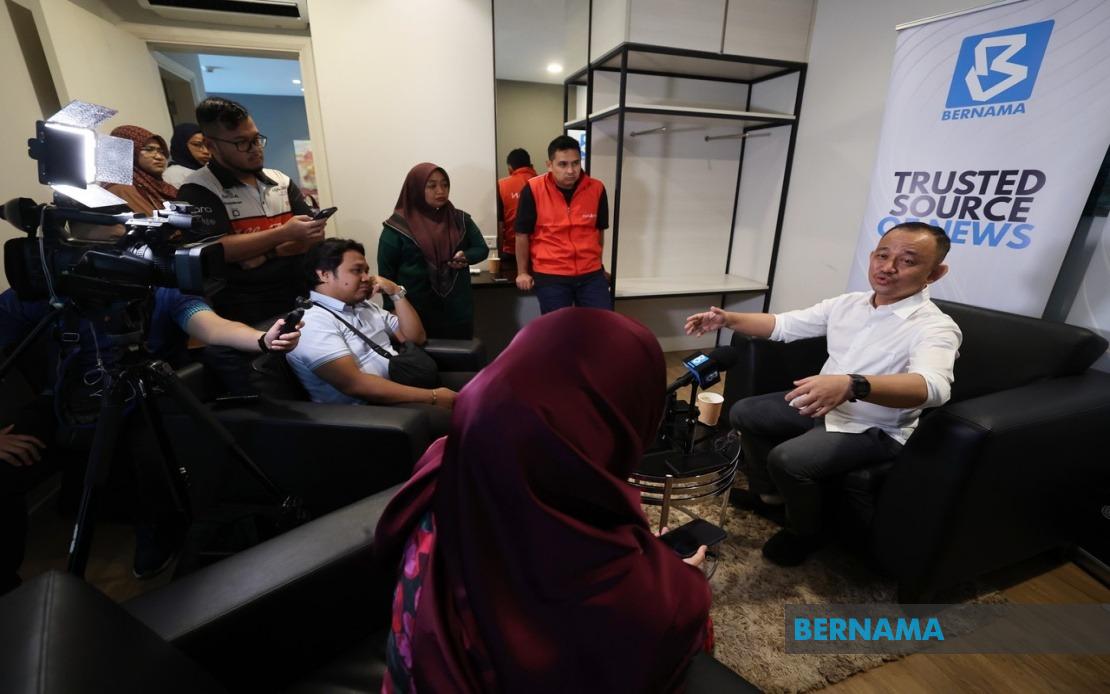
Pakatan Harapan has made clear its position that the appointment of Johor's next Menteri Besar remains the constitutional prerogative of the Sultan of Johor, should the coalition secure victory in the upcoming state election. The announcement came from Dr Maszlee Malik, PH's candidate for the Puteri Wangsa state seat, who emphasised the coalition's respect for the Palace's role in the selection process and its reluctance to pre-empt or lobby for particular individuals.
The clarification addresses mounting speculation on social media that has circulated naming various figures as potential Menteri Besar candidates from the PH bloc. By publicly acknowledging the Sultan's constitutional authority, the coalition has sought to quell premature discussions about leadership succession and redirect attention toward its campaign priorities. This approach reflects a careful balance between maintaining party discipline and honouring the institution of the monarchy, a particularly sensitive matter in a state where the Palace wields significant political influence.
Maszlee explained that PH has intentionally avoided any internal discussions about the Menteri Besar position, viewing such conversations as premature and potentially divisive before the outcome of the 16th Johor state election becomes known. The coalition's focus instead remains trained on presenting a comprehensive policy platform and demonstrating its ability to deliver effective governance across all constituencies. By framing the leadership question as secondary to broader service commitments, PH has attempted to redirect public discourse toward substantive governance issues rather than personality-driven politics.
The coalition has adopted a narrative emphasising collective responsibility and team-based leadership rather than dependence on any single leader's prominence or credibility. Maszlee's invocation of the "Avengers" metaphor—describing all 56 candidates fielded by the coalition as essential components of a unified force—underscores this messaging strategy. This approach seeks to build confidence in PH's broader capabilities and counter perceptions that the coalition lacks depth or relies too heavily on particular figures to drive electoral success.
Johor's constitutional framework grants the Sultan explicit authority over key state positions, a feature that distinguishes Malaysian monarchical practice from purely ceremonial models found elsewhere. While the convention holds that the Sultan typically appoints as Menteri Besar the leader of the party or coalition commanding majority support in the state assembly, discretionary elements remain embedded in the process. PH's public deference to this framework demonstrates awareness of the need to maintain constructive relationships with the institution and avoid appearing to dictate terms to the Palace.
The timing of Maszlee's remarks carries strategic significance, arriving as campaigning intensifies ahead of early voting on July 7 and general polling on July 11. Any appearance of internal jockeying for the top position could undermine the coalition's carefully constructed image of unity and forward-planning. The speculation linking Maszlee himself to the Menteri Besar post made his denial particularly important—accepting such positioning could have appeared presumptuous and potentially alienated colleagues within the coalition or supporters of rival contenders.
For Malaysian voters and observers, this episode reflects broader patterns within the country's federal structure, where state governments operate with considerable autonomy and where the role of traditional institutions remains substantially more powerful than in many comparable democracies. The respect PH has demonstrated toward the Sultan's prerogative, whether motivated by genuine constitutional principle or strategic calculation, underscores how institutional hierarchies shape political competition at the state level. This dynamic differs markedly from electoral contests in states where gubernatorial appointments follow more straightforward democratic procedures.
The coalition's emphasis on fielding strength across all 56 contested seats reflects recognition that electoral mandates in Malaysian politics require not merely victory but demonstration of comprehensive support. A narrow coalition victory might provide grounds for the Sultan to exercise discretion in selecting a Menteri Besar, whereas overwhelming electoral success typically commits the Palace to accepting the coalition's de facto leader. This dynamic creates incentives for PH to pursue ambitious victories rather than mere plurality successes.
For the broader Southeast Asian region, Johor's election carries significance beyond state boundaries given the state's economic importance, its proximity to Singapore, and its role in national political calculations. The outcome could influence federal dynamics and party strength in other states, making the election consequential for Malaysia's overall political trajectory. PH's measured approach to the Menteri Besar question suggests a coalition focused on winning decisively enough to foreclose controversy over the Palace's appointment decision.
The coalition's positioning also addresses concerns among some observers about whether political parties adequately respect constitutional institutions and traditional hierarchies. By explicitly acknowledging the Sultan's role and refraining from advance positioning, PH has sought to present itself as institutionally responsible and respectful of the constitutional order. This stance may prove particularly appealing to voters concerned about governance stability and institutional integrity.
As the election approaches, the focus on governance platforms rather than personality politics aligns with apparent voter preferences evident in recent Malaysian electoral cycles. The emphasis on team-based approaches and service delivery resonates with constituencies increasingly sceptical of leader-centric politics and more interested in tangible policy outcomes. PH's messaging thus reflects both constitutional respect and contemporary political pragmatism.

