Pakatan Harapan is holding firm to its founding principles of integrity and governance competence even as the coalition grapples with disappointing performances in recent state elections. Senior party figures have publicly renewed their dedication to a political philosophy centred on values and administrative capability, signalling that the coalition intends to weather current electoral headwinds by returning to core messaging rather than pivoting away from its established identity. The statement comes at a critical juncture for the federal government, which continues to face pressure from multiple political fronts while managing public expectations around economic recovery and cost-of-living concerns.
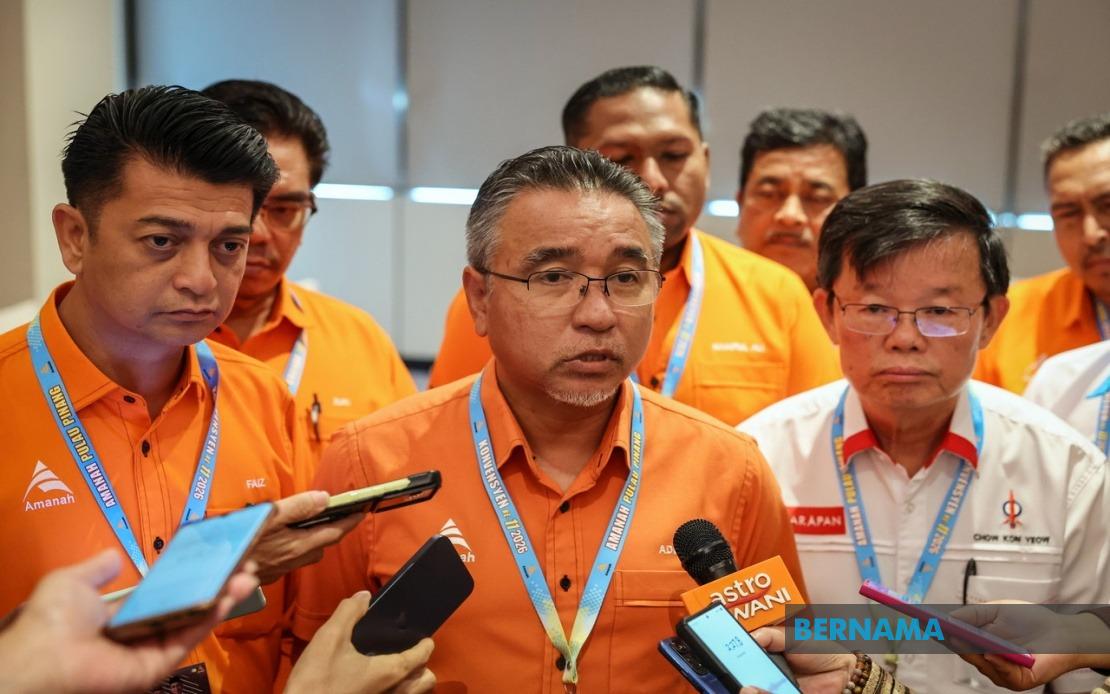
Adly Zahari, vice-president of Amanah and a key voice within the PH coalition, articulated this renewed commitment during the Penang Amanah Convention in Bukit Mertajam. His remarks reflect a strategic calculation that voters ultimately judge governments on tangible outcomes affecting their household finances, economic stability, educational opportunities, and the quality of public services they receive. This framing places the onus squarely on PH's ability to demonstrate concrete improvements in citizens' material circumstances rather than relying on ideological appeals or historical narratives about the coalition's formation and early governance record.
The coalition's recent electoral performance provides ample reason for introspection. In the Negeri Sembilan state election held on August 1, Barisan Nasional reclaimed dominance by winning 18 of 36 state seats, marking a significant recovery for the long-governing coalition. Pakatan Harapan managed only 11 seats, while Perikatan Nasional secured seven, a distribution that underscores the fragmentation of Malaysian electoral politics and the challenge PH faces in maintaining momentum at the state level despite controlling the federal government.
Recognising these shortcomings, PH leadership is preparing to undertake a comprehensive post-election analysis to identify operational and strategic weaknesses. This exercise is being framed not as a fundamental rejection of the coalition's principles but rather as a necessary recalibration to ensure that the party's message effectively reaches voters and resonates with their immediate concerns. The distinction matters because it signals continuity in direction while acknowledging that execution has fallen short of aspirations.
A critical area flagged for improvement is communication strategy. PH leaders acknowledge that the government's achievements, economic initiatives, and welfare programmes are not cutting through to the public consciousness with sufficient clarity or persuasiveness. This suggests that the coalition perceives a gap between what it has accomplished and what voters understand it to have accomplished—a communication failure rather than a performance failure, though the two are inevitably intertwined. In a media-saturated environment with fragmented information sources, controlling the narrative about government performance has become increasingly difficult for those in power.
Chow Kon Yeow, who chairs the Penang PH chapter, disclosed that the coalition will convene on August 8 to formally review electoral outcomes from both Negeri Sembilan and the recent Johor state election. These state-level contests are being treated as preview events for a potential early federal election, making the strategic planning particularly urgent. Malaysian politics operates under compressed election cycles where state results are parsed for national implications, and opposition parties gain momentum from state-level gains that they can convert into federal support.
The coalition's determination to refocus voter attention on government performance and service delivery reflects a defensive posture masked by confident language. The emphasis on job creation, welfare initiatives, and administrative effectiveness represents an implicit acknowledgment that abstract promises of clean governance and institutional integrity—central to PH's 2018 campaign—carry diminishing returns once a government assumes office and faces the grinding realities of managing public resources and competing interests. Voters who supported PH hoping for transformative change may now be more focused on whether their own economic circumstances have improved.
For Malaysian readers and the broader Southeast Asian region, PH's predicament illustrates a fundamental tension in contemporary politics: the difficulty of sustaining electoral coalitions built on anti-establishment sentiment once those same forces assume governmental responsibility. The coalition must simultaneously defend its record while conceding that communication of that record requires enhancement, a position that contains inherent contradictions and vulnerabilities that opposition parties can exploit. The August 8 strategy session will be consequential in determining whether PH can navigate these tensions effectively or whether the coalition faces continued erosion of support.
The stakes extend beyond PH's factional interests. Malaysia's political stability depends partly on whether the incumbent federal coalition can credibly demonstrate that it merits continued support, particularly as economic pressures mount and public patience for gradual reform wears thin. How successfully PH executes its revised communication strategy and whether it can translate government initiatives into voter perception of improved living standards will substantially influence the timing and outcome of the next federal election.

