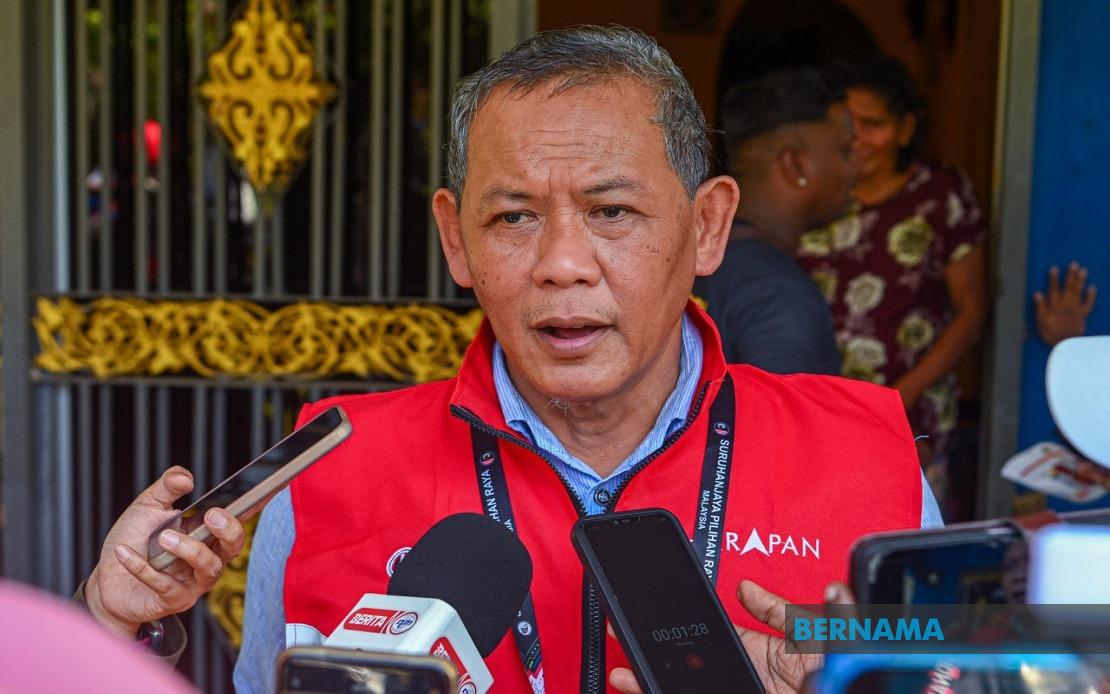
Pakatan Harapan has recalibrated its electoral pitch for the forthcoming Negeri Sembilan state election, presenting a manifesto that deliberately broadens its reach to encompass the state's middle-income households alongside its traditional focus on lower-income groups. The coalition's state chairman Datuk Seri Aminuddin Harun unveiled the platform, entitled "Negeri Sembilan Kekal Harapan," during a community engagement session with the Indian community at Sekang Estate in Linggi, emphasising that ten key commitments contained within the manifesto would translate into tangible benefits for a substantially larger cross-section of Negeri Sembilan's population.
The strategic expansion reflects a deliberate recalibration of PH's electoral mathematics heading into the August 1 polling date. Rather than maintaining the narrower targeting approach of previous campaigns that concentrated resources and promises on the B40 income bracket—households earning below RM3,000 monthly—the coalition has determined that inclusive prosperity messaging resonates more powerfully with voters across the economic spectrum. Aminuddin articulated this repositioning explicitly, noting that the manifesto ensures education access programmes and other state-level initiatives are no longer restricted to disadvantaged households but now reach families within the M40 category, those earning between RM3,000 and RM8,000 monthly. This adjustment carries significant implications for Malaysian electoral politics, as the M40 segment increasingly represents the battleground demographic that swing state-level contests.
The timing and scope of this expanded platform reveal sophisticated campaign strategy. With dissolution of the state assembly occurring on June 5 and the Election Commission scheduling early voting for July 28 before the main poll, PH recognised a narrow window to establish its competitive position. The manifesto announcement serves multiple functions simultaneously: it frames PH as responsive to the material concerns of aspirational middle-class voters who often feel overlooked by welfare-focused policies, whilst simultaneously maintaining the coalition's baseline commitment to supporting the poorest households. This bifurcated messaging approach has become increasingly common across Southeast Asia as middle-class growth creates new political constituencies demanding recognition.
Aminuddin's emphasis on PH's governmental track record since 2018 constitutes another pillar of the coalition's electoral strategy. He differentiated between manifesto-making, which he characterised as relatively straightforward, and the substantially more difficult work of translating electoral promises into actual service delivery. This distinction carries weight in Negeri Sembilan particularly, where voters have had four years to observe whether the outgoing PH state government actually implemented its commitments. The Menteri Besar pointedly asserted that the coalition had demonstrated capacity to deliver on previous pledges, positioning PH as a party of execution rather than mere rhetoric. For Malaysian voters increasingly sceptical of electoral promises, this emphasis on demonstrated competence represents a deliberate differentiation from opposition parties.
The personal electoral context of Aminuddin's own contest adds texture to the broader manifesto story. Standing for the Linggi state seat, he faces a three-cornered contest against incumbent Datuk Mohd Faizal Ramli of Barisan Nasional and Zamri Md Said of Bersatu. This triangular configuration mirrors the broader fragmentation of Malaysian electoral politics, where the traditional two-party dynamics have given way to multi-polar contests in which coalition coherence and individual performance become decisive. Aminuddin's multiple roles—as state PH chairman, Menteri Besar, PKR vice-president, Negeri Sembilan PKR chairman, and Port Dickson Member of Parliament—demonstrate the concentration of political machinery around personalities in Malaysian politics, a pattern reflected across state and federal levels.
The emphasis on expanding manifesto reach to M40 households also reflects deeper demographic and economic currents shaping Malaysian politics. As the economy has matured and nominal incomes have risen, the proportion of households classified as B40 has not shrunk proportionately, suggesting that inflation and rising costs of living have compressed purchasing power across income brackets. Voters in the M40 category increasingly report feeling economically vulnerable despite technically exceeding lowest-income thresholds, creating political space for parties offering comprehensive support extending beyond means-tested programmes. By positioning its manifesto as benefiting both B40 and M40 households, PH potentially appeals to this sentiment, though whether such inclusive positioning ultimately determines voter behaviour remains uncertain.
Aminuddin's appeal for a mature campaign environment emphasising social harmony signals awareness of underlying communal sensitivities in Negeri Sembilan. The state contains significant Indian, Malay, and Chinese populations, and historical elections have occasionally witnessed communal polarisation. By appealing for campaigns focused on substantive governance questions rather than divisive identity issues, Aminuddin attempts to establish normative expectations for the campaign period. Whether such appeals constrain actual campaign behaviour depends substantially on how competitive individual contests become and whether opposition parties perceive advantage in pursuing more inflammatory messaging strategies.
The expanded manifesto approach carries implications extending beyond Negeri Sembilan into broader Malaysian electoral competition. Should PH's expansion into M40-focused policies prove electorally effective in this state election, the strategy would likely be replicated in future federal and other state contests. Conversely, if voters perceive the M40 component as diluting commitment to B40 households, or if the expansion reduces policy credibility by appearing insufficiently focused, the approach could backfire. The August 1 polling date will provide initial empirical evidence regarding whether expanding welfare-state rhetoric to encompass broader income segments represents effective electoral positioning or strategic overreach.
The institutional context of state-level elections in Malaysia remains important for understanding their broader significance. Whilst state governments operate within constraints established by federal authority, particularly regarding tax revenue and certain policy domains, they retain substantial discretion over education delivery, local development projects, and various welfare programmes. PH's manifesto pledges regarding education and welfare initiatives represent commitments that state-level governance can reasonably implement, lending specificity and credibility to the platform. This grounding in realistic governmental capacity distinguishes the Negeri Sembilan manifesto from more expansive federal election promises that sometimes promise outcomes dependent on federal resources or authority.
Looking forward, the Negeri Sembilan election represents a significant test case for PH's electoral viability heading toward the next federal election cycle. As a state where PH currently governs, retaining control would suggest the coalition retains voter confidence despite challenges at the federal level. The expanded manifesto targeting both B40 and M40 households represents a calculated bet that inclusive rather than narrowly targeted messaging resonates with contemporary Malaysian voters. Whether this positioning proves correct will become evident within weeks, with results informing political strategy across the broader Malaysian electoral landscape.

