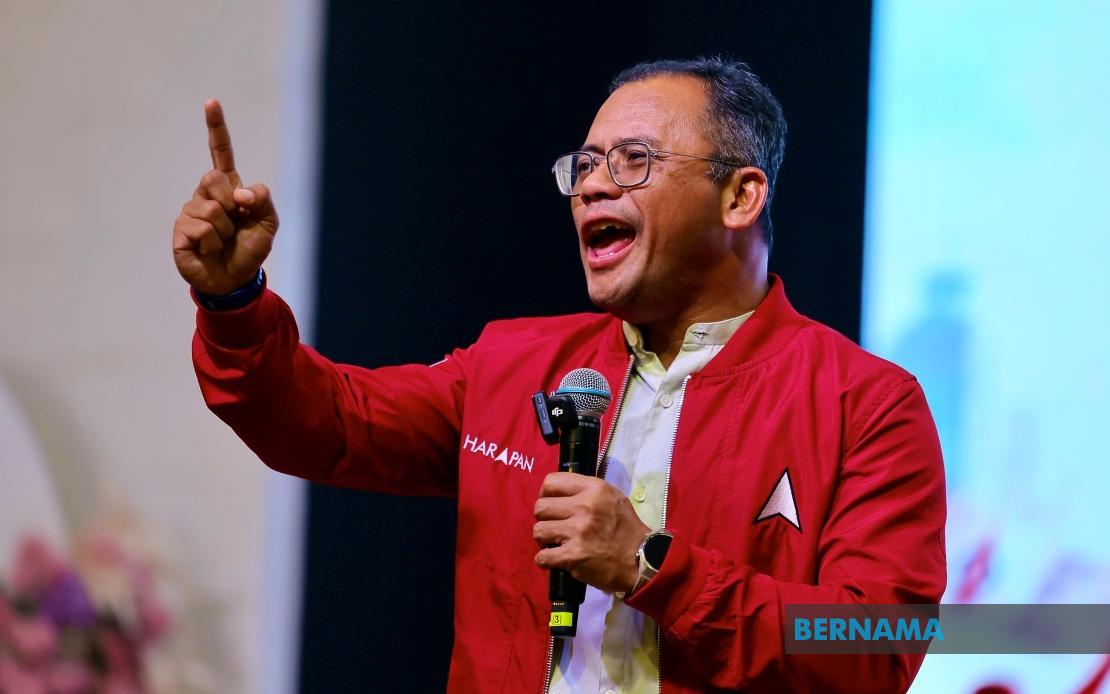
Pakatan Harapan formally presented its 'Johor for All' manifesto in Johor Bahru on July 3, laying out the coalition's comprehensive vision and policy commitments to state voters as preparations intensify for the upcoming 16th Johor state election. The launch event served as a pivotal moment for the opposition alliance, bringing together senior leadership and electoral candidates in a coordinated effort to articulate a unified platform that resonates across the state's diverse communities.
The manifesto presentation was steered by Datuk Seri Amirudin Shari, a prominent member of PH's Presidential Council and co-election director for PKR, underscoring the prominence placed on this campaign rollout by the coalition's national hierarchy. His direct involvement signals that party leadership views the Johor contest as strategically significant within the broader Malaysian political landscape, particularly given the state's status as an economic powerhouse and traditional electoral bellwether.
The coalition mobilised its three principal component parties for the occasion. Aminolhuda Hassan, who chairs PH's Johor operations, joined forces with Teo Nie Ching representing DAP's interests in the state and Datuk Seri Dr Zaliha Mustafa bringing PKR's contingent to the proceedings. This multi-party representation emphasised the collaborative nature of PH's approach, projecting an image of coordinated governance rather than factional competition among coalition members vying for influence within the state administration.
The 'Johor for All' branding itself carries significant symbolic weight, deliberately emphasising inclusivity and broad-based appeal across religious, ethnic, and socioeconomic lines. The phrase suggests PH's commitment to governance that transcends traditional communal divisions, a messaging strategy increasingly important in Malaysian politics as voters across peninsula states demand policies addressing universal concerns such as cost of living, employment, and public service quality.
For Malaysian political observers, the manifesto launch represents a critical juncture in PH's post-2022 repositioning strategy. Following the coalition's mixed electoral fortunes in recent years, including internal tensions that have periodically threatened its cohesion, the Johor campaign provides an opportunity to demonstrate renewed organisational discipline and policy coherence. Successfully articulating shared priorities across PKR, DAP, and other alliance components requires careful negotiation of potentially competing interests, particularly regarding development priorities, business opportunities, and resource allocation.
Johor's political significance extends beyond state boundaries, influencing perceptions of coalition viability at the national level. A strong showing would reinvigorate PH's narrative of credible alternative governance, whereas underperformance could embolden rival coalitions and deepen intra-PH tensions. The manifesto therefore functions not merely as a state-level campaign document but as a statement of broader political intent and competence.
The candidates assembled for the ceremony represent PH's grassroots mobilisation effort across Johor's 56 state constituencies. These nominees would typically span diverse professional backgrounds, age cohorts, and demographic profiles, reflecting the coalition's stated commitment to presenting fresh leadership while maintaining continuity with established political networks. The breadth of candidate participation demonstrated at the launch underscores the scale of organisational effort required to contest a full slate of state seats.
Regionally, the Johor campaign carries implications for Southeast Asian politics beyond Malaysia's borders. Johor's geographic proximity to Singapore and its role as a major economic corridor mean that electoral outcomes and governance quality directly influence cross-border economic activity, investment flows, and bilateral relations. PH's policy positioning on infrastructure development, port operations, and cross-border collaboration would therefore interest stakeholders across the wider region.
The manifesto launch timing coincided with broader shifts in Malaysian coalition politics, as both government and opposition blocs recalibrate strategies in anticipation of eventual federal-level elections. Johor, with its substantial number of parliamentary constituencies aligned to state seats, represents terrain where state and federal political calculations intersect. Success here could provide PH with momentum and credibility for subsequent national campaigns.
The substantive policy content of the 'Johor for All' manifesto—whether emphasising education, healthcare, infrastructure development, business facilitation, or environmental protection—would likely reflect negotiations among PH's coalition partners, each bringing distinct ideological preferences and constituency pressures. DAP's typically strong emphasis on meritocratic governance and transparency likely intersects with PKR's focus on populist economic measures and socioeconomic mobility, producing compromises embedded in the final manifesto text.
Political analysts would scrutinise the manifesto's specificity regarding funding mechanisms, implementation timelines, and accountability frameworks. Campaign promises unmoored from realistic financial planning or administratively feasible timelines can rapidly erode voter confidence, particularly among educated urban constituencies that comprise significant voting blocs in Johor's developed areas. The credibility of PH's platform therefore depends not merely on aspirational vision statements but on demonstrable capacity for execution.
As Johor voters assess competing manifestos from various coalitions contesting the state election, the 'Johor for All' platform would be evaluated against rival visions for governance, development priorities, and resource distribution. The manifesto's ultimate political impact would ultimately depend not on launch ceremony optics but on whether its contents resonate authentically with voter concerns and whether PH's track record inspires confidence in implementation capacity.

