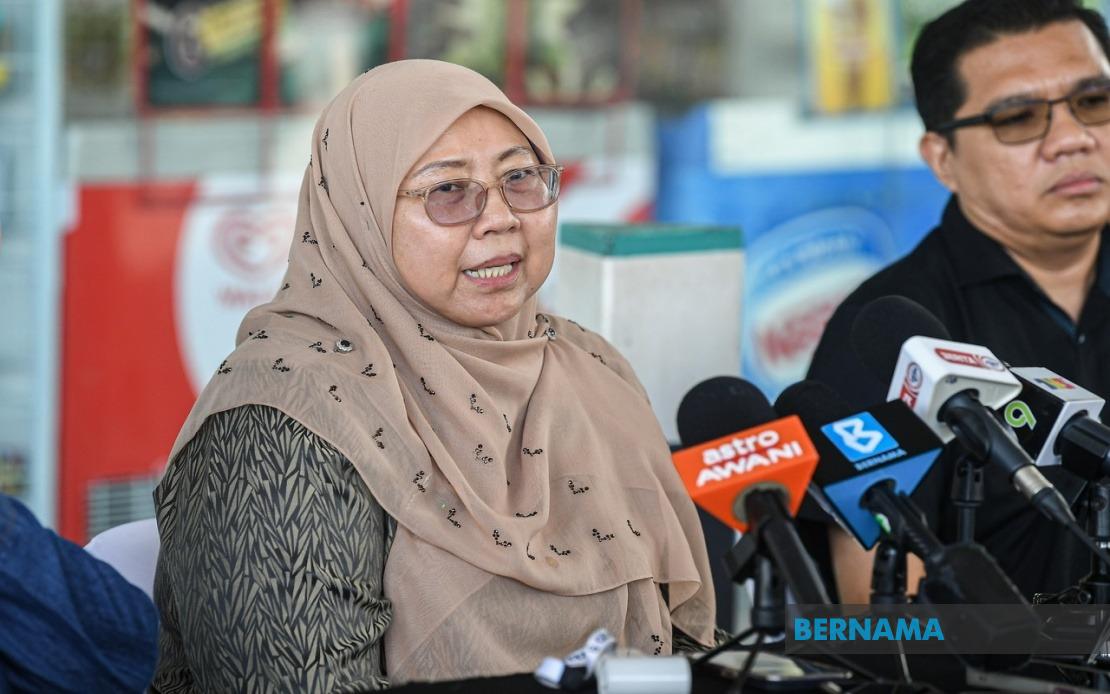
The Pakatan Harapan coalition says it is unfazed by what party officials describe as minor sabotage attempts targeting its campaign infrastructure in Johor, with senior party leadership dismissing the incidents as inconsequential to their electoral prospects in the state assembly contest scheduled for July 11. Datuk Fuziah Salleh, PKR secretary-general and Deputy Minister of Domestic Trade and Cost of Living, made the remarks during a press engagement in Johor Bahru where she characterised reported vandalism of campaign materials as isolated cases that have failed to disrupt the ruling federal coalition's push across contested constituencies.
The incidents cited by PH operatives encompass the removal and desecration of campaign posters, destruction of promotional billboards, and the burning of party flags—tactics that, whilst disruptive in nature, have not translated into meaningful momentum loss according to party assessments. Fuziah's statement represents an attempt to project organisational confidence at a critical juncture in the campaign, occurring roughly a week before voters head to the polls in what is shaping up to be a significant test of federal government popularity in one of Malaysia's most politically contested states.
PH's electoral machinery in Johor has been characterised by intensive grassroots activity, with the coalition deploying candidates in demanding schedules that span from early morning through midnight hours. Each candidate is reportedly engaging with constituents across multiple programmes daily, with some undertaking up to ten separate events within a single day. This saturation approach reflects the coalition's determination to maximise ground presence and direct voter contact, particularly amongst demographics considered crucial to electoral outcomes including younger voters and those casting ballots in state elections for the first time.
The feedback loop from voter interactions has reportedly been encouraging for PH organisers, with Fuziah highlighting notably positive reception amongst youth populations and first-time voters. This observation carries particular significance given the demographic shift in Malaysian electoral patterns, where younger constituencies have demonstrated increasing political engagement and volatile voting behaviour compared to previous electoral cycles. The coalition's emphasis on youth outreach suggests a strategic calculation that securing support amongst this segment could prove decisive in determining outcomes across marginal constituencies.
A clarification issued by Fuziah regarding candidate pledges in the Skudai and Perlis state seats underscores emerging tensions within PH's campaign messaging. Candidates in these constituencies had previously articulated what they framed as manifestos, yet Fuziah distinguished between such localised commitments and comprehensive state-level policy platforms. She emphasised that candidate pledges addressing specific constituency concerns—such as waste management difficulties—represent individual commitments rather than formal party positions, drawing a distinction designed to preserve flexibility in eventual governance while maintaining candidate-specific accountability.
Fuziah's characterisation of the boundary between constituency-level pledges and state-level manifesto reflects broader strategic considerations around campaign messaging. By classifying candidate-specific promises as personal commitments rather than binding party positions, PH provides itself with discretionary space regarding implementation priorities should the coalition secure state government formation. This approach mitigates risks associated with overly specific campaign promises that might prove difficult to deliver within budgetary or administrative constraints, whilst simultaneously allowing candidates to maintain credibility with local constituents through fulfilment of local commitments.
The distinction between manifesto and pledge carries heightened importance given that PH's official state-level manifesto remained unannounced at the time of Fuziah's remarks, with the party planning its release for the following day. This sequencing suggests deliberate campaign strategy, with PH potentially seeking to generate multiple cycles of positive media coverage through successive announcements rather than consolidating all policy positions in a single release. The timing also allows PH to synthesise feedback from ongoing ground consultations into final manifesto wording, potentially incorporating insights gleaned from voter interactions during the intensive campaign period.
The 2024 Johor state election represents the sixteenth such contest in the state, involving 172 candidates competing across constituencies of varying demographic and socioeconomic composition. The contest carries implications extending beyond Johor's borders, functioning as a barometer of federal government performance and serving as a testing ground for coalition dynamics that may influence subsequent national-level electoral calculations. Johor's significance as Malaysia's southernmost state and its historical role as a swing region capable of shifting state government control makes outcomes here relevant to broader assessments of political trajectories across the peninsula.
The reported sabotage incidents, whilst characterised by PH as inconsequential, nonetheless signal the intensity and sometimes acrimonious nature of electoral competition in Malaysian politics. The targeting of physical campaign infrastructure—posters, billboards, and party symbols—represents a tactic employed across the political spectrum and reflects the high stakes involved in state-level contests. Whether such incidents materially influence voter behaviour or merely reflect partisan frustration amongst activists remains unclear, though their prevalence suggests that electoral competition extends into physical spaces and symbolic domains beyond formal campaign messaging and policy debate.
With early voting scheduled for July 7 and main polling day set for July 11, both PH and its political opponents are in the critical final phase of campaign deployment. For PH, maintaining messaging discipline around the distinction between candidate pledges and party manifesto whilst projecting confidence in face of reported sabotage attempts represents a balancing act requiring careful communication management. The coalition's emphasis on positive voter feedback and uninterrupted campaign momentum serves to counter any narrative suggesting electoral vulnerability or organisational disruption that opposition parties might seek to cultivate.
The outcome in Johor will provide Malaysian political observers with valuable data regarding voter sentiment toward the federal government approximately three years into PH's current term following the 2022 general election. Voter responses in this contest will offer insights into whether the coalition has successfully managed governance challenges, maintained electoral coalition cohesion, and sustained appeal amongst the demographic groups most critical to its electoral fortunes. For political analysts tracking longer-term trends in Malaysian electoral politics, Johor's results in this contest will contribute to understanding trajectories that may extend through to the next general election cycle.

