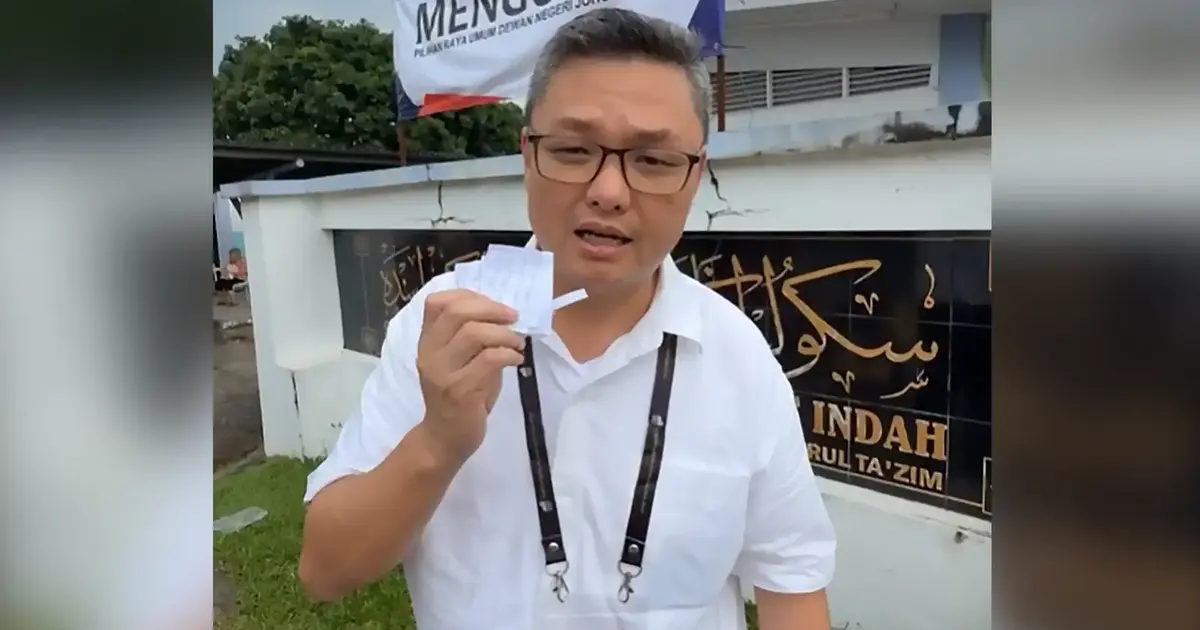
A senior Pakatan Harapan official has escalated electoral integrity concerns by filing a formal complaint against what he alleges was an unauthorised attempt by a Barisan Nasional counting agent to record individual voters' ballot selections during polling operations. Tee Boon Tsong's intervention marks the latest in a series of allegations surrounding conduct at counting stations, triggering broader questions about election administration safeguards in the country.
The complaint centres on the alleged use of handwritten notes to document voting choices, a practice that would fundamentally violate voter secrecy principles enshrined in Malaysian electoral law. Tee has called for the Election Commission to confiscate any such documentation as part of a comprehensive investigation into the matter. This demand reflects growing concern among opposition parties about whether current monitoring mechanisms at counting stations are sufficient to prevent irregularities.
Voter secrecy stands as one of the cornerstone principles of democratic elections globally and in Malaysia specifically. The confidentiality of ballot choices protects voters from coercion and vote-buying while ensuring the legitimacy of electoral outcomes. Any breach of this principle, whether isolated or systematic, undermines public confidence in the integrity of results. The allegation, if substantiated, would represent a serious procedural violation requiring thorough examination.
Election Commission procedures typically involve multiple checks and balances at counting stations, including the presence of counting agents from competing political parties who monitor the process in real time. The presence of opposition party representatives at these stations is intended to provide immediate oversight and enable rapid reporting of irregularities. However, allegations such as this suggest potential gaps in how such oversight operates or enforcement mechanisms when violations are suspected.
The timing of the complaint adds significance to the broader political discourse surrounding electoral administration. Malaysia's election system has faced periodic scrutiny regarding transparency and fairness, particularly following closely contested results and shifting political coalitions. Both Pakatan Harapan and Barisan Nasional have occasionally raised concerns about counting procedures, reflecting mutual suspicion that extends beyond this specific incident.
The Election Commission faces considerable responsibility in responding to such allegations swiftly and transparently. A thorough investigation should establish whether the alleged recording occurred, the extent of any documentation, and whether systematic attempts were made across multiple polling stations. The confiscation of evidence would be essential to any credible inquiry, as handwritten notes could reveal patterns indicating coordinated conduct rather than isolated error.
For Southeast Asian observers, the incident illustrates continuing challenges facing electoral commissions in the region regarding technical capabilities and enforcement powers. While Malaysia maintains stronger institutional frameworks than some neighbouring countries, allegations of procedural breaches demonstrate that permanent vigilance remains necessary. The region has witnessed various approaches to securing ballot integrity, from technological innovations to procedural reforms, yet no system proves foolproof without sustained oversight.
The complaint also reflects how opposition parties increasingly leverage formal procedures and investigations to maintain pressure on electoral administration. Rather than simply raising concerns publicly, Tee's decision to file an official complaint channelled through appropriate institutions demonstrates the political strategies deployed when parties perceive vulnerabilities. Whether this approach yields substantive changes depends largely on how seriously the Election Commission investigates and whether findings prompt procedural reforms.
For Malaysian voters and civil society observers, the incident underscores the importance of election monitoring by independent observers and party representatives alike. The counting station phase represents a critical juncture where votes are translated into official tallies, making this stage particularly vulnerable to irregularities. Enhanced training for election officials, clearer protocols regarding permissible documentation, and more rigorous enforcement of existing rules could help prevent future allegations.
The outcome of any investigation will carry implications beyond the immediate complaint. If the Election Commission substantiates the allegation, it may prompt questions about whether similar incidents occurred undetected at other polling stations or in previous elections. Conversely, if investigation finds no evidence or contradicts the claim, it could intensify opposition scepticism regarding electoral fairness. Either outcome requires the Commission to communicate findings clearly and convincingly to restore public confidence.
Moving forward, the incident may catalyse broader discussions about modernising electoral procedures and adopting technologies that provide transparent documentation without compromising voter secrecy. Digital counting systems with enhanced audit trails, for instance, could reduce reliance on handwritten notes while creating permanent records for verification purposes. Malaysia might examine practices from democracies with robust election systems to identify improvements applicable to local contexts.
The complaint ultimately reflects tensions inherent in competitive electoral politics where parties maintain justified interest in monitoring counting procedures while election officials balance this oversight with operational efficiency. Resolving these tensions requires clear rules, adequate training, transparent investigation of alleged breaches, and consistent enforcement. Until such systems earn genuine confidence from all major political actors, allegations like Tee's will continue surfacing periodically, testing both institutional capacity and political maturity.

