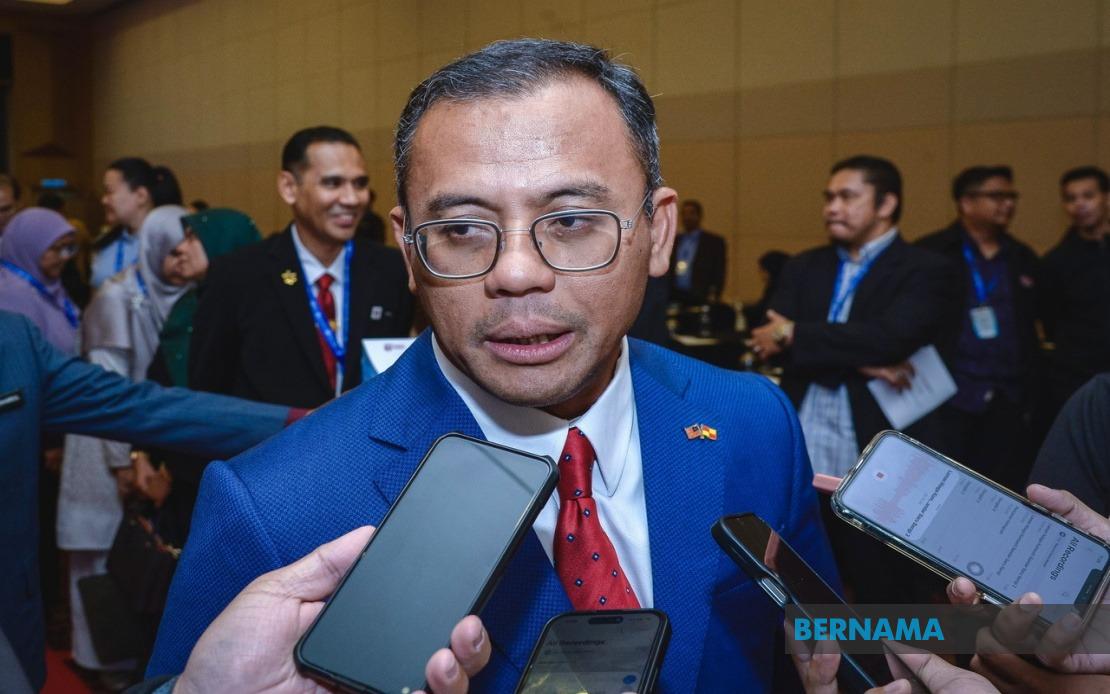
Pakatan Harapan has opened the door to potential political alliances with other coalitions and parties, but only if such arrangements serve the dual objectives of maintaining political stability and advancing the people's welfare. Datuk Seri Amirudin Shari, a senior figure in PH's Presidential Council and vice-president of PKR, articulated this measured stance during remarks at the Ecology International Conference II here in Bangi, signalling that the coalition remains pragmatic about its political positioning even as national alignments shift ahead of crucial electoral contests.
The Selangor Menteri Besar's comments reflect a broader strategic calculation within PH as Malaysia navigates a period of considerable political flux. Rather than adopt a rigid stance toward potential partners, PH has effectively drawn a line around its core principles—political stability and public interest—and indicated that any alliance meeting these criteria could theoretically be pursued. This approach positions PH as principled yet flexible, avoiding the appearance of arbitrary opposition to engagement with any particular group while maintaining that collaboration cannot proceed without substantive agreement on fundamentals.
Amirudin explicitly noted that cooperation need not be limited to Perikatan Nasional (PN) or Bersatu, the two entities most frequently mentioned in recent political speculation. By broadening the scope of potential partners, he suggested that PH's calculus is forward-looking rather than reactive, focused on which arrangements ultimately serve national interests rather than on historical grievances or factional rivalries. This rhetorical openness serves multiple functions: it allows PH to appear statesmanlike and willing to prioritise governance over politics, while simultaneously placing pressure on other coalitions to match such reasonableness.
However, Amirudin moved swiftly to quell recent speculation that Selangor's state-level PH machinery had already begun discussions with Bersatu. He categorically denied that any formal cooperation had been entered into, emphasising that no substantive talks or decisions involving Bersatu had materialised at the state level. This clarification was necessary because earlier media reports had suggested that Selangor PH was signalling openness to a Bersatu partnership, potentially in preparation for upcoming state and federal elections. By walking back such suggestions, Amirudin sought to prevent the perception that PH was fragmenting from below or that state leaders were acting independently of central party direction.
The timing of any potential cooperation, Amirudin stressed, cannot be divorced from broader electoral dynamics and party strategic interests. He indicated that hypothetical arrangements would need to be evaluated carefully at PH's central leadership level, taking into account when elections might occur and what political circumstances prevail. This insistence on centralised decision-making reflects the reality that any alliance involving PH could have ramifications across multiple states and for the federal government, and therefore cannot be determined by state-level considerations alone, however important Selangor's political weight may be.
Amirudin's framing of potential discussions as matters requiring escalation to party leadership appears designed to impose procedural discipline on state-level actors who might otherwise be tempted to explore local accommodations with rival parties. By emphasising that only ideas emanating from grassroots or arising from national political realignments would merit consideration, he created space for organic political dialogue while reserving final authority with the centre. This hierarchy of decision-making helps prevent individual state leaders or factions from committing PH to positions that the broader party leadership might later disavow.
The speculation about PH's willingness to cooperate with Bersatu appears rooted in calculations about electoral viability. Both parties have incentives to strengthen their respective positions before general elections and state contests, particularly Melaka's upcoming state election. If either party faces the prospect of being marginalised or losing ground to the other, a partnership might enhance both their electoral prospects. For PH, cooperation with elements of PN could theoretically broaden its appeal or consolidate anti-government voting in particular constituencies. For Bersatu, alignment with PH might offer a pathway to regaining influence after its departure from Perikatan Nasional's government structures.
Yet Amirudin's insistence on stability and people's interests as foundational principles suggests that any such cooperation would need to be justified in terms beyond mere electoral calculus. This reflects an understanding that Malaysian voters and civil society increasingly scrutinise political mergers and alliances through the lens of whether they serve public good or merely serve politicians' careerism. By anchoring PH's openness to cooperation around these broader principles, Amirudin attempted to elevate the conversation above transactional politics and position PH as the responsible actor willing to cooperate when circumstances warrant.
The distinction Amirudin drew between external ideas, which he characterised as merely floating around, and formal PH positions is significant. It suggests that while various political actors and commentators may speculate about potential alliances, PH as an organisation has not yet determined its course. This preservation of optionality allows PH to respond to evolving circumstances without appearing indecisive, and to evaluate proposals on their merits as they develop rather than committing prematurely to particular alignments.
For Malaysian political observers, Amirudin's remarks signal that the coming months will likely see continued maneuvering and testing of potential partnerships, with various parties attempting to gauge the seriousness of others' interest in collaboration. The key indicator will be whether PH's stated principles around stability and public interest prove sufficient to constrain its future options or whether they function primarily as rhetorical cover for pragmatic coalition-building. The Selangor state government's actual conduct in coming electoral contests will provide the most reliable measure of how seriously PH takes its stated openness to cooperation with former rivals.

