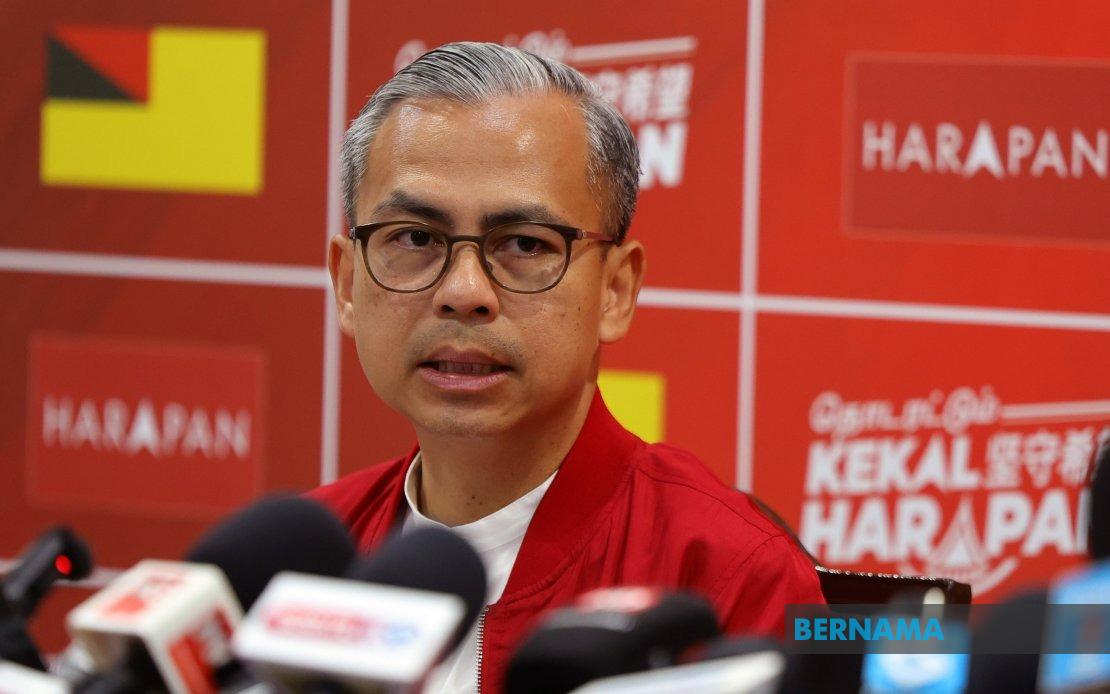
Ahead of the Negeri Sembilan state election, Pakatan Harapan has mounted a pointed rebuttal against political opponents who claim sole representation of the Malay-Muslim electorate, insisting that such exclusionary framing undermines the nation's multicultural foundations and weakens social cohesion. The coalition's pushback, articulated during a July 23 press conference in Seremban, signals an intensifying battle over political legitimacy and community representation as voting nears in Malaysia's central state.
The core dispute centres on a recurring campaign argument that one political bloc alone can credibly champion Malay-Muslim interests and values. Pakatan Harapan communications director Datuk Seri Fahmi Fadzil pointedly questioned this premise, noting that his coalition includes numerous Malay-Muslim leaders occupying influential positions across its member parties. By invoking his own Muslim credentials alongside those of Khalid Abdul Samad, the Amanah communications director, Fahmi demonstrated that religious and ethnic representation within PH spans multiple senior figures rather than being concentrated in rival camps.
The strategic implications of this messaging extend beyond defensive positioning. By attacking the notion of exclusive representation, Pakatan Harapan fundamentally challenges a political framing that has gained traction in Malaysia since the 2023 general election. Opposition groups have increasingly argued that the ruling coalition either neglects or marginalises Malay-Muslim concerns, a narrative that resonates in constituencies where religious identity and governance questions intertwine. Fahmi's intervention attempts to disrupt this storyline before polling day on August 1, offering voters an alternative perspective on how the coalition manages community interests.
The Negeri Sembilan administration under Menteri Besar Aminuddin Harun has compiled specific achievements intended to counter marginalisation claims. Mosque construction has accelerated, while zakat collection revenues have surged to nearly two-and-a-half times previous levels recorded under the prior administration. These metrics, presented as tangible evidence of commitment to Muslim-majority concerns, form part of a broader narrative strategy: that inclusive politics delivers measurable benefits to all communities rather than sacrificing one group's welfare for another's advancement.
This approach reflects a deeper philosophical distinction in Malaysian politics regarding how diversity should be managed institutionally. Fahmi articulated Pakatan Harapan's framing as one premised on shared values and collective good rather than ethnic or religious tribalism. The coalition advocates for unity built on horizontal solidarity across demographic lines—Malays united with Chinese and Indians through common purpose—rather than vertical mobilisation organised exclusively along communal boundaries. Such a vision contests the assumption that electoral competition inherently requires appeals structured through narrow identity categories.
The context of Negeri Sembilan's state election amplifies these rhetorical stakes. Early voting commenced on July 28, with the full electorate voting on August 1. As a state where Pakatan Harapan governs under the broader Unity Government framework, the coalition's performance carries implications extending beyond local representation. Results will signal whether inclusive political messaging can effectively counter identity-based campaign strategies in an environment where such narratives have demonstrated electoral potency elsewhere.
For Malaysian readers, this debate encapsulates longstanding tensions within the nation's political culture. Malaysia's official commitment to multiculturalism coexists with electoral systems where candidates and parties frequently mobilise voters through communal appeals. The tension between inclusive rhetoric and divisive practice shapes governance legitimacy across all levels. Pakatan Harapan's challenge lies not merely in asserting that it represents Malay-Muslims—the party must persuade voters that this representation occurs within a broader framework genuinely respecting plural interests rather than subordinating one community's concerns to another's dominance.
The coalition's emphasis on governance achievements rather than identity politics alone reflects lessons from recent electoral cycles. While communal messaging triggers strong responses among core supporters, floating voters increasingly respond to performance metrics demonstrating tangible improvements in their lived conditions. Mosque expansion and zakat revenue growth represent precisely this type of deliverable evidence, translating abstract commitments into concrete outcomes visible to affected communities.
Khalid Abdul Samad's attendance at the press conference symbolised Amanah's particular stake in this debate. The Islamic-oriented party within Pakatan Harapan occupies an especially delicate position, seeking to appeal to Malay-Muslim voters while maintaining coalition solidarity with non-Muslim partners like DAP. By visibly supporting Fahmi's messaging, Khalid reinforced that Islamically-conscious politics need not involve exclusionary appeals or zero-sum competition against other communities. This positioning distinguishes Amanah's approach from rival Islamic parties employing more confrontational rhetoric.
The presence of DAP's Negeri Sembilan secretary, Cha Kee Chin, further underscored coalition unity across ethnic lines. Such inclusive representation at major press conferences becomes strategic messaging itself, demonstrating through visible composition what words articulate verbally. Multi-ethnic leadership panels confront head-on the claim that Pakatan Harapan privileges certain communities over others, even as such imagery cannot entirely overcome residual voter scepticism.
Beyond Negeri Sembilan's immediate contest, this political debate resonates across Malaysia's landscape. The framework Fahmi articulated—that exclusive ethnic politics contradicts national diversity—appears increasingly central to Pakatan Harapan's broader strategic positioning. As the party seeks to rebuild support eroded by 2023 losses, framing inclusive governance as both morally superior and practically superior in delivering results addresses a fundamental vulnerability: the perception that coalition partners sacrifice Malay-Muslim interests for broader Malaysian unity. Whether voters find this argument persuasive will substantially influence not merely Negeri Sembilan outcomes but the coalition's trajectory across subsequent electoral contests.

