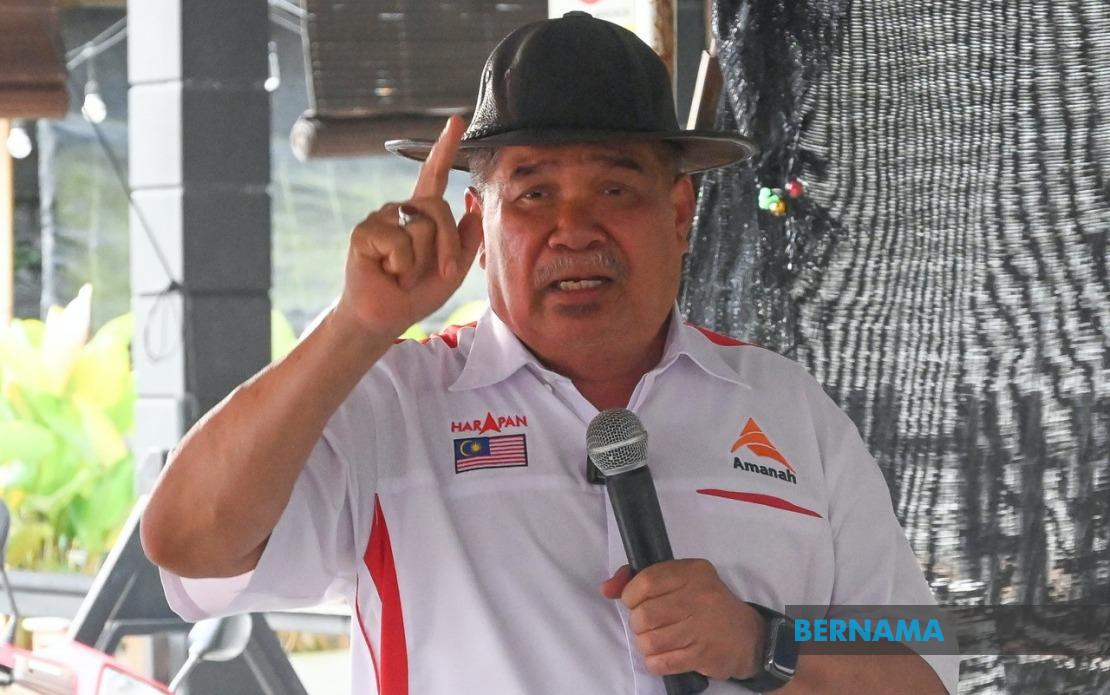
Pakatan Harapan has signalled its determination to maintain focus on delivering tangible benefits to Malaysians rather than becoming drawn into reactive political positioning, according to Amanah President Datuk Seri Mohamad Sabu. Speaking on the evolving landscape of coalition politics, Mohamad stressed that the ruling coalition need not succumb to anxiety over deepening ties between Barisan Nasional and Perikatan Nasional, insisting instead that maturity and sustained commitment to public service remain the appropriate response.
The Agriculture and Food Security Minister articulated a vision in which Pakatan Harapan's governance framework rests upon constitutional principles and substantive policy outcomes rather than emotionally charged political rhetoric. Prime Minister Datuk Seri Anwar Ibrahim, Mohamad stated, remains unwavering in his dedication to advancing Malay and Islamic interests through concrete mechanisms that generate measurable improvements for communities and national development. This framing positions the administration's approach as one grounded in institutional structures and strategic implementation, diverging from what Mohamad characterised as sentiment-driven political narratives.
Critical to Mohamad's message was a direct challenge to what he termed the perpetuation of victimhood narratives surrounding the Malay community. He contended that continuous reinforcement of the notion that Malays face existential threats ultimately undermines rather than strengthens social cohesion and national resilience. Instead of amplifying anxiety, the government's foundational obligation extends to cultivating self-assurance and capability among all segments of society. This represents a philosophical departure from traditional communal political messaging, suggesting an attempt by the coalition to reframe the national conversation around constructive institutional development.
Mohamad articulated a conception of Malay empowerment centred on education, professional integrity, economic autonomy, and competitive capability across sectors. He emphasised that genuine strength derives not from protective isolation or dependency relationships, but from the development of knowledge, ethical standards, and self-reliance. This framework implicitly critiques earlier governance approaches that relied upon distributive mechanisms or fear-based political mobilisation. The minister's comments suggest Pakatan Harapan envisions a Malaysian society in which communities possess the tools and confidence to navigate contemporary economic and technological challenges independently.
The emphasis on technological mastery and economic diversification reflects awareness among senior coalition figures that Malaysia's competitive positioning within the region and globally hinges upon human capital development and innovation capacity. Mohamad's reference to Malays competing effectively across sectors signals recognition that demographic group cannot remain confined to traditional industries or dependency frameworks if the nation is to achieve middle-income status and sustain prosperity. This positioning carries implications for educational policy priorities and sectoral development strategies that the coalition may pursue during the remainder of the current administration's tenure.
Mohamad's statement also contained an implicit assessment of the political maturity of the Malay-Muslim electorate, suggesting that voters increasingly resist simplistic binary framings and recognise the distinction between genuine policy delivery and rhetorical posturing. If this assessment proves accurate, it suggests the traditional efficacy of sentiment-based political messaging may be eroding, compelling political actors across the spectrum to compete on substantive governance grounds. For Pakatan Harapan, this interpretation offers strategic reassurance that maintaining focus on implementation and outcomes provides a sustainable electoral foundation.
The coalition's defensive positioning relative to heightened cooperation between its two main rivals—Barisan Nasional and Perikatan Nasional—represents a significant shift in Malaysian coalition dynamics. The formation of a de facto working arrangement between these previously antagonistic political forces creates pressure on Pakatan Harapan to articulate a distinctive governing vision rather than simply operating as an alternative to previous administrations. Mohamad's emphasis on constitutional values, institutional integrity, and forward-looking development policy suggests the coalition's leadership recognises the necessity of projecting a positive developmental agenda rather than merely criticising opposition frameworks.
The minister's commitment to defending constitutional provisions regarding Islam's status, the institution of Malay Rulers, the national language, and Bumiputera rights demonstrates continued anchoring of Pakatan Harapan's governing philosophy within Malaysia's foundational constitutional settlement. Rather than abandoning these frameworks—which some opposition figures have implied might occur—the coalition explicitly reaffirms them whilst simultaneously rejecting securitised interpretations that frame them as perpetually under siege. This balancing act suggests an attempt to neutralise one significant line of opposition attack whilst simultaneously advancing a narrative of confident, institutionally grounded governance.
For Southeast Asian observers, Mohamad's remarks illuminate how Malaysian political competition is evolving beyond traditional communal fault lines toward debates about governance effectiveness, human capital development, and national positioning within regional and global contexts. The willingness of senior coalition figures to publicly critique fear-based political messaging suggests emerging space for alternative political narratives, even within a system historically characterised by communal polarisation. Whether this represents a durable reorientation or merely tactical repositioning ahead of anticipated electoral contests remains to be determined.
The practical implications of Mohamad's framework extend to policy formulation across multiple domains. If confidence-building and capability development genuinely constitute governing priorities, resource allocation in education, skills training, technological innovation, and enterprise development should reflect these commitments. The degree to which actual budgetary and institutional decisions align with stated philosophical principles will determine whether the coalition's messaging represents authentic strategic recalibration or primarily rhetorical repositioning. For Malaysian voters seeking to assess the coalition's credibility and direction, tracking the consistency between stated priorities and measurable resource deployment offers a critical metric.
Looking forward, Mohamad's intervention suggests Pakatan Harapan intends to contest the evolving political landscape by emphasising institutional stability, constitutional fidelity, and substantive policy outcomes rather than by adopting more aggressive communal mobilisation strategies to match opposition messaging. Whether this approach generates sufficient electoral resonance to sustain the coalition's parliamentary position will depend significantly on whether economic conditions improve and public perception of governance effectiveness strengthens. The coalition's strategic wager appears to rest upon the proposition that increasingly sophisticated and maturing electorates recognise enduring value in technocratic competence and consistent policy implementation over reactive political theatrics.

