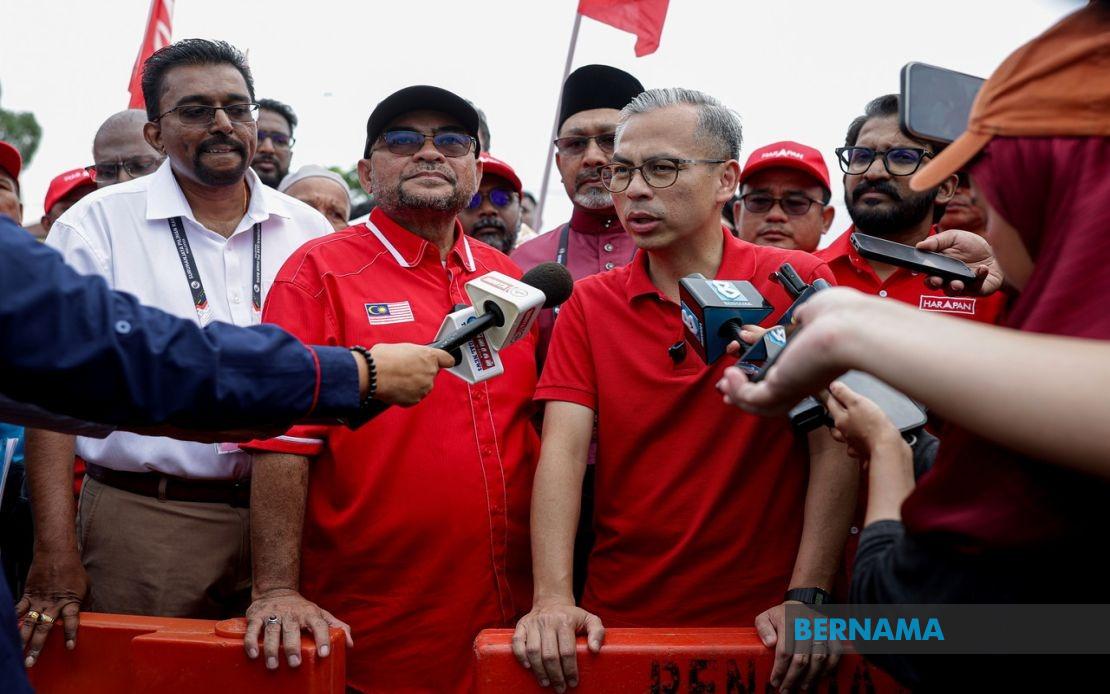
The Pakatan Harapan coalition has unveiled its electoral strategy for the upcoming Negeri Sembilan state election, choosing to anchor its campaign on the record of accomplishments compiled by Menteri Besar Datuk Seri Aminuddin Harun since taking office in 2018. Communications director Datuk Seri Fahmi Fadzil, speaking in Jempol after the conclusion of candidate nominations for four state seats, outlined that the coalition would emphasise proven administrative competence and tangible economic gains rather than pivoting toward opposition attacks or divisive rhetoric.
The central plank of PH's pitch to voters rests on what party strategists describe as measurable indicators of good governance. Fahmi pointed to rising zakat collections, improved revenue generation for the state government, and a consistent pipeline of foreign direct investment as evidence of effective stewardship. Among specific examples cited was the development of new port infrastructure, projects that the coalition hopes will resonate with constituencies dependent on commerce and maritime activity. This focus on continuity reflects a broader calculation that voters in Malaysia's heartland respond more favourably to narratives of stability and proven results than to promises of sweeping reform.
For the PH campaign team, the strategy carries particular significance given the Malaysian political landscape. In an environment where voters have grown increasingly sophisticated in evaluating incumbent performance, the coalition's reliance on measurable outcomes suggests confidence in Aminuddin's administration weathering scrutiny. The emphasis on economic stability also positions Negeri Sembilan as a counterpoint to states managed by rival coalitions, implicitly inviting voters to compare growth trajectories and administrative efficiency across the country's varied political arrangements.
Fahmi emphasised that the campaign would centre on bread-and-butter issues that preoccupy ordinary Malaysians. In the hotly contested four-way battle for the Jeram Padang seat, for instance, PH's candidate G. Manivannan—a lawyer serving as political secretary to Prime Minister Datuk Seri Anwar Ibrahim—intends to spotlight employment generation and economic opportunity, particularly for younger voters. This granular approach reflects recognition that state elections often turn on local grievances and constituency-specific concerns rather than abstract national narratives. By tethering the campaign to job creation and prosperity, PH aims to translate administrative achievements into tangible benefits that voters perceive in their daily lives.
The Jeram Padang contest itself illustrates the competition's complexity. Manivannan faces an incumbent from Barisan Nasional, a Perikatan Nasional breakaway candidate from Bersatu, and notably, Dayana Dal, the sole Orang Asli nominee in the contest. The presence of an indigenous candidate introduces an additional dimension to electoral dynamics, requiring PH to articulate its commitment to marginalised communities while maintaining its broader coalition messaging around economic continuity.
Fahmi's remarks also signalled awareness of reputational risks surrounding campaign conduct. As Communications Minister overseeing media relations nationwide, he appealed for responsible engagement throughout the two-week campaign period, explicitly cautioning against discourse touching on the so-called 3Rs—religion, race, and respect for monarchical institutions—while also warning against disinformation and defamation. This circumscription reflects Malaysia's sensitive political terrain, where electoral contests can rapidly escalate into communal friction if partisan rhetoric transgresses understood boundaries. By staking out ethical campaigning as a coalition priority, Fahmi positioned PH as the custodian of democratic civility.
The four contested seats under the Jempol parliamentary constituency reveal varied competitive configurations. Serting and Palong will witness three-way contests, while Bahau is shaping as a direct confrontation between PH incumbent Teo Kok Seong of the Democratic Action Party and BN's Chong Fui Ming of the Malaysian Chinese Association. In Serting, PH's Yaacob Mahmood must unseat Perikatan Nasional's sitting member Mohd Fairuz Mohd Isa while fending off Bersatu's Muhammad Noraffendy Mohd Salleh. Palong will see BN's incumbent Datuk Mustapha Nagoor challenged by both PH and Bersatu candidates, fragmenting the opposition's vote in a seat the government has previously held.
These configurations underline how Malaysia's fractured political landscape has evolved since the 2018 upheaval that initially brought PH to power nationally and in Negeri Sembilan. The appearance of Bersatu candidates across multiple seats reflects that party's evolution from ally to rival following the 2020 political implosion. For PH, navigating multi-cornered contests requires discipline in turnout management and coalition messaging, particularly where DAP candidates compete alongside fellow coalition partners from PKR and Amanah.
The coalition's confidence appears grounded in institutional incumbency and administrative visibility. Control of state machinery provides PH opportunities to showcase development projects, execute welfare programmes, and deploy government resources in ways that benefit voters. Aminuddin's relative longevity as Menteri Besar—five years by election time—affords sufficient tenure to claim genuine track records rather than merely inherited portfolios. This contrasts sharply with opposition parties, some of which have fragmented or shifted alignment since previous electoral cycles.
Fahmi's undertaking to monitor media welfare during the campaign signals attention to operational conditions for news gathering. In Malaysia's context, where media freedom remains contested and journalists occasionally encounter intimidation during electoral periods, such assurances carry practical weight. By positioning the government as guardian of professional conditions for reporting, PH implicitly claims moral authority over democratic process conduct.
The Election Commission's two-week campaign window, culminating in polling on August 1 with early voting set for July 28, compresses the timeframe for persuasion. Within this abbreviated period, PH must translate administrative accomplishments into sufficient voter motivation to secure Negeri Sembilan's legislative majority. The coalition's emphasis on continuity and demonstrated governance suggests confidence that voters will reward incumbency, provided the administration can credibly demonstrate that continued stewardship yields continued prosperity. Whether this calculation proves accurate will depend on whether suburban and rural constituencies in Negeri Sembilan—the demographic backbone of the state's electorate—perceive economic gains as sufficiently distributed and personally meaningful.

