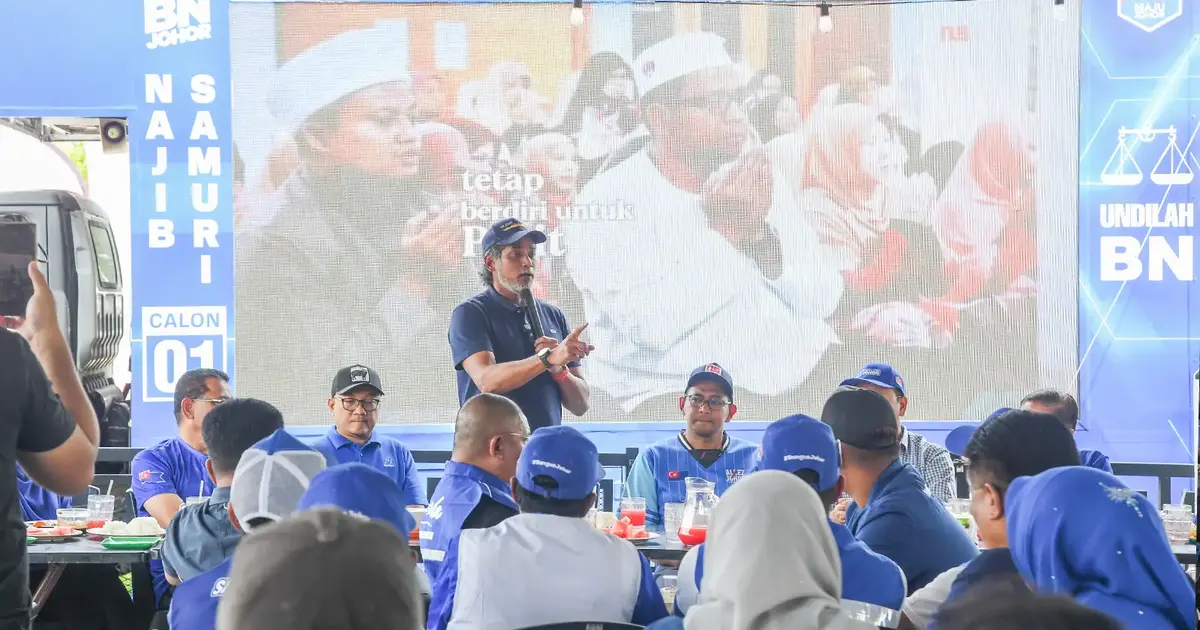
Khairy Jamaluddin has set a condition that Pakatan Harapan must present a candidate of comparable rank and stature before engaging in any formal debate with Johor Barisan Nasional chairman Onn Hafiz Ghazi. The former Umno Youth chief's remarks underscore the growing intensity of political positioning ahead of crucial state-level contests in Malaysia's southern region.
In raising this threshold, Khairy appears to be asserting the significance of the Johor BN leadership role and ensuring that any public discourse involving Onn Hafiz maintains appropriate diplomatic protocols. By insisting on a prospective menteri besar candidate from the opposition benches, the former minister is effectively placing the debate at a level of electoral consequence that reflects the stakes involved in determining Johor's next state administration.
The demand for parity in candidacy rank carries strategic implications for opposition efforts. Pakatan Harapan must carefully weigh whether fielding its designated menteri besar hopeful serves its broader campaign interests or risks overexposing that figure to intense scrutiny. Such debates can provide valuable platform exposure but equally present opportunities for opponents to undermine credibility before crucial voting begins.
KJ's public statement also reflects broader calculations within Umno and Barisan Nasional regarding how to manage electoral confrontations during this period. By establishing prerequisites for engagement, the coalition effectively shapes the terms under which substantive policy discussions occur, controlling narrative advantage before campaigning gains momentum.
For Pakatan, the decision whether to accept Khairy's implicit challenge hinges on multiple factors. The opposition coalition must assess whether its prospective menteri besar candidate possesses sufficient depth on policy issues, rhetorical strength, and public appeal to emerge positively from televised or public forum engagement with an incumbent administration representative. A strong debate performance could galvanise voter support among undecided electorates, while a faltering showing might depress coalition morale.
The condition also reveals something about competitive dynamics within Johor politics specifically. The state has emerged as a contested battleground where both coalitions invest substantial resources and strategic attention. Control of Johor carries implications extending beyond the state itself, affecting overall balance within the Malaysian federation and potentially influencing federal-level political alignments.
Historically, Johor has served as a Barisan stronghold, though recent electoral cycles have demonstrated shifting voter preferences across Malaysia. Whether Pakatan can consolidate support and mount a credible challenge depends partly on how effectively it communicates policy alternatives and connects with grassroots concerns. Debates featuring state-level leadership candidates offer mechanisms for such communication, particularly when reaching audiences beyond traditional partisan media.
The emphasis on candidate equivalency also touches on broader questions about what standards govern political discourse in Malaysia. If debate participation requires matching official titles and presumed electoral prospects, this potentially privileges candidates from established parties with clear succession pipelines while disadvantaging alternatives or insurgent movements lacking institutional recognition.
For Malaysian voters, particularly those in Johor, these developments signal intensifying competition and suggest that both major coalitions view the state as crucial to their respective political fortunes. The debate dynamic—should it materialise—could prove consequential in shaping voter perceptions and energising ground-level campaign activities.
KJ's statement also reflects generational and factional considerations within Umno. As a former youth leader and minister who has navigated complex party politics, his public positioning carries weight with specific constituencies within the party and broader business-political establishment. His intervention in setting debate conditions suggests confidence in Onn Hafiz's capacity to prevail in such confrontations while simultaneously establishing framework rules favourable to the incumbent administration.
Going forward, much depends on how Pakatan responds. Accepting the condition would demonstrate confidence but commit leadership resources to a high-stakes public encounter. Declining would risk accusations of avoiding substantive engagement while potentially ceding narrative control to Barisan. Either path carries political costs and benefits requiring careful strategic calculation.
The broader pattern of such statements—establishing preconditions for debate—has become increasingly common in Malaysian politics as major parties seek to control electoral narratives. Whether such conditions ultimately strengthen democratic discourse or constrain public deliberation remains contested among observers of Malaysian political culture.

