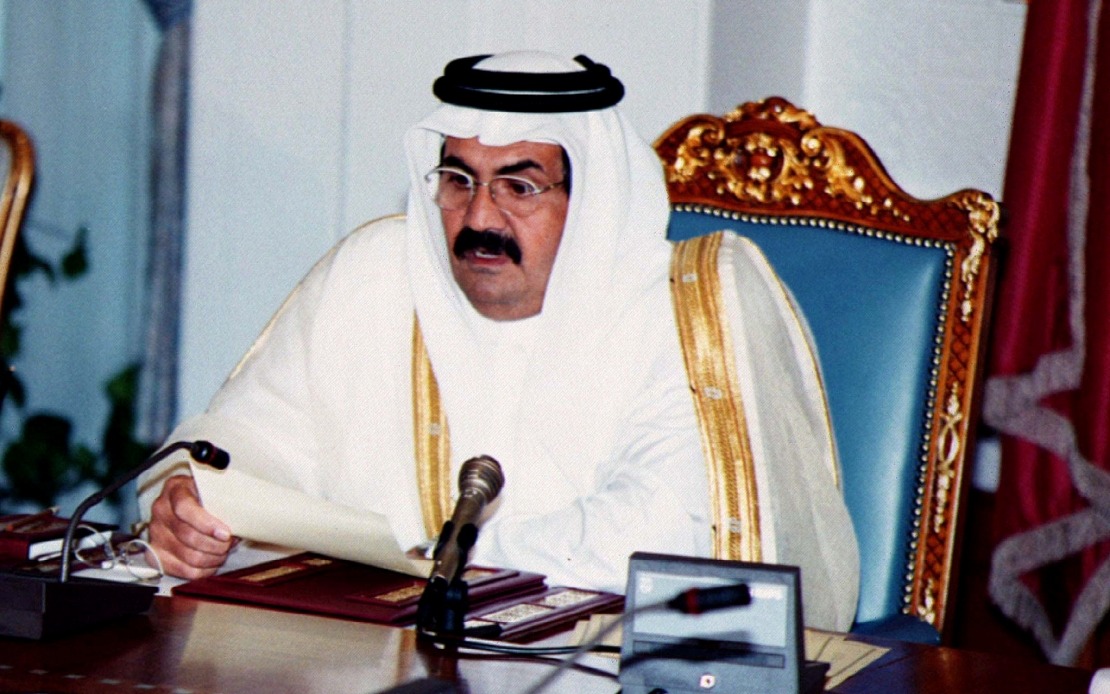
Senior political figures from South Asia and the Indian Ocean region descended on Doha on Monday to pay their final respects to Qatar's former ruler, underscoring the significant regional and international stature the late emir commanded. Pakistan's Prime Minister Shehbaz Sharif and Maldives President Mohamed Muizzu both made the journey to Qatar to offer condolences to the current Emir Sheikh Tamim Bin Hamad Al Thani and members of the royal family following the death of Sheikh Hamad Bin Khalifa Al Thani, who governed the Gulf nation for nearly two decades before stepping down.
Shehbaz Sharif's one-day official visit demonstrated the diplomatic importance Islamabad places on ties with Qatar. The Pakistani premier brought with him a substantial delegation that included his brother and former prime minister Nawaz Sharif, reflecting the significance of the occasion. Deputy Prime Minister and Foreign Minister Senator Ishaq Dar and Information Minister Attaullah Tarar also accompanied the delegation, signalling that the condolence mission carried considerable political weight and was treated as a matter of state importance.
Sheikh Hamad, who passed away at the age of 74 on Sunday, left behind a transformative legacy that reshaped Qatar's position in global affairs. During his tenure from 1995 until his abdication in 2013, the former emir oversaw Qatar's metamorphosis from a relatively modest Gulf state into one of the region's most influential economies and diplomatic players. His reign coincided with the discovery and development of vast natural gas reserves, which became the foundation for the nation's subsequent economic boom and unprecedented wealth accumulation.
The mourning period extended beyond Qatar's borders, with both Pakistan and India observing a day of national mourning on Monday as a formal gesture of respect for the departed leader. This diplomatic protocol underscores how Sheikh Hamad's influence transcended the Gulf region and resonated across South Asian political establishments. The decision by two major South Asian nations to declare official mourning reflected the esteem in which he was held across diverse regions and political systems.
Muhammad Muizzu, the Maldivian president, emphasised in his remarks that Sheikh Hamad's contributions would endure in collective memory. The Maldivian leader highlighted how the former emir's work extended well beyond Qatar's borders, benefiting the broader Arab world and the global Islamic community. This framing positioned Sheikh Hamad not merely as a national leader but as a figure whose influence shaped regional and transnational trajectories across the Muslim-majority world.
Global tributes poured in acknowledging the late emir's instrumental role in Qatar's extraordinary rise. World leaders recognised his vision and stewardship, crediting him with orchestrating the country's strategic transformation during a pivotal period in Middle Eastern geopolitics. The praise reflected not just nostalgia for his era but recognition of the foundational decisions he made that positioned Qatar as a major player in regional diplomacy, investment, and soft power.
Bangladesh Prime Minister Sheikh Tarique Rahman articulated the broader international perspective on Sheikh Hamad's contributions in his condolence message to the current emir. Rahman specifically highlighted four pillars of the former ruler's legacy: his work for regional peace, economic development initiatives, educational advancement, and fostering international cooperation. These domains captured the essential elements of Sheikh Hamad's strategic vision—recognising that sustainable national greatness required attention to security, prosperity, knowledge, and diplomatic relationships.
The visit by Shehbaz Sharif, coming at a time when Pakistan faces significant economic and political challenges, also represented an opportunity to reaffirm bilateral relations with Qatar. Pakistan maintains longstanding ties with the Gulf state, benefiting from Qatari investment and cooperation on energy security matters. The high-level delegation signalled continuity and commitment in this important partnership, even as Pakistan's political landscape undergoes transitions.
For regional observers in Southeast Asia and South Asia, the outpouring of tributes to Sheikh Hamad offers insights into how the Gulf's leadership mechanisms function and the value placed on diplomatic continuity. Qatar's strategic positioning as a bridge between the Arab world and Asia, combined with its significant economic interests across multiple continents, means that transitions in Qatari leadership carry implications beyond the immediate region. The smooth succession from Sheikh Hamad to Sheikh Tamim and the subsequent strengthening of Qatar's global role demonstrate how institutional stability in key states influences broader regional dynamics.
The condolence missions also reflected the interconnected nature of contemporary international relations, where symbolic gestures carry substantive diplomatic weight. By personally attending commemoration ceremonies, leaders such as Shehbaz Sharif and Muizzu reinforced the importance they attach to maintaining robust relationships with major Gulf powers. In an era of shifting geopolitical alignments and competing regional influences, such demonstrations of respect and continuity serve practical diplomatic functions beyond their ceremonial dimensions.
As Qatar moves forward under Sheikh Tamim's continued leadership, the international community's recognition of Sheikh Hamad's legacy serves to legitimise the institutions and policies established during his tenure. The former emir's successful transition to emeritus status without destabilising the nation represented a model of orderly succession in a region where power transfers have sometimes proved contentious. The lasting respect accorded to him suggests that Qatar's developmental model and strategic choices under his guidance remain broadly endorsed by the international community, creating a foundation of legitimacy for current and future policies.

