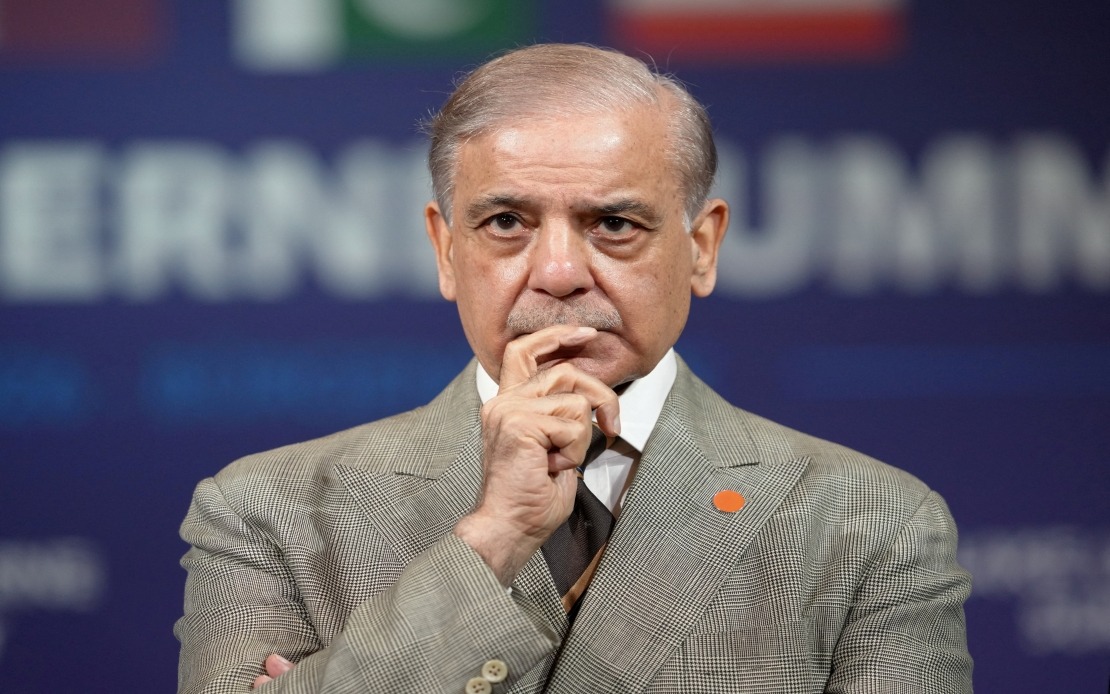
Pakistan and Türkiye have moved to fortify their economic relationship through a series of high-level engagements in Istanbul, with Prime Minister Shehbaz Sharif and President Recep Tayyip Erdogan affirming their mutual commitment to expanded bilateral trade and investment. The meetings, held on Saturday, underscore both nations' recognition that deeper economic integration could benefit their respective development agendas and enhance their strategic standing in South Asia and the Eastern Mediterranean.
During the bilateral talks with Erdogan, Sharif articulated Pakistan's broader economic vision while simultaneously addressing a dedicated business conference that drew participation from Turkey's largest corporations. This two-track approach—combining high-level political dialogue with pragmatic commercial engagement—reflects the renewed emphasis both capitals are placing on translating political goodwill into tangible economic outcomes. For Pakistan, which faces significant macroeconomic headwinds and a mounting external account deficit, securing reliable partners for investment and trade diversification remains critical to stabilising its economy.
The two governments have set an ambitious target of achieving US$5 billion in annual bilateral trade, a figure that would nearly triple current levels and position Türkiye as one of Pakistan's most significant trading partners outside China and the Gulf region. This target encompasses multiple sectors, with particular emphasis on energy cooperation—a strategic priority for Pakistan as it grapples with chronic power shortages and the need to modernise its generation and transmission infrastructure. Türkiye's expertise in renewable energy technologies and its experience managing regional energy corridors could prove instrumental in addressing Pakistan's supply constraints.
A notable innovation emerging from the talks is Pakistan's proposal to establish a digital corridor with Türkiye, an initiative that reflects the growing recognition across South Asia that digital infrastructure and cross-border data flows represent frontiers for regional integration. During his meeting with Turkcell chief executive officer Ali Taha Koc, Sharif outlined how secure digital connectivity could facilitate not only direct Pakistan-Türkiye commerce but also position both nations as hubs for digital services in their respective regions. Such infrastructure investments could attract technology companies seeking to operate across multiple jurisdictions with unified systems.
Critical minerals emerged as another area of expanded cooperation, a sector with particular relevance for Pakistan given its substantial untapped mineral deposits and Türkiye's established mining and processing capabilities. As global supply chains for minerals essential to battery technology and electronics manufacturing become increasingly fragmented, bilateral cooperation in this domain could create mutual advantages. Pakistan could develop its resource base while Türkiye gains access to reliable upstream supply, reducing both nations' dependence on more distant or politically complicated suppliers.
Transportation and logistics featured prominently in the discussions, reflecting the geographic reality that Pakistan and Türkiye occupy strategic positions along corridors connecting South Asia, Central Asia, and Europe. Enhanced cooperation in this sector could unlock new routes for regional trade and position both nations as intermediaries in continental commerce. Pakistan's ports and overland connections to Central Asia, combined with Türkiye's role bridging Europe and Asia, create natural complementarities that remain substantially underdeveloped.
Deputy Prime Minister and Foreign Minister Ishaq Dar led Pakistan's economic delegation, a signal of the government's high prioritisation of these negotiations. His presence alongside sectoral ministers responsible for maritime affairs, energy, petroleum, privatisation, information technology, and telecommunications ensured that discussions encompassed the full spectrum of potential cooperation areas. This comprehensive ministerial representation enabled Turkish companies to engage directly with the relevant Pakistani authorities, reducing bureaucratic friction and facilitating faster decision-making on specific projects.
Turkish industry participated substantively in the business conference, with executives from major conglomerates including Koc Holding, Arcelik, Aygaz, and Demir Export attending. Koc Holding's involvement is particularly significant given its sprawling portfolio spanning energy, manufacturing, and financial services—sectors where Pakistan represents significant growth potential. Arcelik's interest in Pakistan could presage expansion of Turkish manufacturing into South Asia, while Aygaz's participation suggests natural gas distribution opportunities merit closer examination.
For Malaysia and broader Southeast Asia, this Pakistan-Türkiye rapprochement carries implications for regional economic architecture. As ASEAN nations seek to diversify economic partnerships beyond traditional Western markets and China, the emergence of stronger South Asia-Middle East connections could reshape trade patterns and investment flows. Additionally, the digital corridor concept between Pakistan and Türkiye may serve as a template that Southeast Asian countries could adapt for their own regional integration efforts, particularly in harmonising data governance and cross-border digital transactions.
Pakistan's economic stabilisation remains contingent on attracting foreign investment and expanding export markets, making these Turkish engagements timely. The initiatives under discussion—energy infrastructure, digital services, mineral extraction, and manufacturing—align with sectors where Pakistan possesses either natural endowments or emerging capabilities. Success in implementing even a portion of these ambitions could generate employment, technology transfer, and foreign exchange earnings that would support Pakistan's medium-term macroeconomic objectives.
The business conference format, rather than relying solely on government-to-government arrangements, introduces market discipline and commercial logic into the partnership. Turkish companies will only commit capital if they perceive genuine profit opportunities, meaning that the initiatives gaining traction will likely reflect actual comparative advantages rather than political posturing. This commercial orientation could distinguish the Pakistan-Türkiye partnership from development projects that sometimes struggle with implementation challenges.
Moving forward, both nations face the practical challenge of translating these pledges into operational reality. Historically, ambitious bilateral economic targets have sometimes fallen short of expectations due to regulatory obstacles, currency fluctuations, or shifting political priorities. Pakistan and Türkiye will need to establish dedicated institutional mechanisms to monitor progress, remove impediments to investment, and ensure that the business community has confidence in the commitment of both governments to follow through on their stated intentions.

