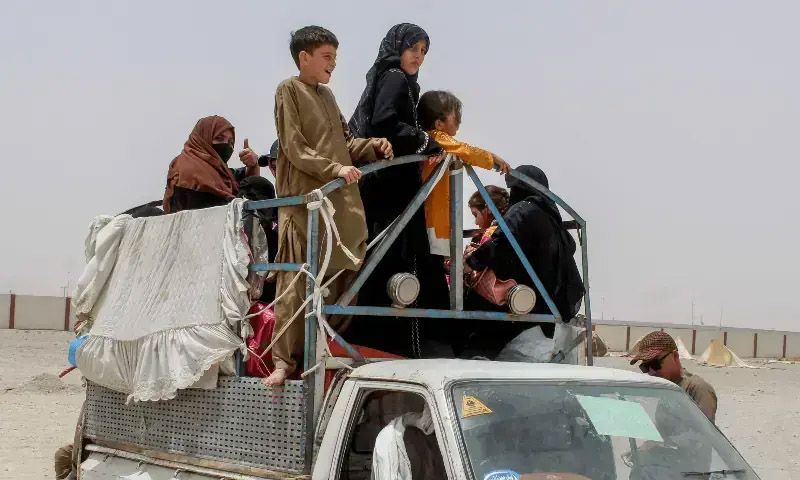
Pakistan's federal and provincial governments have completed the deportation of some 2.59 million Afghan nationals who were residing in the country without proper legal status since 2023, marking a significant escalation in immigration enforcement across South Asia's most volatile border corridor. The scale of the operation underscores the mounting pressure on Pakistan's government to address irregular migration flows while managing the broader geopolitical challenges arising from its neighbour Afghanistan's political transformation.
Punjab province, Pakistan's most populous region and home to the nation's capital Lahore, has emerged as the focal point of the deportation initiative. Authorities within the province have detained approximately 138,342 Afghan nationals across 36 functioning holding centres, processed their documentation, and overseen their removal to Afghanistan. The Punjab home department's foreign national security cell continues active enforcement operations, with approximately 53 detained individuals currently in custody awaiting deportation proceedings. This institutional infrastructure demonstrates how thoroughly the provincial government has mobilised resources to execute what officials describe as a systematic regularisation of the country's immigration status.
The deportation campaign reflects an explicitly stated federal policy position that no individual lacking valid visa documentation may legally remain within Pakistan's borders. Government officials have framed the operations as a necessary administrative measure to maintain border security and demographic order rather than as a punitive exercise. A spokesman for the home department articulated this rationale, explaining that the policy applies uniformly to all foreign nationals regardless of nationality or circumstance, though the scale and intensity of enforcement appears concentrated on Afghan citizens given the historical migration patterns between the two nations.
For Malaysian and Southeast Asian observers, the Pakistan case illustrates the mounting complications surrounding irregular migration in Asia's volatile regions. As Myanmar, Bangladesh, and other nations grapple with similar displacement pressures, Pakistan's approach—combining systematic detention, documentation processing, and repatriation through designated border crossing points like Torkham—offers a model of large-scale deportation management, albeit one that raises humanitarian considerations about the conditions facing returned migrants and their reception in Afghanistan's unstable environment.
The enforcement methodology involves multiple operational phases. Government teams have conducted surveys and examinations in commercial markets and residential areas where undocumented Afghan nationals have historically concentrated. Upon identification, individuals are arrested and transported to holding centres administered by provincial authorities. Within these facilities, detainees receive basic provisions, registration documentation is completed, and deportation logistics are arranged. The government has designated Torkham, the primary overland crossing between Pakistan and Afghanistan, as the primary repatriation point, suggesting coordination with Afghan border authorities to facilitate orderly transfers.
Public participation forms a crucial component of the enforcement strategy. The Punjab government has encouraged residents to report suspected undocumented Afghan nationals by contacting emergency services at the designated number 15, establishing a community-based surveillance mechanism. Officials have simultaneously pledged confidentiality regarding informant identities, apparently attempting to reassure potential whistleblowers about privacy protections. This approach mirrors strategies employed in other countries managing mass deportation campaigns, though questions persist about the accuracy of community-based reporting and potential discrimination against Afghan communities regardless of documentation status.
The timeline deserves analytical attention. The initiation of large-scale deportations in 2023 followed the Taliban's consolidation of control across Afghanistan in 2021, suggesting that Pakistan's government concluded the security environment had sufficiently stabilised to permit return migration. This calculation reflects Pakistan's longstanding preference for addressing the Afghan refugee question through repatriation rather than permanent resettlement, a position informed by domestic economic pressures, security concerns, and broader geopolitical considerations regarding Afghanistan's strategic position.
The humanitarian dimensions of this enforcement campaign warrant consideration. Afghanistan's economy remains severely constrained, with widespread poverty, limited employment opportunities, and fragile governance structures across much of the country. Returnees face reintegration challenges including housing insecurity, employment prospects, and access to social services. Pakistani authorities have not publicly disclosed comprehensive data regarding the conditions or reception Afghan returnees experience upon crossing the border, nor information about assistance mechanisms available to facilitate their reintegration into Afghan communities.
The regional implications extend beyond bilateral Pakistan-Afghanistan relations. Afghanistan's humanitarian crisis has generated secondary migration pressures affecting Iran, Central Asian republics, and increasingly drawing individuals toward Europe via overland routes through the Caucasus and Balkans. Pakistan's repatriation policy represents an effort to contain these secondary flows by preventing Afghanistan from becoming a transit point for onward migration. However, if returnees encounter insufficient economic opportunity and security, the policy risks generating new displacement rather than achieving durable stabilisation.
For Pakistani policymakers, the deportation campaign addresses genuine administrative and security concerns regarding visa compliance and border management. Government statements emphasise the universal application of documentation requirements and the orderly nature of processing procedures. Yet the concentration of enforcement on Afghan nationals reflects broader demographic realities and geopolitical considerations that distinguish this case from routine immigration administration. The operation demonstrates state capacity for large-scale coordination across federal and provincial structures, though questions persist regarding the sustainability of maintaining 36 holding centres and processing operations at current intensity indefinitely.

