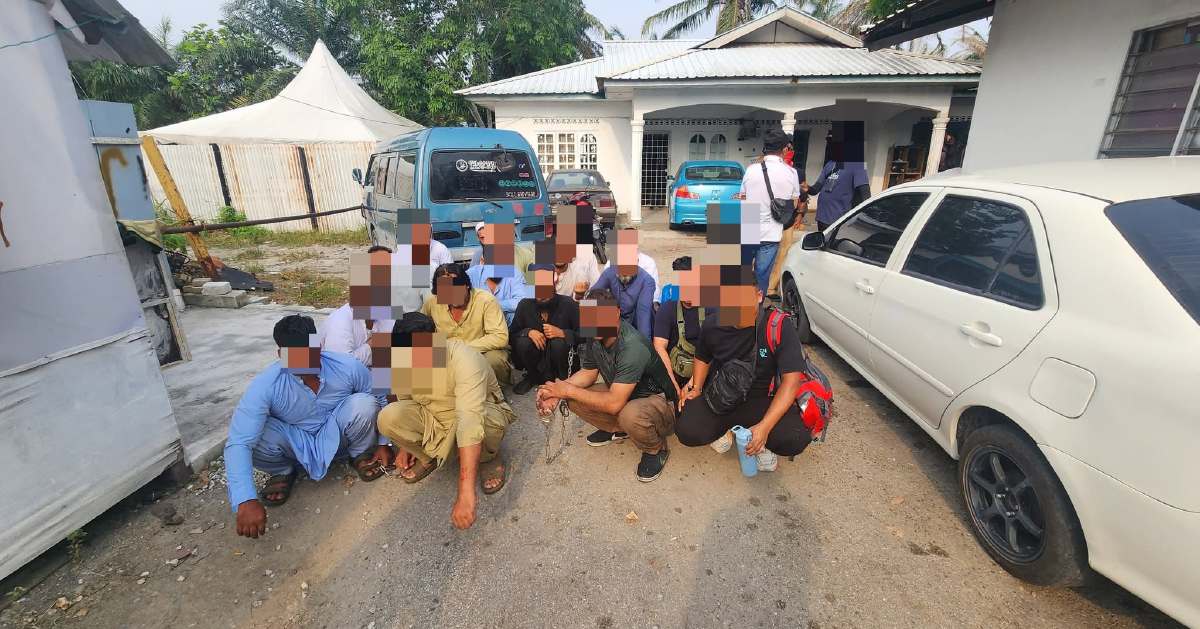
Authorities have dealt a significant blow to organised vehicle theft operations in Selangor, dismantling what law enforcement officials describe as a sophisticated parts-stripping syndicate centred on an industrial zone in Klang. Twenty suspects were taken into custody during a coordinated raid yesterday at a facility on Jalan Kapar, marking a major intervention by the Immigration Department into criminal activity that had apparently been operating undetected for some time. The operation is believed to have been orchestrated primarily by a Pakistani national whose identity and specific role in directing the enterprise are now the subject of ongoing investigations.
The syndicate's modus operandi involved acquiring vehicles—the precise methods and sources of acquisition remain under investigation—and systematically dismantling them to extract high-value components for resale through illicit channels. Vehicle parts trafficking represents a lucrative segment within Malaysia's broader automobile crime ecosystem, with components sourced from such operations eventually reaching secondary markets across Southeast Asia and beyond. The scale of this particular ring, evidenced by the number of arrests, suggests a well-coordinated distribution network capable of moving significant quantities of merchandise with minimal detection.
The raid itself reflects the Immigration Department's expanding role in tackling transnational organised crime beyond its traditional immigration enforcement mandate. The involvement of foreign nationals in directing criminal syndicates has become increasingly common across Malaysia, reflecting broader regional patterns where organised crime hierarchies frequently position non-citizens in leadership positions while utilising local recruits for lower-level operational tasks. This arrangement typically insulates the primary architects from direct law enforcement contact while creating plausible deniability through layers of intermediaries.
Klang's selection as the syndicate's operational hub is perhaps unsurprising given the port city's characteristics as a major commercial and transportation nexus. The area's dense industrial infrastructure, proximity to Port Klang, and relative anonymity within a sprawling urban landscape provide ideal conditions for criminal enterprises seeking to conduct illicit business with reduced visibility. Furthermore, Klang's existing reputation as a regional commercial hub means that unusual cargo movements and industrial activity generate less scrutiny than they might elsewhere.
The timing of this operation arrives amid heightened police and customs focus on port-related crime following several major narcotics interdictions and smuggling cases originating from Klang's facilities. Enhanced coordination between different enforcement agencies has apparently yielded results, with information sharing protocols enabling disparate departments to identify and target criminal networks that might previously have operated independently of each other's investigations. The Immigration Department's capacity to pursue cases with foreign national involvement provides additional leverage unavailable to purely domestic law enforcement bodies.
For Malaysian motorists, this raid carries significant implications regarding the broader vehicle safety and security landscape. Every stolen vehicle and dismantled car represents not only lost property but also a potential source of counterfeit or substandard replacement parts circulating in the legitimate market. Consumers purchasing second-hand components without proper provenance verification risk acquiring items that have neither undergone manufacturer quality assurance nor been handled according to industry standards, potentially compromising vehicle safety and longevity.
The investigation into this syndicate will likely yield intelligence regarding upstream theft operations, distribution networks, and international trafficking routes that the stolen parts traverse. Such intelligence frequently enables law enforcement agencies to disrupt complementary criminal activities and identify vulnerabilities in border controls and export procedures. The participation of a Pakistani national as the alleged mastermind also hints at potential international dimensions that may warrant diplomatic cooperation or information exchange with foreign law enforcement counterparts.
The 20 arrests represent individuals at various levels within the organisational hierarchy, and their respective roles during the coming investigation and prosecution will considerably influence sentencing recommendations and the overall success rate for convictions. Lower-level operatives who participated in physical dismantling work face different liability than those who managed logistics, finances, or customer acquisition. Distinguishing between these tiers while pursuing charges against the primary orchestrator will require detailed forensic accounting, communications analysis, and testimonial evidence.
Moving forward, this case underscores the necessity for enhanced vehicle registration scrutiny and owner notification systems that alert authorities when registered vehicles disappear from legitimate circulation channels. Several regional jurisdictions have implemented automated systems that flag vehicles exceeding certain time periods without recorded movement, enabling preventive interventions before systematic dismantling occurs. Malaysia's continued development of such preventive infrastructure, coupled with sustained interagency cooperation, appears essential for disrupting similar enterprises before they achieve the apparent scale of this Klang operation.

