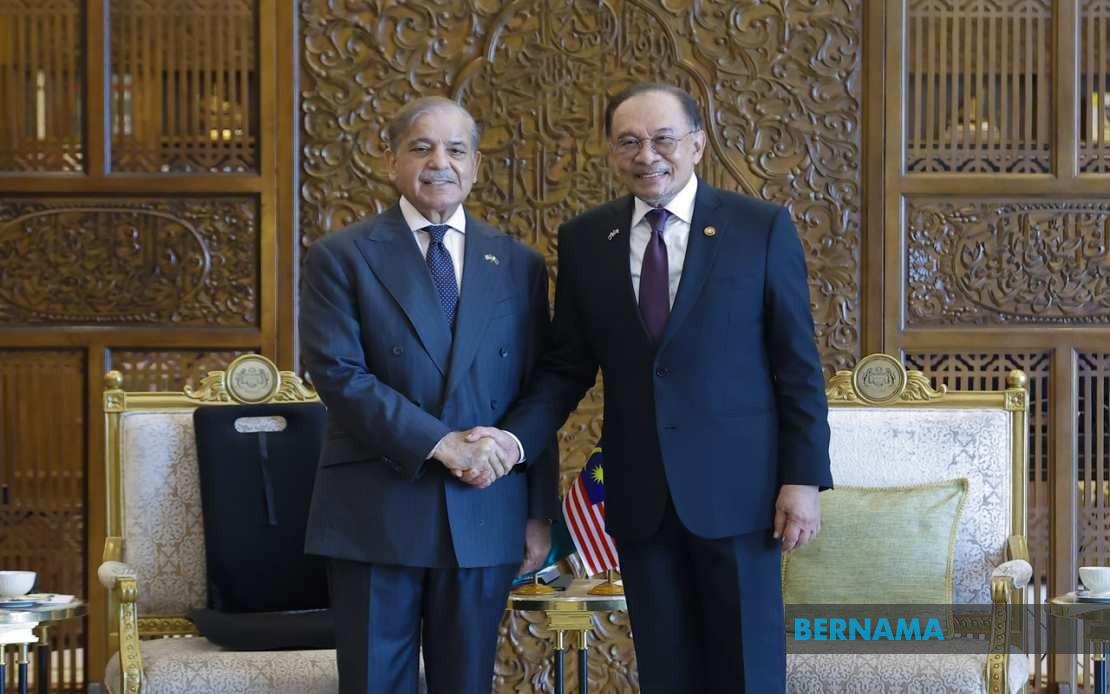
Pakistani Prime Minister Shehbaz Sharif has extended his well-wishes to Malaysian Prime Minister Datuk Seri Anwar Ibrahim as the Malaysian leader underwent a scheduled medical procedure on Monday. In a gesture of bilateral goodwill, Sharif conveyed prayers from the Pakistani people for Anwar's swift recuperation and continued robust health, underscoring the warm diplomatic relations maintained between the two South and Southeast Asian nations.
The Pakistani premier took to social media platform X to articulate his sentiments, stating that he was praying for Anwar's speedy return to his duties following the medical examinations. His message carried religious undertones appropriate to both leaders' Islamic backgrounds, invoking divine blessings for the Malaysian prime minister's recovery and well-being. Such expressions of solidarity between leaders of Muslim-majority nations carry particular weight in South and Southeast Asian geopolitical contexts, where personal relationships between heads of government often translate into broader strategic cooperation.
According to Anwar's Senior Press Secretary Tunku Nashrul Abaidah, the prime minister's medical procedures formed part of a comprehensive examination regimen developed by a specialised medical team. Rather than representing an emergency intervention, the procedures reflected a planned healthcare protocol tailored to the Malaysian leader's specific needs. This distinction proved important for maintaining public confidence in governmental continuity, as it signalled routine preventive care rather than acute health concerns requiring immediate intervention.
The Malaysian prime minister's medical team had prescribed a two-day observation period following the procedures, during which Anwar would remain under medical supervision. This timeframe suggested a moderate level of intervention requiring monitoring but not necessarily indicative of serious underlying conditions. The relatively brief observation window reflected contemporary medical practices that balance thorough post-procedural care with the operational demands placed on high-office holders.
From a Malaysian governance perspective, the transparent communication regarding Anwar's medical arrangements demonstrated institutional maturity. By promptly informing the public and international community through official channels, the Malaysian government preempted speculation while maintaining operational discretion about specific health details. This approach contrasts with previous instances in Malaysian political history where ambiguity surrounding leaders' health statuses had sparked public concern and rumour.
The exchange between Sharif and Anwar reflects the broader pattern of diplomatic engagement between Pakistan and Malaysia, two nations that maintain extensive people-to-people connections through religious, cultural, and economic ties. Pakistani migrant workers constitute a significant portion of Malaysia's foreign workforce, while Malaysian investors maintain interests across Pakistani industries. Political courtesy between their leaders carries practical implications for this multifaceted relationship.
For Malaysian readers, the incident underscores the international dimensions of domestic governance. When a nation's prime minister undergoes medical procedures, the event reverberates across bilateral relationships and international perceptions of governmental stability. Foreign leaders' public expressions of support serve not merely as courtesy but as affirmations of confidence in Malaysia's institutional capacity to maintain administrative continuity during transitional periods.
The timing of Anwar's procedures, occurring in August during the parliamentary recess, represented shrewd administrative planning. By scheduling medical interventions during periods of reduced legislative activity, the government minimised disruption to parliamentary operations while ensuring the prime minister received necessary healthcare attention. This synchronisation between personal health requirements and governmental scheduling demonstrates sophisticated executive management.
Shehbaz Sharif's public support for Anwar also carried subtle political significance within Pakistan's domestic context. By positioning himself as supportive of regional peer leaders, Sharif reinforced perceptions of stable, predictable leadership in a nation that has experienced considerable political turbulence in recent years. For Malaysian observers, the Pakistani premier's message served as external validation of Anwar's standing within the international community of Islamic-majority democracies.
The incident highlights how modern governance increasingly operates within a transparent informational ecosystem where citizens and international observers expect prompt, accurate updates regarding leaders' health and availability. The Malaysian government's proactive disclosure through official channels contrasted favourably with alternative scenarios involving leaked information or prolonged ambiguity. Such transparency builds public trust and reduces space for destabilising rumours about governmental capacity.
Looking forward, Anwar's swift return to full duties following the two-day observation period would reinforce perceptions of robust health and uninterrupted governance. The routine nature of the medical procedures, when understood within this framework, represented responsible stewardship of national leadership resources rather than any suggestion of administrative instability. For Malaysia's regional standing, demonstrating institutional resilience and continuity through such transitions strengthens international confidence in the nation's governance structures.

