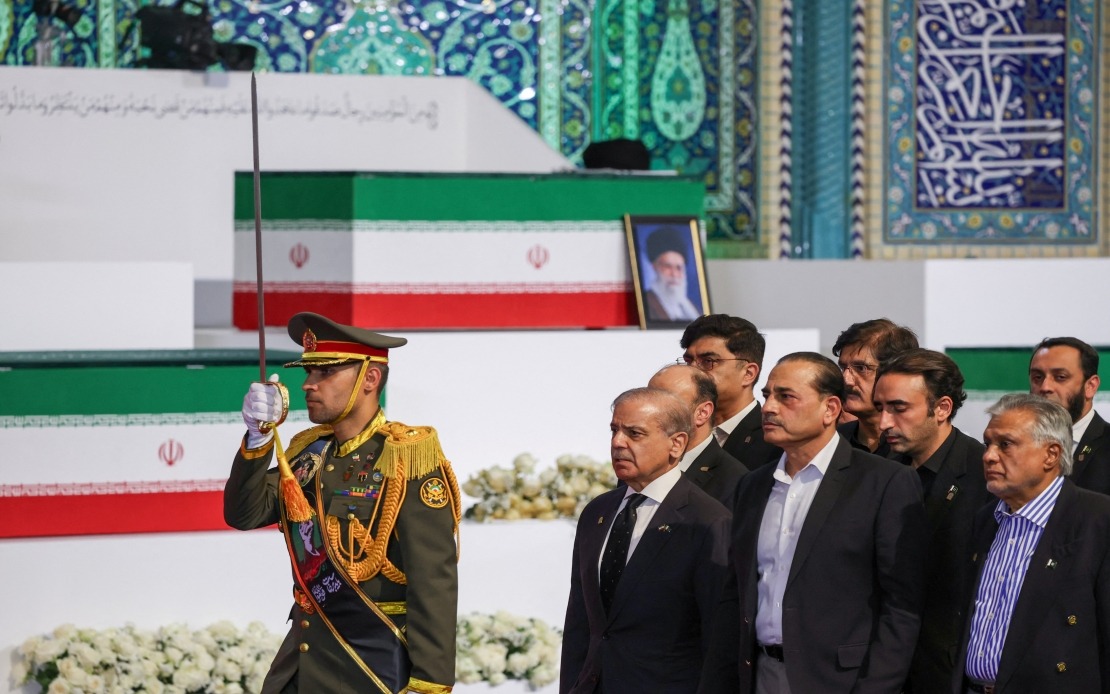
Pakistan made a prominent diplomatic statement by sending one of the largest state delegations to the funeral of Iran's Supreme Leader Ayatollah Ali Khamenei on Friday, drawing warm commendation from Tehran for what officials described as a powerful affirmation of bilateral brotherhood. The participation underscores Pakistan's strategic commitment to maintaining strong ties with its western neighbour at a particularly sensitive juncture in regional politics, coming months after the February attack that claimed Khamenei's life along with several family members.
The funeral ceremony in Tehran attracted dignitaries and representatives from approximately 100 countries, a remarkable show of global attendance that reflected Khamenei's significance as a major regional and international figure. Nations represented included Malaysia, Bangladesh, Saudi Arabia, Turkey, Qatar, Oman, Egypt, Russia, Iraq, China and India—a cross-section spanning Western allies, regional powers and global competitors. This breadth of participation illustrated how Khamenei's death resonated across geopolitical divides, yet Pakistan's delegation notably distinguished itself both in seniority and size.
Prime Minister Shehbaz Sharif personally led the Pakistani contingent, a decision that conveyed the highest level of governmental respect for the occasion. His presence was accompanied by Deputy Prime Minister and Foreign Minister Ishaq Dar, whose portfolio gave the mission formal diplomatic weight. Critically, the delegation included Pakistan's Chief of Army Staff Field Marshal Syed Asim Munir, signalling that military-to-military relations remain central to Islamabad's engagement with Tehran. The inclusion of PPP chairman Bilawal Bhutto Zardari, National Assembly Speaker Sardar Ayaz Sadiq, Interior Minister Mohsin Naqvi and Information Minister Attaullah Tarar demonstrated a whole-of-government approach that transcended party politics, reflecting a national consensus on the importance of Pakistan-Iran relations.
According to Iran's Ambassador to Islamabad, Reza Amiri Moghadam, Pakistan's delegation was the single largest representation from any nation at the ceremony. This numerical strength, combined with the calibre of participants, sent a deliberate message about the primacy Pakistan accords to its relationship with Iran. The ambassador expressed profound satisfaction with Islamabad's gesture, noting that the participation occurred at the "highest possible level" and reflected enduring bonds between the two nations. Such language, publicly articulated through social media, suggested an Iranian leadership eager to reinforce positive messaging about bilateral relations at a time when regional tensions remain elevated.
Moghadam's statements positioned the funeral attendance within a broader narrative of historic ties and shared values. He characterised the Pakistani delegation's presence as "a testament to the enduring friendship, mutual respect, and fraternal bonds between our two brotherly nations," language that emphasised continuity and deep structural connections rather than transactional interests. This rhetorical framing carries significance for Southeast Asian observers, as it illustrates how South Asian powers leverage ceremonial diplomacy to underscore regional partnerships during periods of uncertainty or external pressure.
Prime Minister Sharif himself paid public homage to Khamenei, describing the late Supreme Leader's "wisdom, leadership and profound influence on Iran and the wider region" as qualities that would endure in collective memory. This acknowledgment of Khamenei's regional impact tacitly recognised Iran's geopolitical weight and the extensive influence it wielded beyond its borders—a reality that shapes dynamics across the Middle East and has indirect ramifications for global stability and energy security matters affecting Southeast Asia.
Khamenei's tenure as Supreme Leader spanned from 1989 until his death at age 86, making him a defining figure in post-revolutionary Iran's evolution and a pivotal architect of its foreign policy doctrine. The fact that Pakistan invested so substantially in honouring his passing suggests recognition that continuity in Iran's leadership will likely perpetuate established patterns of bilateral engagement. The funeral ceremonies, which commenced on Saturday with burial scheduled for July 9 in Khamenei's birthplace of Mashhad, provided a formal window during which states could recalibrate relationships or signal political messages through their attendance patterns and delegation compositions.
For Malaysia and other Southeast Asian nations, Pakistan's diplomatic approach offers instructive lessons in managing relationships with major regional powers. Pakistan's strategy combined ceremonial respect with senior-level representation across military, civilian and legislative spheres, avoiding the appearance of either perfunctory participation or excessive deference. This calibrated approach preserved Pakistan's strategic autonomy while demonstrating genuine commitment to the relationship, a balance that smaller states often struggle to achieve when engaging with larger neighbours.
The Pakistan-Iran relationship has long been complicated by sectarian tensions, border security challenges and differing strategic interests, yet diplomatic occasions such as this funeral highlight how both nations maintain institutional mechanisms for managing differences while preserving broader partnership frameworks. Pakistan's willingness to send Sharif himself, rather than delegating the mission to a deputy or ceremonial figurehead, conveyed that despite structural challenges, Islamabad views the relationship as sufficiently important to warrant top-tier engagement. This decision likely reflects calculations about regional balance, energy cooperation through pipeline projects, and shared concerns about instability affecting both nations' security.
The international dimension of the funeral—with a century of nations represented—created a backdrop against which bilateral relationships were performed and evaluated. Pakistan's prominent positioning within this context enhanced its diplomatic profile while reaffirming its status as a significant regional actor with independent foreign policy agency. The emphasis Iran placed on praising Pakistan's delegation suggested that Tehran welcomed Islamabad's gesture as validation of their partnership's resilience and mutual importance, messaging that carries implications for how other South Asian nations calibrate their own relationships with Tehran.

