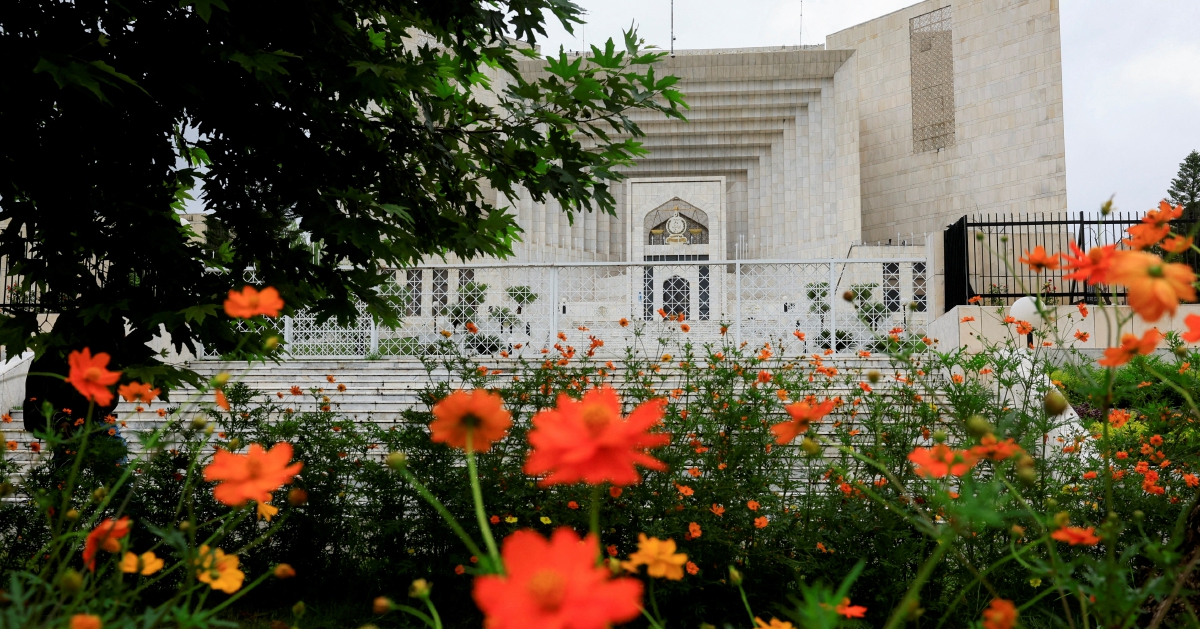
Pakistan's imprisoned former Prime Minister Imran Khan was relocated to a hospital in the early hours of Friday to undergo medical examinations, following a specific order issued by the Supreme Court. The development came as announced by Khan's political party, highlighting the continued legal complexities surrounding the detention of one of South Asia's most influential contemporary political figures.
The transfer marks a significant moment in the protracted legal saga involving Khan, whose political trajectory from cricket legend to opposition firebrand has captivated not only Pakistani politics but also drawn international attention. His detention has become emblematic of the broader political tensions within Pakistan, where questions about the independence of judicial institutions and the treatment of political opponents remain hotly contested.
Khan's popularity among Pakistan's youth and middle classes has made him a formidable political force since he founded his Pakistan Tehreek-e-Insaf (PTI) party in 1996. His meteoric rise to the premiership in 2018 represented a watershed moment for the nation, promising anti-corruption reforms and economic revitalisation. However, his removal from office in 2022 and subsequent imprisonment have sparked considerable controversy, with supporters arguing his prosecution represents political victimization.
The Supreme Court's intervention to order medical tests suggests judicial concern about Khan's health and welfare during detention. Such directives, while ostensibly procedural, carry symbolic weight in Pakistan's politically charged environment, where the judiciary's actions are frequently interpreted through the lens of power dynamics between competing political factions and state institutions.
For Malaysian and Southeast Asian observers, Khan's situation illustrates the complexities within democratic transitions in South Asia. Pakistan's struggle to balance institutional independence with political accountability mirrors challenges faced across the region, where questions about the rule of law, separation of powers, and the treatment of political opposition remain central to governance debates.
The specifics of Khan's medical condition and the exact nature of tests ordered by the Supreme Court have not been extensively detailed, though the timing of such judicial intervention typically occurs when concerns arise about a detainee's physical or mental wellbeing. In Pakistan's context, where prison conditions and detainee treatment have previously attracted human rights scrutiny, such developments acquire heightened significance.
Khan's detention has become a rallying point for his supporters, who have organized periodic protests and demonstrations across major Pakistani cities. These mobilizations underscore his continued relevance in Pakistani politics despite his incarceration, a phenomenon that distinguishes him from previous political figures whose influence diminished upon imprisonment.
The involvement of Pakistan's Supreme Court in ordering hospitalization reflects institutional mechanisms designed to safeguard detainee rights, though observers debate whether such protections function effectively or whether political considerations influence their application. The court's decision to intervene in Khan's medical assessment suggests recognition of legitimate health concerns, though the full details remain subject to public scrutiny and political interpretation.
For the broader Pakistani political landscape, Khan's continued detention complicates efforts to achieve national consensus on governance. His party, PTI, remains a significant opposition force, and his imprisonment has become entangled with broader debates about civilian supremacy, military influence, and institutional credibility within Pakistan's hybrid political system.
The international dimension of Khan's case cannot be overlooked. Various global human rights organizations have monitored his detention, and his circumstances have featured in discussions about judicial independence and political freedom in South Asia. This external attention, while potentially constraining the actions of Pakistani authorities, also reflects broader international concerns about democratic norms in the region.
Looking forward, Khan's hospitalization raises questions about the trajectory of his legal proceedings and the political implications of his continued imprisonment. Whether the medical assessment leads to any changes in his detention status remains uncertain, though the Supreme Court's order suggests ongoing engagement with questions about his treatment during incarceration.
The situation exemplifies how political imprisonment in contemporary South Asia remains intertwined with questions of institutional legitimacy and democratic governance. For policymakers and observers across Southeast Asia, Pakistan's experience offers lessons about the vulnerabilities of democratic institutions when subjected to sustained political pressure and the challenges of maintaining public confidence in judicial fairness.

